Articles | Volume 8, issue 4
https://doi.org/10.5194/jbji-8-183-2023
© Author(s) 2023. This work is distributed under
the Creative Commons Attribution 4.0 License.
https://doi.org/10.5194/jbji-8-183-2023
© Author(s) 2023. This work is distributed under
the Creative Commons Attribution 4.0 License.
A natural history of untreated chronic osteomyelitis of the tibia over 20 years, with evolving squamous cell carcinoma: a case report
Asanka Wijendra
Bone Infection Unit, Nuffield Orthopaedic Centre, Oxford University
Hospitals, Windmill Road, Oxford, OX3 7HE, UK
Alex Ramsden
Bone Infection Unit, Nuffield Orthopaedic Centre, Oxford University
Hospitals, Windmill Road, Oxford, OX3 7HE, UK
Bone Infection Unit, Nuffield Orthopaedic Centre, Oxford University
Hospitals, Windmill Road, Oxford, OX3 7HE, UK
Related authors
No articles found.
Josefine Slater, Maiken Stilling, Andreas Engel Krag, Sara Kousgaard Tøstesen, Mads Kristian Duborg Mikkelsen, Martin McNally, Alexander James Ramsden, Louise Kruse Jensen, Birgitte Jul Kiil, and Mats Bue
J. Bone Joint Infect., 10, 597–607, https://doi.org/10.5194/jbji-10-597-2025, https://doi.org/10.5194/jbji-10-597-2025, 2025
Short summary
Short summary
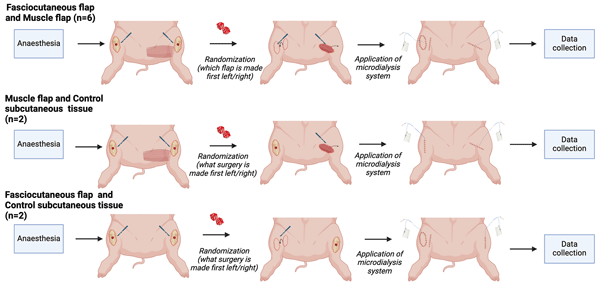
We developed a pig model to study how different tissue flaps support the healing microenvironment of lower-leg composite defects. By measuring tissue metabolism and examining tissue samples under the microscope, we found distinct early responses between muscle and fascia-based flaps. This model may help researchers and clinicians better understand the healing of complex bone and soft-tissue defects and may provide a platform for evaluating clinically relevant ortho-plastic outcomes.
Antonio Loro, Fulvio Franceschi, Muhumuza M. Fisha, Emmanuel Ewochu, Geoffrey Mwanje, Annamaria Dal Lago, and Martin McNally
J. Bone Joint Infect., 10, 155–163, https://doi.org/10.5194/jbji-10-155-2025, https://doi.org/10.5194/jbji-10-155-2025, 2025
Short summary
Short summary
This retrospective study shows that autogenous non-vascularized bone graft is a viable option for managing post-osteomyelitis bone defects in children in low-resource settings. Bone union was achieved in all cases at the last follow-up (minimum of 7 years). Recurrence of infection was seen in two cases. Studies into this specific technique are important as it does not require super-specialized centres or skills, both of which are scarce in low-resource settings.
Niels Vanvelk, Esther M. M. Van Lieshout, Jolien Onsea, Jonathan Sliepen, Geertje Govaert, Frank F. A. IJpma, Melissa Depypere, Jamie Ferguson, Martin McNally, William T. Obremskey, Charalampos Zalavras, Michael H. J. Verhofstad, and Willem-Jan Metsemakers
J. Bone Joint Infect., 8, 133–142, https://doi.org/10.5194/jbji-8-133-2023, https://doi.org/10.5194/jbji-8-133-2023, 2023
Short summary
Short summary
This international retrospective cohort study displays the diagnostic characteristics of 609 patients who were treated for fracture-related infection (FRI). Clinical confirmatory criteria were present in 77% of patients. In the remaining patients, the decision to operatively collect deep tissue cultures had to be based on a set of suggestive criteria. The combined use of these suggestive criteria should guide treating physicians in the management pathway of FRI.
Maria Dudareva, Andrew Hotchen, Martin A. McNally, Jamie Hartmann-Boyce, Matthew Scarborough, and Gary Collins
J. Bone Joint Infect., 6, 257–271, https://doi.org/10.5194/jbji-6-257-2021, https://doi.org/10.5194/jbji-6-257-2021, 2021
Short summary
Short summary
Clinical prognostic models are tools that predict treatment outcomes for individual patients. For adults with bone and joint infection treated with surgery and implant removal, this review found no existing unbiased clinical prediction models that took modifiable health factors into account to estimate prognosis. Developing a clinical prognostic model may help treatment decisions and future targeted research in orthopaedic infection.
Martin McNally
J. Bone Joint Infect., 6, 199–201, https://doi.org/10.5194/jbji-6-199-2021, https://doi.org/10.5194/jbji-6-199-2021, 2021
Short summary
Short summary
This paper provides further evidence that treatment of osteomyelitis by serial debridement without the use of local antimicrobials has high recurrence rates (20 %–30 %). The addition of bioglass did not improve this compared to using bone graft alone. Additional systemic antibiotic was required in many cases, increasing the risk of antimicrobial resistance. Recent series of single-stage surgery with local antibiotic delivery have reported better outcomes.
Jamie Ferguson, Myriam Alexander, Stuart Bruce, Matthew O'Connell, Sue Beecroft, and Martin McNally
J. Bone Joint Infect., 6, 151–163, https://doi.org/10.5194/jbji-6-151-2021, https://doi.org/10.5194/jbji-6-151-2021, 2021
Martina Galea Wismayer, Kurstein Sant, Ryan Giordmaina, and Martin McNally
J. Bone Joint Infect., 6, 141–145, https://doi.org/10.5194/jbji-6-141-2021, https://doi.org/10.5194/jbji-6-141-2021, 2021
Short summary
Short summary
We report the treatment of bone infection in a patient with a rare disease which causes overgrowth of the limb. Careful assessment of the scans showed that the infection was in some new bone which had formed in the soft tissues after a minor injury to the leg and not in one of the major bones. This made treatment much easier with a successful outcome.
Max Mifsud, Jamie Y. Ferguson, David A. Stubbs, Alex J. Ramsden, and Martin A. McNally
J. Bone Joint Infect., 6, 63–72, https://doi.org/10.5194/jbji-6-63-2020, https://doi.org/10.5194/jbji-6-63-2020, 2020
Short summary
Short summary
Chronic bone infections often present with major bone and soft tissue loss which can be difficult to manage. In this study, we treated the most complex infections using surgery which reconstructed all of the tissues in one operation.
We showed that this was a safe approach with very good outcomes. All of the bones healed and 96.5 % of patients were infection-free at final follow-up. This type of surgery requires close cooperation of a multidisciplinary team with expertise in major infections.
Cited articles
Alami, M.: Squamous cell carcinoma arising from chronic osteomyelitis, Acta
Orthop. Traumatol. Turc., 45, 144–148, https://doi.org/10.3944/AOTT.2011.2537,
2011.
Barker, J. C., Khansa, I., and Gordillo, G. M.: A Formidable Foe Is
Sabotaging Your Results: What You Should Know about Biofilms and Wound
Healing, Plast. Reconstr. Surg., 139, 1184e–1194e,
https://doi.org/10.1097/PRS.0000000000003325, 2017.
Chan, J. K. K., Ferguson, J. Y., Scarborough, M., McNally, M. A., and
Ramsden, A. J.: Management of Post-Traumatic Osteomyelitis in the Lower
Limb: Current State of the Art, Indian J. Plast. Surg., 52, 62–72,
https://doi.org/10.1055/s-0039-1687920, 2019.
Corrigan, R. A., Barlow, G., Hartley, C., and McNally, M.: Squamous cell
carcinoma complicating chronic osteomyelitis: A systematic review and case
series, The Surgeon, 20, e322–e337,
https://doi.org/10.1016/j.surge.2021.12.003, 2022.
Fritz, J. M. and McDonald, J. R.: Osteomyelitis: Approach to Diagnosis and
Treatment, Phys. Sportsmed., 36, 50–54,
https://doi.org/10.3810/psm.2008.12.11, 2008.
Goldberg, D. J. and Arbesfeld, D.: Squamous Cell Carcinoma Arising in a Site
of Chronic Osteomyelitis, J. Dermatol. Surg. Oncol., 17, 788–790,
https://doi.org/10.1111/j.1524-4725.1991.tb03261.x, 1991.
Lack, W. and McKinley, T.: Marjolin's ulcer: incidental diagnosis of
squamous cell carcinoma on hemipelvectomy for recalcitrant pelvic
osteomyelitis, Iowa Orthop. J., 30, 174–176, 2010.
Li, Q., Cui, H., Dong, J., He, Y., Zhou, D., Zhang, P., and Liu, P.:
Squamous cell carcinoma resulting from chronic osteomyelitis: a
retrospective study of 8 cases, Int. J. Clin. Exp. Pathol., 8, 10178–10184, 2015.
McNally, M.: Osteomylitis, in: Management of Orthopaedic Infections: a
practical guide, edited by: Chen, A., Thieme, 61–87, 2021.
McNally, M. and Nagarajah, K.: (iv) Osteomyelitis, Orthop. Trauma, 24,
416–429, https://doi.org/10.1016/j.mporth.2010.09.004, 2010.
Ogawa, B., Chen, M., Margolis, J., Schiller, F. J., and Schnall, S. B.:
Marjolin's Ulcer Arising at the Elbow: A Case Report and Literature Review,
HAND, 1, 89–93, https://doi.org/10.1007/s11552-006-9007-1, 2006.
Pandey, M., Kumar, P., and Khanna, A. K.: Marjolin's ulcer associated with
chronic osteomyelitis, J. Wound Care, 18, 504–506,
https://doi.org/10.12968/jowc.2009.18.12.45607, 2009.
Panteli, M., Puttaswamaiah, R., Lowenberg, D. W., and Giannoudis, P. v.:
Malignant Transformation in Chronic Osteomyelitis, J. Am.
Acad. Orthop. Surg., 22, 586–594,
https://doi.org/10.5435/JAAOS-22-09-586, 2014.
Sağlik, Y., Arikan, M., Altay, M., and Yildiz, Y.: Squamous cell
carcinoma arising in chronic osteomyelitis, Int. Orthop., 25, 389–391,
https://doi.org/10.1007/s002640100280, 2001.
Scanferla, R., Roselli, G., Scoccianti, G., Bartolini, M., Muratori, F., and
Campanacci, D. A.: Management of Squamous Cell Carcinoma in Chronic
Osteomyelitis: Our Experience, Review of the Literature and Role of MRI in
Differential Diagnosis, Diagnostics, 12, 2062,
https://doi.org/10.3390/diagnostics12092062, 2022.
Sharma, A., Schwartz, R. A., and Swan, K. G.: Marjolin's warty ulcer, J. Surg.
Oncol., 103, 193–195, https://doi.org/10.1002/jso.21783, 2011.
Sharma, D., Misba, L., and Khan, A. U.: Antibiotics versus biofilm: an
emerging battleground in microbial communities, Antimicrob. Resist Infect.
Control., 8, 76, https://doi.org/10.1186/s13756-019-0533-3, 2019.
Short summary
Cancerous transformation is a rare but potentially life-threatening complication of chronic bone infection. As with all forms of cancer, early detection and diagnosis is crucial to outcome.
Whilst there have been over 100 cases of chronic bone infection with cancerous transformation reported in the literature between 1999 and 2020, this is the first case report to document transformation with 20 years of concordant imaging and clinical review.
Cancerous transformation is a rare but potentially life-threatening complication of chronic bone...