Articles | Volume 11, issue 1
https://doi.org/10.5194/jbji-11-77-2026
© Author(s) 2026. This work is distributed under
the Creative Commons Attribution 4.0 License.
https://doi.org/10.5194/jbji-11-77-2026
© Author(s) 2026. This work is distributed under
the Creative Commons Attribution 4.0 License.
Lyme in the prosthetic joint: two cases and a review of the literature

Hussam Tabaja
CORRESPONDING AUTHOR
Division of Public Health, Infectious Diseases and Occupational Medicine, Department of Medicine, Mayo Clinic, Rochester, MN, USA
Matteo Passerini
Department of Infectious Disease, Luigi Sacco Hospital, ASST-FBF-Sacco, Milan, Italy
Department of Pathophysiology and Transplantation, University of Milano, Milan, Italy
Irene G. Sia
Division of Public Health, Infectious Diseases and Occupational Medicine, Department of Medicine, Mayo Clinic, Rochester, MN, USA
Elena Beam
Division of Public Health, Infectious Diseases and Occupational Medicine, Department of Medicine, Mayo Clinic, Rochester, MN, USA
Gina A. Suh
Division of Public Health, Infectious Diseases and Occupational Medicine, Department of Medicine, Mayo Clinic, Rochester, MN, USA
Related authors
No articles found.
Fabio Borgonovo, Francesco Petri, Takahiro Matsuo, Rita Igwilo-Alaneme, Seyed Mohammad Amin Alavi, Omar K. Mahmoud, Said El Zein, Matteo Passerini, Mohammad Hassan Murad, Daniel C. DeSimone, Ahmad Nassr, Aaron J. Tande, Andrea Gori, and Elie F. Berbari
J. Bone Joint Infect., 10, 425–435, https://doi.org/10.5194/jbji-10-425-2025, https://doi.org/10.5194/jbji-10-425-2025, 2025
Short summary
Short summary
We studied a serious double infection affecting the heart and spine, often seen in older or immunocompromised patients. By analyzing systematic data from the literature, we found that this condition leads to high death rates, especially when caused by the bacterium Staphylococcus aureus. Our work highlights the urgent need for higher-quality studies and better coordinated care. These findings may help guide future treatment strategies and improve outcomes for affected patients.
Chiara Mariani, Matteo Passerini, Lucia Galli, Alice Covizzi, Marta Colaneri, Martina Offer, Margherita Faenzi, Stefania Merli, Simona Landonio, Marta Fusi, Alberto Dolci, Andrea Gori, and Dario Cattaneo
J. Bone Joint Infect., 10, 255–263, https://doi.org/10.5194/jbji-10-255-2025, https://doi.org/10.5194/jbji-10-255-2025, 2025
Short summary
Short summary
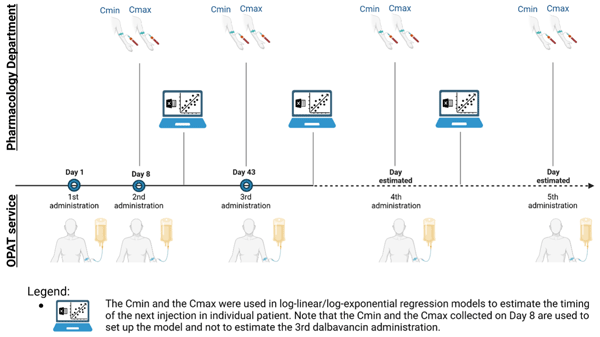
Bone and joint infections often require prolonged antibiotic treatments over 12 weeks. Dalbavancin, an intravenous antibiotic given at spaced intervals, offers a promising option. Our study developed a method to optimize dosing schedules using two blood tests to measure drug levels. This ensures effective treatment while avoiding excessive accumulation. These findings suggest dalbavancin is a safe, effective choice for managing long-term infections.
Pansachee Damronglerd, Ryan Bijan Khodadadi, Said El Zein, Jack William McHugh, Omar M. Abu Saleh, Mark Edward Morrey, Aaron Joseph Tande, and Gina Ann Suh
J. Bone Joint Infect., 10, 25–31, https://doi.org/10.5194/jbji-10-25-2025, https://doi.org/10.5194/jbji-10-25-2025, 2025
Short summary
Short summary
Our 10-year multicenter study examines the epidemiology, presentation, management, and outcomes of elbow native joint septic arthritis, a rare condition with risks like reoperation and mortality. Common symptoms included pain and swelling. Synovial fluid white blood cell counts were often low, with monosodium urate crystals also noted. Staphylococcus aureus was the main pathogen, and 72.2 % of patients underwent open debridement.
Ryan B. Khodadadi, Jack W. McHugh, Supavit Chesdachai, Nancy L. Wengenack, Wendelyn Bosch, Maria Teresa Seville, Douglas R. Osmon, Elena Beam, and Zachary A. Yetmar
J. Bone Joint Infect., 9, 207–212, https://doi.org/10.5194/jbji-9-207-2024, https://doi.org/10.5194/jbji-9-207-2024, 2024
Short summary
Short summary
In a multicenter retrospective study of musculoskeletal Nocardia infections (2011–2022), nine cases were identified. Disseminated disease occurred in 33 %, all in solid organ transplant recipients. Surgical intervention was common (89 %), with varied treatment duration (21–467 d). The 1-year mortality was 22%; all fatal cases involved disseminated disease. Localized infection generally had favorable outcomes compared to disseminated disease and requires a collaborative approach for management.
Daisuke Furukawa, Megan Dunning, Sa Shen, Amy Chang, Jenny Aronson, Derek F. Amanatullah, Gina A. Suh, and Shanthi Kappagoda
J. Bone Joint Infect., 9, 143–148, https://doi.org/10.5194/jbji-9-143-2024, https://doi.org/10.5194/jbji-9-143-2024, 2024
Short summary
Short summary
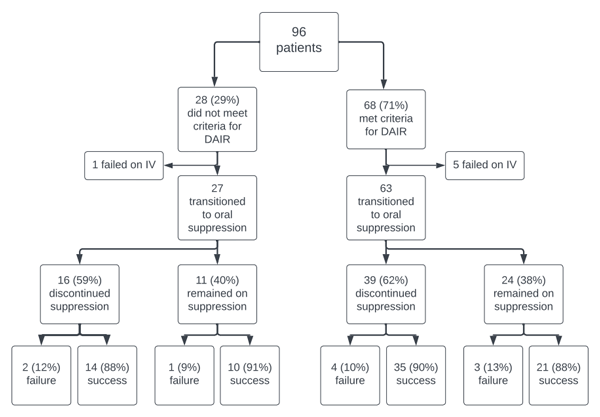
The role of long-term antibiotics after debridement, antibiotics, and implant retention (DAIR) for periprosthetic joint infections is unclear. Patients with eventual cessation of antibiotics had similar outcomes to those who remained on chronic antibiotic suppression (failure rate of 11 % for both groups). This study importantly highlights a potential opportunity to prevent unnecessary antibiotic use and spare patients from the risk of side effects and development of resistant organisms.
Matteo Passerini, Julian Maamari, Don Bambino Geno Tai, Robin Patel, Aaron J. Tande, Zelalem Temesgen, and Elie F. Berbari
J. Bone Joint Infect., 8, 143–149, https://doi.org/10.5194/jbji-8-143-2023, https://doi.org/10.5194/jbji-8-143-2023, 2023
Short summary
Short summary
Physicians have difficulties interpreting the isolation of Cutibacterium acnes in the spine tissue. Here we provide the experience of our center about this topic, adding data that can help physicians in their choices. Our results show that some clinical, radiological, and microbiological features can help distinguish patients to treat or not to treat. Moreover, treatment with parenteral beta-lactams appears to be effective, but targeted oral therapy could be a valid alternative.
Eibhlin Higgins, Don Bambino Geno Tai, Brian Lahr, Gina A. Suh, Elie F. Berbari, Kevin I. Perry, Matthew P. Abdel, and Aaron J. Tande
J. Bone Joint Infect., 8, 125–131, https://doi.org/10.5194/jbji-8-125-2023, https://doi.org/10.5194/jbji-8-125-2023, 2023
Short summary
Short summary
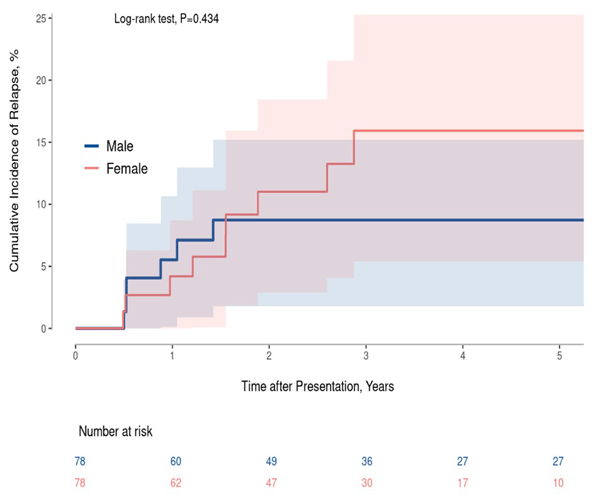
This retrospective case-matched study evaluated males and females with staphylococcal PJI (periprosthetic joint infection) treated with two-stage exchange arthroplasty. We matched 156 males and females for age, type of staphylococcal infection, and joint involved. We compared clinical parameters related to presentation, treatment, and outcome. We did not find a statistically significant difference in outcome between males and females treated with the same surgical approach at our institution.
Kareme D. Alder, Anthony P. Fiegen, Matthew M. Rode, Don Bambino Geno Tai, Gina A. Suh, Abinash Virk, and Nicholas Pulos
J. Bone Joint Infect., 8, 39–44, https://doi.org/10.5194/jbji-8-39-2023, https://doi.org/10.5194/jbji-8-39-2023, 2023
Short summary
Short summary
We present the first published case of bilateral extensor tenosynovitis caused by Coxiella burnetii. C. burnetii should be considered in patients with inflammatory osteoarticular disease, including tenosynovitis, when conventional cultures are negative especially in elderly, male, or immunocompromised patients with exposure to animals.
Matteo Passerini, Julian Maamari, Tarek Nayfeh, Leslie C. Hassett, Aaron J. Tande, Mohammad H. Murad, Zelalem Temesgen, and Elie F. Berbari
J. Bone Joint Infect., 7, 249–257, https://doi.org/10.5194/jbji-7-249-2022, https://doi.org/10.5194/jbji-7-249-2022, 2022
Short summary
Short summary
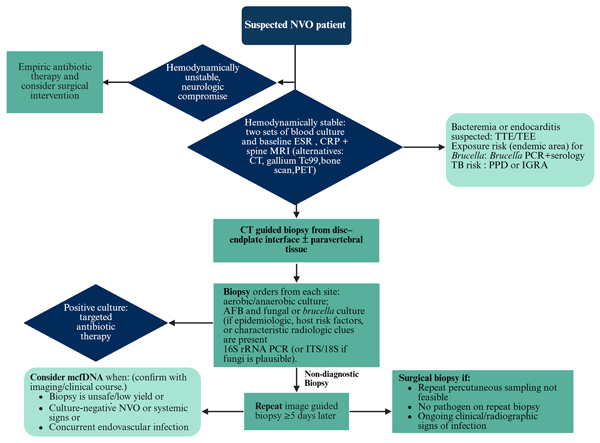
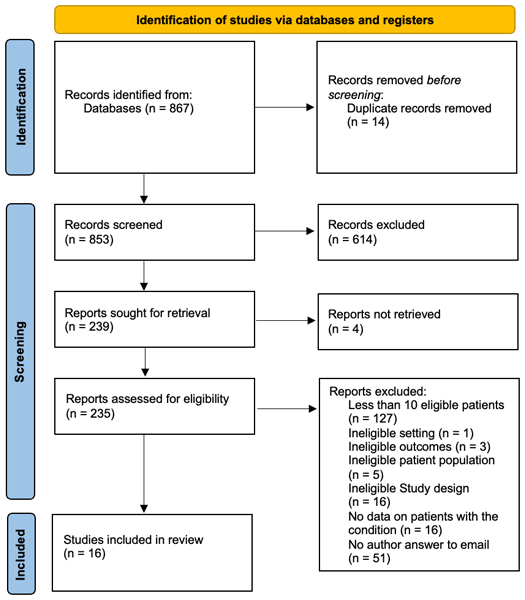
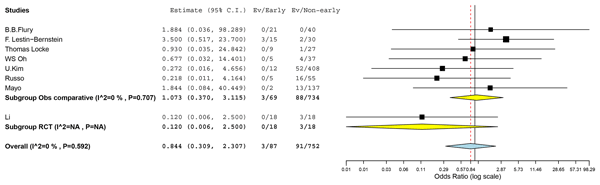
Despite a growing interest in oral therapy for native vertebral osteomyelitis, there is no evidence to recommend oral or parenteral therapy. From our single-center experience combined with a systematic review and a meta-analysis of the available literature, there is insufficient evidence to conclude that there is a difference in proportion of failure and relapse between an early switch to oral antibiotics and prolonged parenteral therapy. Further studies are needed to increase the evidence.
Katharine Dobos, Gina A. Suh, Aaron J. Tande, and Shanthi Kappagoda
J. Bone Joint Infect., 7, 137–141, https://doi.org/10.5194/jbji-7-137-2022, https://doi.org/10.5194/jbji-7-137-2022, 2022
Short summary
Short summary
This paper describes five cases of prosthetic joint infection (PJI) caused by Mycobacterium avium complex (MAC). Infections occurred in both immune competent and immunosuppressed patients. Interestingly, using the Musculoskeletal Infection Society diagnostic criteria for PJI may miss some cases of MAC PJI. Treatment courses and outcomes are described.
Talha Riaz, Mark Collins, Mark Enzler, Marco Rizzo, Audrey N. Schuetz, Julia S. Lehman, Douglas Osmon, and Irene G. Sia
J. Bone Joint Infect., 6, 355–361, https://doi.org/10.5194/jbji-6-355-2021, https://doi.org/10.5194/jbji-6-355-2021, 2021
Short summary
Short summary
Tenosynovitis due to Histoplasma capsulatum in an immunocompromised host warrants special attention. Following surgical debridement, the patient initially improved on antifungal therapy, but as immunosuppression was decreased, she presented with a flare, requiring further debridement. With negative fungal cultures and declining antigenemia, it was felt that her interim worsening was as a consequence of immune reconstitution inflammatory syndrome (IRIS).
Cited articles
Adrados, M., Wiznia, D. H., Golden, M., and Pelker, R.: Lyme periprosthetic joint infection in total knee arthroplasty, Arthroplast Today, 4, 158–161, https://doi.org/10.1016/j.artd.2017.12.003, 2018.
Ali, M., Kamson, A. O., Hussain, N., and King, S. G.: Lyme Prosthetic Joint Infection in Total Knee Arthroplasty: A Case Report, JBJS Case Connect, 11, https://doi.org/10.2106/JBJS.CC.20.00898, 2021.
Collins, K. A., Gotoff, J. R., and Ghanem, E. S.: Lyme Disease: A Potential Source for Culture-negative Prosthetic Joint Infection, J. Am. Acad. Orthop. Surg. Glob. Res. Rev., 1, e023, https://doi.org/10.5435/JAAOSGlobal-D-17-00023, 2017.
Lantos, P. M., Rumbaugh, J., Bockenstedt, L. K., Falck-Ytter, Y. T., Aguero-Rosenfeld, M. E., Auwaerter, P. G., Baldwin, K., Bannuru, R. R., Belani, K. K., Bowie, W. R., Branda, J. A., Clifford, D. B., DiMario, F. J., Jr., Halperin, J. J., Krause, P. J., Lavergne, V., Liang, M. H., Cody Meissner, H., Nigrovic, L. E., Nocton, J. J. J., Osani, M. C., Pruitt, A. A., Rips, J., Rosenfeld, L. E., Savoy, M. L., Sood, S. K., Steere, A. C., Strle, F., Sundel, R., Tsao, J., Vaysbrot, E. E., Wormser, G. P., and Zemel, L. S.: Clinical Practice Guidelines by the Infectious Diseases Society of America (IDSA), American Academy of Neurology (AAN), and American College of Rheumatology (ACR): 2020 Guidelines for the Prevention, Diagnosis, and Treatment of Lyme Disease, Arthritis Care Res (Hoboken), 73, 1–9, https://doi.org/10.1002/acr.24495, 2021.
Miller, A. O., Carli, A. V., and Kahlenberg, C.: Lyme Prosthetic Joint Infection May Be Underappreciated and Can Be Treated Without Surgery: A Case Report, JBJS Case Connect, 15, https://doi.org/10.2106/JBJS.CC.24.00600, 2025.
Nadelman, R. B., Nowakowski, J., Forseter, G., Goldberg, N. S., Bittker, S., Cooper, D., Aguero-Rosenfeld, M., and Wormser, G. P.: The clinical spectrum of early Lyme borreliosis in patients with culture-confirmed erythema migrans, Am. J. Med., 100, 502–508, https://doi.org/10.1016/s0002-9343(95)99915-9, 1996.
Nathavitharana, R. R. and Mitty, J. A.: Diseases from North America: focus on tick-borne infections, Clin. Med. (Lond.), 15, 74–77, https://doi.org/10.7861/clinmedicine.14-6-74, 2015.
Nocton, J. J., Dressler, F., Rutledge, B. J., Rys, P. N., Persing, D. H., and Steere, A. C.: Detection of Borrelia burgdorferi DNA by polymerase chain reaction in synovial fluid from patients with Lyme arthritis, N. Engl. J. Med., 330, 229–234, https://doi.org/10.1056/NEJM199401273300401, 1994.
Saar, A. and Fairbanks, S.: Medically Managed Lyme Periprosthetic Joint Infection: A Case Report, Cureus, 16, e56457, https://doi.org/10.7759/cureus.56457, 2024.
Steere, A. C. and Sikand, V. K.: The presenting manifestations of Lyme disease and the outcomes of treatment, N. Engl. J. Med., 348, 2472–2474, https://doi.org/10.1056/NEJM200306123482423, 2003.
Tabaja, H., Abu Saleh, O. M., and Osmon, D. R.: Periprosthetic Joint Infection: What's New?, Infect. Dis. Clin. North Am., 38, 731–756, https://doi.org/10.1016/j.idc.2024.07.007, 2024.
Wright, W. F. and Oliverio, J. A.: First Case of Lyme Arthritis Involving a Prosthetic Knee Joint, Open Forum Infect. Dis., 3, ofw096, https://doi.org/10.1093/ofid/ofw096, 2016.
Yang, T., Shweta, F., Greatens, M., and Webb, J.: Lyme disease periprosthetic joint infection, BMJ Case Rep., 18, e261837, https://doi.org/10.1136/bcr-2024-261837, 2025.
Short summary
In Lyme-endemic regions, Lyme disease should be considered in culture-negative periprosthetic joint infection (PJI). Diagnosis relies on microbial DNA detection, particularly Borrelia-targeted polymerase chain reaction (PCR) on synovial fluid or tissue. We present 10 cases highlighting the value of PCR for early recognition of this pathogen, which is not detectable by conventional culture media. Surgical debridement remains the standard of care, though several cases were successfully treated medically, an observation that merits further investigation.
In Lyme-endemic regions, Lyme disease should be considered in culture-negative periprosthetic...