Articles | Volume 6, issue 7
https://doi.org/10.5194/jbji-6-241-2021
© Author(s) 2021. This work is distributed under
the Creative Commons Attribution 4.0 License.
https://doi.org/10.5194/jbji-6-241-2021
© Author(s) 2021. This work is distributed under
the Creative Commons Attribution 4.0 License.
The Staphylococcus aureus toxin–antitoxin system YefM–YoeB is associated with antibiotic tolerance and extracellular dependent biofilm formation
Xinyu Qi
Arthritis and Arthroplasty Design Group (AAD Lab), Department of
Orthopaedic Surgery, College of Medicine, University of Pittsburgh,
Pittsburgh, Pennsylvania, USA
Department of Orthopedic Surgery, the First Affiliated Hospital of
Traditional Chinese Medicine of Guangzhou University, Guangzhou, Guangdong,
China
Kimberly M. Brothers
Arthritis and Arthroplasty Design Group (AAD Lab), Department of
Orthopaedic Surgery, College of Medicine, University of Pittsburgh,
Pittsburgh, Pennsylvania, USA
Dongzhu Ma
Arthritis and Arthroplasty Design Group (AAD Lab), Department of
Orthopaedic Surgery, College of Medicine, University of Pittsburgh,
Pittsburgh, Pennsylvania, USA
Jonathan B. Mandell
Arthritis and Arthroplasty Design Group (AAD Lab), Department of
Orthopaedic Surgery, College of Medicine, University of Pittsburgh,
Pittsburgh, Pennsylvania, USA
Niles P. Donegan
Department of Microbiology and Immunology, Geisel School of Medicine
at Dartmouth, Hanover, NH, New Hampshire, USA
Ambrose L. Cheung
Department of Microbiology and Immunology, Geisel School of Medicine
at Dartmouth, Hanover, NH, New Hampshire, USA
Anthony R. Richardson
Department of Microbiology and Molecular Genetics, University of
Pittsburgh, Pittsburgh, Pennsylvania, USA
Arthritis and Arthroplasty Design Group (AAD Lab), Department of
Orthopaedic Surgery, College of Medicine, University of Pittsburgh,
Pittsburgh, Pennsylvania, USA
Related authors
No articles found.
Samuelson E. Osifo, Adrian Santana, Michael F. Shannon, Victoria R. Wong, Caroline F. Tyndall, Christian Cisneros, Niosha Parvizi, Brian A. Klatt, Johannes F. Plate, Nicolas S. Piuzzi, and Kenneth L. Urish
J. Bone Joint Infect., 11, 31–41, https://doi.org/10.5194/jbji-11-31-2026, https://doi.org/10.5194/jbji-11-31-2026, 2026
Short summary
Short summary
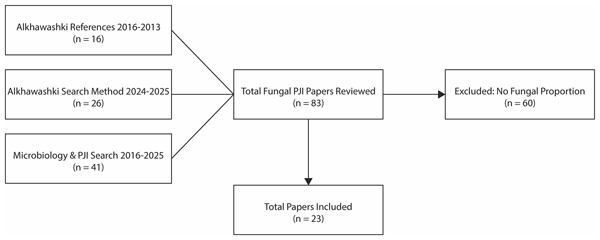
Fungal organisms are conventionally estimated to account for 1 % –2 % of periprosthetic joint infection (PJI) cases, although diagnostic and reporting limitations may result in systematic underestimation. Using a quantitative missing-data sensitivity analysis across 23 studies encompassing 28 253 PJI cases, we estimated an adjusted Candida PJI proportion of approximately 5 %, increasing to nearly 10 % in chronic or refractory infections.
Michael F. Shannon, Timothy Edwards, Timothy Maurer, Andrew J. Frear, Victoria R. Wong, Shaan Sadhwani, Clair Smith, Anthony Kamson, Brian Omslaer, Christian Cisneros, Andrew Gordon, Akeem Williams, Neel B. Shah, and Kenneth L. Urish
J. Bone Joint Infect., 10, 243–253, https://doi.org/10.5194/jbji-10-243-2025, https://doi.org/10.5194/jbji-10-243-2025, 2025
Short summary
Short summary
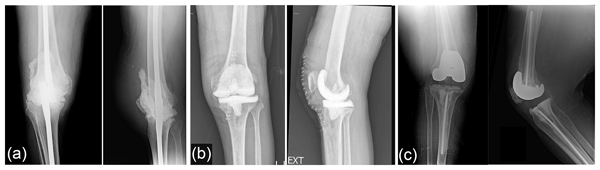
We retrospectively compared outcomes of two-stage revision with three common spacer types. No significant difference in failure rate was seen across groups, contributing evidence of similar efficacy. Articulating spacers showed a greater range of motion than static spacers, and static spacers were associated with a higher adverse event rate, directly showing potential advantages and disadvantages of each variant. A trend toward a longer interstage duration for prosthetic spacers may reflect greater functionality.
Andrew J. Frear, Michael F. Shannon, Shaan Sadhwani, Anthony O. Kamson, Clair Smith, Charity G. Patterson, Victoria R. Wong, Frank Johannes Plate, and Kenneth L. Urish
J. Bone Joint Infect., 10, 225–235, https://doi.org/10.5194/jbji-10-225-2025, https://doi.org/10.5194/jbji-10-225-2025, 2025
Short summary
Short summary
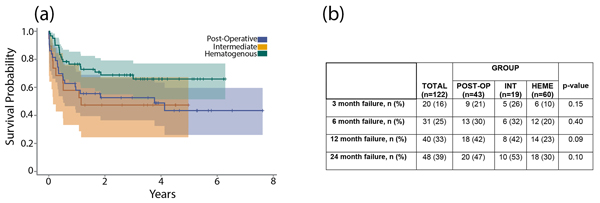
This retrospective study compared debridement and implant retention failure for three types of acute knee replacement infection and analyzed outcomes for patients in a cohort with low medical risk. No differences in failure rate were seen between types in the overall sample or “optimal” cohort. Staphylococcus aureus was less common in later infection, while Streptococcus was less frequent in earlier infection. In an optimal patient, similar outcomes between types may suggest that medical factors do not alter risk.
Cited articles
Bakar, F. A., Yeo, C. C., and Harikrishna, J. A.: Expression of the
Streptococcus pneumoniae yoeB chromosomal toxin gene causes cell death in the model plant
Arabidopsis thaliana, BMC Biotechnol., 15, 26, https://doi.org/10.1186/s12896-015-0138-8, 2015.
Biau, D. J., Larousserie, F., Thevenin, F., Piperno-Neumann, S., and Anract,
P.: Results of 32 allograft-prosthesis composite reconstructions of the
proximal femur, Clin. Orthop. Relat. Res., 468, 834–845,
https://doi.org/10.1007/s11999-009-1132-z, 2010.
Cerca, N., Jefferson, K. K., Oliveira, R., Pier, G. B., and Azeredo, J.:
Comparative antibody-mediated phagocytosis of Staphylococcus epidermidis cells grown in a biofilm or
in the planktonic state, Infect. Immun., 74, 4849–4855, https://doi.org/10.1128/IAI.00230-06,
2006.
Chan, W. T., Moreno-Cordoba, I., Yeo, C. C., and Espinosa, M.:
Toxin-antitoxin genes of the Gram-positive pathogen Streptococcus pneumoniae: so few and yet so
many, Microbiol. Mol. Biol. Rev., 76, 773–791, https://doi.org/10.1128/MMBR.00030-12, 2012.
Chan, W. T., Domenech, M., Moreno-Cordoba, I., Navarro-Martinez, V., Nieto,
C., Moscoso, M., Garcia, E., and Espinosa, M.: The Streptococcus pneumoniae yefM-yoeB and relBE
Toxin-Antitoxin Operons Participate in Oxidative Stress and Biofilm
Formation, Toxins (Basel), 10, 1–15, https://doi.org/10.3390/toxins10090378, 2018.
Costa, A. R., Henriques, M., Oliveira, R., and Azeredo, J.: The role of
polysaccharide intercellular adhesin (PIA) in Staphylococcus epidermidis adhesion to host tissues and
subsequent antibiotic tolerance, Eur. J. Clin. Microbiol. Infect. Dis., 28,
623–629, https://doi.org/10.1007/s10096-008-0684-2, 2009.
Costerton, J. W.: Introduction to biofilm, Int. J. Antimicrob. Agents, 11,
217–221, https://doi.org/10.1016/s0924-8579(99)00018-7, 1999.
DeFrancesco, A. S., Masloboeva, N., Syed, A. K., DeLoughery, A., Bradshaw,
N., Li, G. W., Gilmore, M. S., Walker, S., and Losick, R.: Genome-wide
screen for genes involved in eDNA release during biofilm formation by
Staphylococcus aureus, P. Natl. Acad. Sci. USA, 114, E5969–E5978, https://doi.org/10.1073/pnas.1704544114, 2017.
Del Pozo, J. L.: Biofilm-related disease, Expert Rev. Anti. Infect. Ther., 16,
51–65, https://doi.org/10.1080/14787210.2018.1417036, 2018.
Donlan, R. M.: Biofilm formation: a clinically relevant microbiological
process, Clin. Infect. Dis., 33, 1387–1392, https://doi.org/10.1086/322972, 2001.
Dotto, C., Lombarte Serrat, A., Cattelan, N., Barbagelata, M. S., Yantorno,
O. M., Sordelli, D. O., Ehling-Schulz, M., Grunert, T., and Buzzola, F. R.:
The Active Component of Aspirin, Salicylic Acid, Promotes Staphylococcus aureus Biofilm Formation
in a PIA-dependent Manner, Front. Microbiol., 8, 4, https://doi.org/10.3389/fmicb.2017.00004,
2017.
Fasani, R. A. and Savageau, M. A.: Molecular mechanisms of multiple
toxin-antitoxin systems are coordinated to govern the persister phenotype,
P. Natl. Acad. Sci. USA, 110, E2528–2537, https://doi.org/10.1073/pnas.1301023110, 2013.
Flemming, H. C. and Wingender, J.: The biofilm matrix, Nat. Rev. Microbiol., 8,
623–633, https://doi.org/10.1038/nrmicro2415, 2010.
Gao, Y., Feng, X., Xian, M., Wang, Q., and Zhao, G.: Inducible cell lysis
systems in microbial production of bio-based chemicals, Appl. Microbiol.
Biotechnol., 97, 7121–7129, https://doi.org/10.1007/s00253-013-5100-x, 2013.
Goormaghtigh, F., Fraikin, N., Putrins, M., Hallaert, T., Hauryliuk, V.,
Garcia-Pino, A., Sjodin, A., Kasvandik, S., Udekwu, K., Tenson, T., Kaldalu,
N., and Van Melderen, L.: Reassessing the Role of Type II Toxin-Antitoxin
Systems in Formation of Escherichia coli Type II Persister Cells, mBio, 9, 1–14,
https://doi.org/10.1128/mBio.00640-18, 2018.
Hayes, F. and Van Melderen, L.: Toxins-antitoxins: diversity, evolution and
function, Crit. Rev. Biochem. Mol. Biol., 46, 386–408,
https://doi.org/10.3109/10409238.2011.600437, 2011.
Hemati, S., Azizi-Jalilian, F., Pakzad, I., Taherikalani, M., Maleki, A.,
Karimi, S., Monjezei, A., Mahdavi, Z., Fadavi, M. R., Sayehmiri, K., and
Sadeghifard, N.: The correlation between the presence of quorum sensing,
toxin-antitoxin system genes and MIC values with ability of biofilm
formation in clinical isolates of Pseudomonas aeruginosa, Iran J. Microbiol., 6, 133–139, 2014.
Kato, F., Yabuno, Y., Yamaguchi, Y., Sugai, M., and Inouye, M.: Deletion of
mazF increases Staphylococcus aureus biofilm formation in an ica-dependent manner, Pathog. Dis.,
75, 1–14, https://doi.org/10.1093/femspd/ftx026, 2017.
Kedzierska, B. and Hayes, F.: Emerging Roles of Toxin-Antitoxin Modules in
Bacterial Pathogenesis, Molecules, 21, 1–25, https://doi.org/10.3390/molecules21060790, 2016.
Kobayashi, S. D., Malachowa, N., and DeLeo, F. R.: Pathogenesis of
Staphylococcus aureus abscesses, Am. J. Pathol., 185, 1518–1527, https://doi.org/10.1016/j.ajpath.2014.11.030, 2015.
Ma, D., Shanks, R. M. Q., Davis 3rd, C. M., Craft, D. W., Wood, T. K.,
Hamlin, B. R., and Urish, K. L.: Viable bacteria persist on antibiotic
spacers following two-stage revision for periprosthetic joint infection, J.
Orthop. Res., 36, 452–458, https://doi.org/10.1002/jor.23611, 2018.
Ma, D., Mandell, J. B., Donegan, N. P., Cheung, A. L., Ma, W., Rothenberger,
S., Shanks, R. M. Q., Richardson, A. R., and Urish, K. L.: The
Toxin-Antitoxin MazEF Drives Staphylococcus aureus Biofilm Formation, Antibiotic Tolerance, and
Chronic Infection, mBio, 10, 1–15, https://doi.org/10.1128/mBio.01658-19, 2019.
Mooney, J. A., Pridgen, E. M., Manasherob, R., Suh, G., Blackwell, H. E.,
Barron, A. E., Bollyky, P. L., Goodman, S. B., and Amanatullah, D. F.:
Periprosthetic bacterial biofilm and quorum sensing, J. Orthop. Res., 36,
2331–2339, https://doi.org/10.1002/jor.24019, 2018.
Neut, D., van der Mei, H. C., Bulstra, S. K., and Busscher, H. J.: The role
of small-colony variants in failure to diagnose and treat biofilm infections
in orthopedics, Acta Orthop., 78, 299–308, https://doi.org/10.1080/17453670710013843, 2007.
Nodzo, S. R., Boyle, K. K., Spiro, S., Nocon, A. A., Miller, A. O., and
Westrich, G. H.: Success rates, characteristics, and costs of articulating
antibiotic spacers for total knee periprosthetic joint infection, Knee, 24,
1175–1181, https://doi.org/10.1016/j.knee.2017.05.016, 2017.
Okshevsky, M. and Meyer, R. L.: The role of extracellular DNA in the
establishment, maintenance and perpetuation of bacterial biofilms, Crit. Rev.
Microbiol., 41, 341–352, https://doi.org/10.3109/1040841X.2013.841639, 2015.
Pakkulnan, R., Anutrakunchai, C., Kanthawong, S., Taweechaisupapong, S.,
Chareonsudjai, P., and Chareonsudjai, S.: Extracellular DNA facilitates
bacterial adhesion during Burkholderia pseudomallei biofilm formation, PLoS One, 14, e0213288,
https://doi.org/10.1371/journal.pone.0213288, 2019.
Rice, K. C., Mann, E. E., Endres, J. L., Weiss, E. C., Cassat, J. E.,
Smeltzer, M. S., and Bayles, K. W.: The cidA murein hydrolase regulator
contributes to DNA release and biofilm development in Staphylococcus aureus, P. Natl. Acad. Sci. USA, 104, 8113–8118, https://doi.org/10.1073/pnas.0610226104, 2007.
Rohde, H., Frankenberger, S., Zahringer, U., and Mack, D.: Structure,
function and contribution of polysaccharide intercellular adhesin (PIA) to
Staphylococcus epidermidis biofilm formation and pathogenesis of biomaterial-associated infections,
Eur. J. Cell Biol., 89, 103–111, https://doi.org/10.1016/j.ejcb.2009.10.005, 2010.
Salzberg, L. I. and Helmann, J. D.: An antibiotic-inducible cell
wall-associated protein that protects Bacillus subtilis from autolysis, J. Bacteriol., 189,
4671–4680, https://doi.org/10.1128/JB.00403-07, 2007.
Schuster, C. F. and Bertram, R.: Toxin-Antitoxin Systems of Staphylococcus aureus, Toxins
(Basel), 8, 1–13, https://doi.org/10.3390/toxins8050140, 2016.
Tande, A. J. and Patel, R.: Prosthetic joint infection, Clin. Microbiol. Rev.,
27, 302–345, https://doi.org/10.1128/CMR.00111-13, 2014.
Thomopoulos, S., Parks, W. C., Rifkin, D. B., and Derwin, K. A.: Mechanisms
of tendon injury and repair, J. Orthop. Res., 33, 832–839, https://doi.org/10.1002/jor.22806,
2015.
Tram, T. T. B., Nhung, H. N., Vijay, S., Hai, H. T., Thu, D. D. A., Ha, V.
T. N., Dinh, T. D., Ashton, P. M., Hanh, N. T., Phu, N. H., Thwaites, G. E.,
and Thuong, N. T. T.: Virulence of Mycobacterium tuberculosis Clinical Isolates Is Associated With
Sputum Pre-treatment Bacterial Load, Lineage, Survival in Macrophages, and
Cytokine Response, Front. Cell Infect. Microbiol., 8, 417,
https://doi.org/10.3389/fcimb.2018.00417, 2018.
Urish, K. L., DeMuth, P. W., Kwan, B. W., Craft, D. W., Ma, D., Haider, H.,
Tuan, R. S., Wood, T. K., and Davis 3rd, C. M.: Antibiotic-tolerant
Staphylococcus aureus Biofilm Persists on Arthroplasty Materials, Clin. Orthop. Relat. Res., 474,
1649–1656, https://doi.org/10.1007/s11999-016-4720-8, 2016.
Urish, K. L., Bullock, A. G., Kreger, A. M., Shah, N. B., Jeong, K.,
Rothenberger, S. D., and Infected Implant, C.: A Multicenter Study of
Irrigation and Debridement in Total Knee Arthroplasty Periprosthetic Joint
Infection: Treatment Failure Is High, J. Arthroplasty, 33, 1154–1159,
https://doi.org/10.1016/j.arth.2017.11.029, 2018.
Wang, X., Lord, D. M., Cheng, H. Y., Osbourne, D. O., Hong, S. H.,
Sanchez-Torres, V., Quiroga, C., Zheng, K., Herrmann, T., Peti, W., Benedik,
M. J., Page, R., and Wood, T. K.: A new type V toxin-antitoxin system where
mRNA for toxin GhoT is cleaved by antitoxin GhoS, Nat. Chem. Biol., 8, 855–861,
https://doi.org/10.1038/nchembio.1062, 2012.
Wen, Y., Behiels, E., and Devreese, B.: Toxin-Antitoxin systems: their role
in persistence, biofilm formation, and pathogenicity, Pathog. Dis., 70,
240–249, https://doi.org/10.1111/2049-632X.12145, 2014.
You, Y., Xue, T., Cao, L., Zhao, L., Sun, H., and Sun, B.: Staphylococcus aureus glucose-induced
biofilm accessory proteins, GbaAB, influence biofilm formation in a
PIA-dependent manner, Int. J. Med. Microbiol., 304, 603–612,
https://doi.org/10.1016/j.ijmm.2014.04.003, 2014.
Zimmerli, W. and Sendi, P.: Role of Rifampin against Staphylococcal Biofilm
Infections In Vitro, in Animal Models, and in Orthopedic-Device-Related
Infections, Antimicrob. Agents Chemother., 63, 1–10, https://doi.org/10.1128/AAC.01746-18, 2019.
Short summary
Periprosthetic joint infection (PJI) is one of the most challenging complications following total joint arthroplasty. PJI infections are primarily caused by antibiotic-tolerant biofilms on the surface of the implant. Bacterial toxin antitoxin systems are believed to play a critical role in biofilm antibiotic tolerance and resistance. The objective of this study was to identify the role of the S. aureus toxin YoeB in biofilm formation, antibiotic susceptibility, and virulence.
Periprosthetic joint infection (PJI) is one of the most challenging complications following...