the Creative Commons Attribution 4.0 License.
the Creative Commons Attribution 4.0 License.
 | 24 Aug 2026
Socioeconomic burden of septic re-revision surgeries for periprosthetic joint infections in Europe – a comprehensive analysis of re-revision costs
Dominik Szymski
Susanne Baertl
Nike Walter
Markus Rupp
Katja Hierl
Volker Alt
Introduction: Periprosthetic joint infection (PJI) is a major cause of failure after total hip arthroplasty (THA) and total knee arthroplasty (TKA). While primary PJI treatment costs are increasingly recognized, the economic burden of septic re-revision surgery remains poorly defined. This study estimated septic re-revisions and the reimbursement burden across Europe. Methods: A payor-perspective health-economic model was applied to 30 European countries, combining 2023 Eurostat arthroplasty data with published infection rates to estimate PJIs and septic re-revisions (including after aseptic revisions), categorized as DAIR (debridement, antibiotics, and implant retention), one-stage, or two-stage procedures. Reimbursement used 13-country survey data plus GDP-based extrapolation; sensitivity analyses varied key parameters by ±20 %. Results: In 2023, 2.29 million primary arthroplasties were performed in Europe, resulting in an estimated 22 794 PJIs and 8629 septic re-revisions. Total reimbursement costs were estimated at EUR 123.6 million (EUR 74.1 million THA; EUR 49.5 million TKA), split into EUR 111.6 million after primary PJI treatment and EUR 12.0 million after initially aseptic revision. Two-stage exchanges accounted for 82.8 % of expenditures and were the main cost driver; Germany had the highest national costs. A Monte Carlo probabilistic sensitivity analysis yielded a 95 % credibility interval of EUR 102.0–156.2 million. Conclusion: Septic re-revision surgery after arthroplasty represents a substantial economic burden in Europe, largely driven by two-stage exchange procedures. Reducing infection and treatment failure rates may provide major clinical and financial benefits: a 25 % reduction in PJI incidence could save EUR 27.9 million annually (22.6 %), and shifting half of two-stage cases to one-stage a further EUR 22.6 million (18.3 %).
- Article
(917 KB) - Full-text XML
-
Supplement
(640 KB) - BibTeX
- EndNote


Periprosthetic joint infection (PJI) remains one of the most devastating complications after total hip and knee arthroplasty. Despite continuous improvements in surgical techniques, perioperative management, and infection prevention strategies, PJIs occur in approximately 1 % of primary arthroplasties and are a leading cause of early failure (Springer et al., 2017). Beyond the profound clinical consequences for affected patients – characterized by pain, functional impairment, repeated surgeries, and prolonged antimicrobial therapy – PJIs impose a substantial economic burden on healthcare systems (Lawrence et al., 2024; Szymski et al., 2024).
While the costs of primary PJI treatment have been examined in several national studies (Garrido-Gómez et al., 2013; Kasch et al., 2016; Kasch et al., 2017; Romanò et al., 2010; Serrier et al., 2021; Sousa et al., 2018), far less attention has been paid to the socioeconomic impact of septic re-revision surgeries. Treatment failure requiring recurrent revision after an initial PJI intervention occurs in up to 30 % of hip arthroplasty cases and more than 20 % of knee arthroplasty cases, often necessitating further complex surgical procedures (Becker et al., 2025; Resl et al., 2024). These re-revisions are associated with longer hospital stays, higher complication rates, and markedly higher treatment expenses compared with primary revision procedures (Rodriguez-Merchan, 2024; Yu et al., 2020). However, comprehensive European-wide analyses quantifying this financial burden are lacking.
Existing literature has focused on single-country data or primary PJI costs; heterogeneous healthcare systems across Europe make extrapolation difficult (Alt et al., 2025). Moreover, the additional burden of septic failure after aseptic revision arthroplasty has rarely been incorporated into economic models, despite representing a clinically relevant proportion of cases.
Therefore, a robust European-level health-economic evaluation is needed. The aims of this study were (1) to estimate the number of septic re-revisions after PJI and after initially aseptic revisions in hip and knee arthroplasty across Europe; and (2) to calculate the corresponding reimbursement burden under different treatment options.
This study is a socioeconomic analysis of periprosthetic joint infections and subsequent septic re-revisions of hip and knee arthroplasties in Europe. The analysis is based on data from the Statistical Office of the European Union (Eurostat), previously published epidemiological literature on infection and failure rates, and national reimbursement data for PJI treatment (Springer et al., 2017; Szymski et al., 2024; Becker et al., 2025; Resl et al., 2024; Alt et al., 2025; Lenguerrand et al., 2022; Leta et al., 2015). This analysis follows CHEERS 2022 guidance (checklist in the Supplement). “Septic re-revision” denotes any revision for infection, whether the preceding revision was itself septic (failed PJI treatment) or aseptic; these two populations are analysed separately throughout.
2.1 Health-economic modelling
The health-economic model was developed from the perspective of healthcare payors to assess the financial impact on healthcare systems across European countries. The analysis focused primarily on the reimbursement burden borne by public healthcare systems, which represent the predominant funding mechanism in Europe. Reimbursement from public payors was assumed to approximate basic payments from the private sector, as the data obtained from the Statistical Office of the European Union (Eurostat) do not differentiate between public and private healthcare provision. This assumption can be considered conservative, since private healthcare delivery is generally associated with higher costs and reimbursement levels.
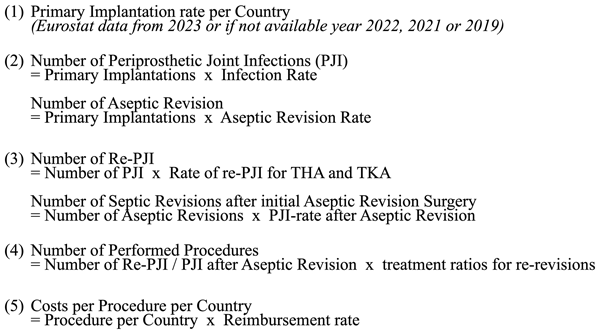
The model followed a five-step calculation process (Fig. 1; Alt et al., 2025). First, Eurostat data from 2023 on the number of primary hip and knee arthroplasties were identified; if not available for 2023, data from previous years were utilized (Fig. 1, Eq. 1). Second, primary implantations were combined with published infection rates to estimate the total number of hip and knee periprosthetic joint infections (PJIs) and combined with published rates for aseptic revisions to identify the number of primary aseptic revisions across 30 European countries (Fig. 1, Eq. 2; Springer et al., 2017; Straub et al., 2024; Szymski et al., 2023). Third, the rate of septic revisions following PJI treatment and following initial aseptic revision surgery was estimated based on previously published rates (Fig. 1, Eq. 3; Becker et al., 2025; Resl et al., 2024; Lenguerrand et al., 2022; Leta et al., 2015). Fourth, the re-revision procedures performed were estimated based on published treatment ratios for septic re-revisions (Lenguerrand et al., 2022). Revision procedures were classified into three categories: (1) debridement, antibiotics, and implant retention (DAIR); (2) one-stage exchange; and (3) two-stage revision procedures (Fig. 1, Eq. 4). Fifth, these procedure volumes were multiplied by the corresponding reimbursement payments (Fig. 1, Eq. 5). Reimbursement data were obtained through a survey conducted in 13 countries (Austria, Croatia, France, Germany, Italy, Lithuania, the Netherlands, Norway, Portugal, Slovenia, Switzerland, Türkiye, and the UK) and extrapolated to the remaining countries using mean gross domestic product (GDP) values as reported in Alt et al. (2025). Eurostat data were the “Surgical procedures” dataset (hlth_co_proc3, extraction ID 19281055). The Lenguerrand et al. treatment strategy distribution (DAIR 3.8 %; one-stage 23.1 %; two-stage 70.4 %) was derived from a single English/Welsh registry and applied uniformly across countries; because practice mix varies across Europe, reported costs represent a uniform-practice projection rather than country-specific observed costs.
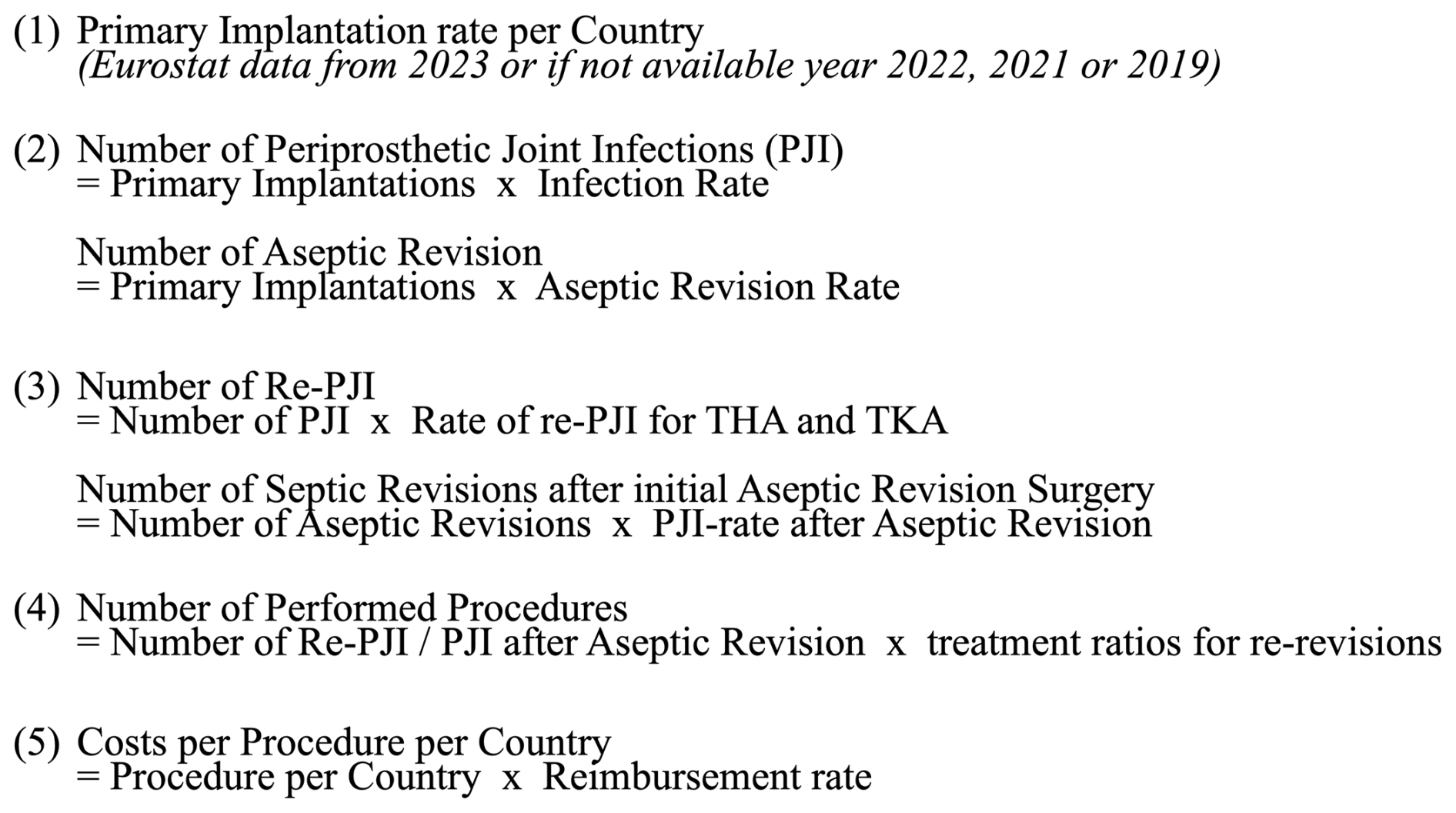
Figure 1Study methods of estimation of re-revision procedures after periprosthetic joint infection and initial aseptic revision for total hip arthroplasty (THA) and total knee arthroplasty (TKA) in Europe in 2023.
2.2 Calculation of reimbursement payments
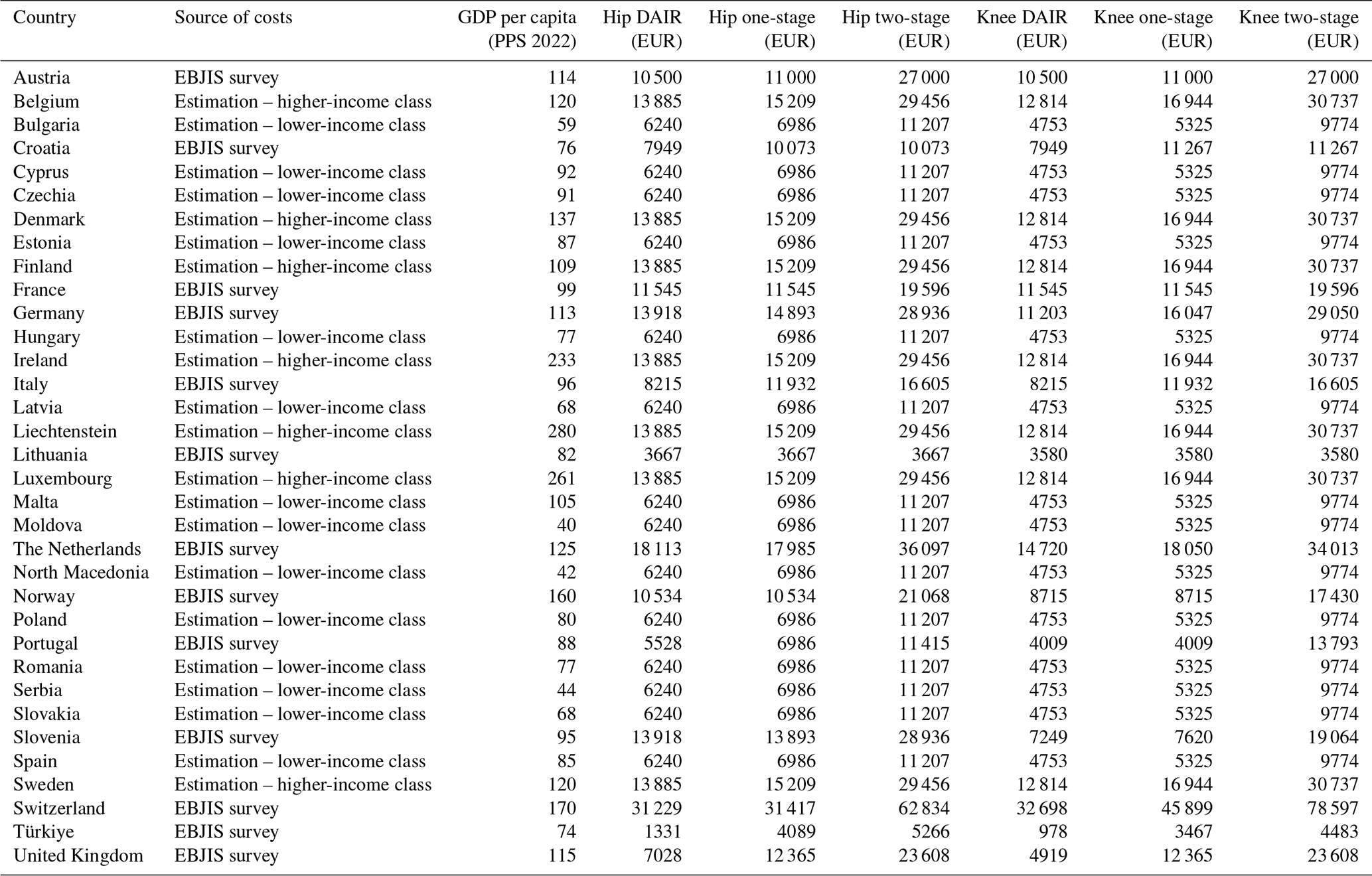
Based on Alt et al. (2025), in the subsequent step, information on reimbursement payments received by hospitals from public healthcare funders for DAIR, one-stage, and two-stage PJI treatments was collected from 13 European countries through a survey coordinated by the EBJIS Country Delegates Group. For countries without direct data, a classification into higher- and lower-income groups was performed based on GDP per capita, sourced from Eurostat. GDP per capita ranged from 42 Purchasing Power Standards (PPS) in North Macedonia to 261 PPS in Luxembourg, with a European average of 101 PPS serving as the threshold for categorization (Table 1). Reimbursement amounts for each procedure type were multiplied by the corresponding number of interventions per country to estimate total payments per category (Fig. 1, Eq. 5). These were aggregated to national and European totals. Non-EUR costs were converted using 26 May 2023 exchange rates; public/private reimbursement equivalence was assumed for a conservative estimate. The GDP-tier extrapolation was validated by leave-one-out cross-validation (see Supplement).
A deterministic one-way sensitivity analysis was performed by varying key parameters by ±20 %: (1) incidence of primary PJI, (2) septic failure rate after PJI treatment, and (3) proportion of two-stage exchange procedures. Changes in PJI incidence and failure rates affected only the number of septic re-revisions after PJI, while infections after aseptic revision remained constant. For treatment strategy distribution, the two-stage share was modified by ±20 % relative to baseline, with the remaining proportion reallocated to one-stage procedures while keeping the total number of re-revisions unchanged. Total European reimbursement costs were recalculated for each scenario and compared with the base case.
To characterize compound parameter uncertainty, a probabilistic sensitivity analysis (10 000 Monte Carlo iterations; Beta-distributed rates, Dirichlet-distributed treatment mix, lognormal reimbursement values) was additionally performed; full distributional assumptions are detailed in the Supplement. The width of the resulting credibility interval is inherited directly from the ±20 % relative uncertainty assumed for the Beta- and Dirichlet-calibrated epidemiological and treatment-mix parameters, except for reimbursement values in GDP-tier-extrapolated countries, where the lognormal multiplier instead uses the empirical leave-one-out cross-validation error (70.7 % THA, 80.8 % TKA) rather than the ±20 % assumption.
Table 1Costs for THA and TKA revision procedures from EBJIS survey data and income-class estimation.
3.1 Total number of hip and knee PJIs in Europe for primary arthroplasty performed in 2023
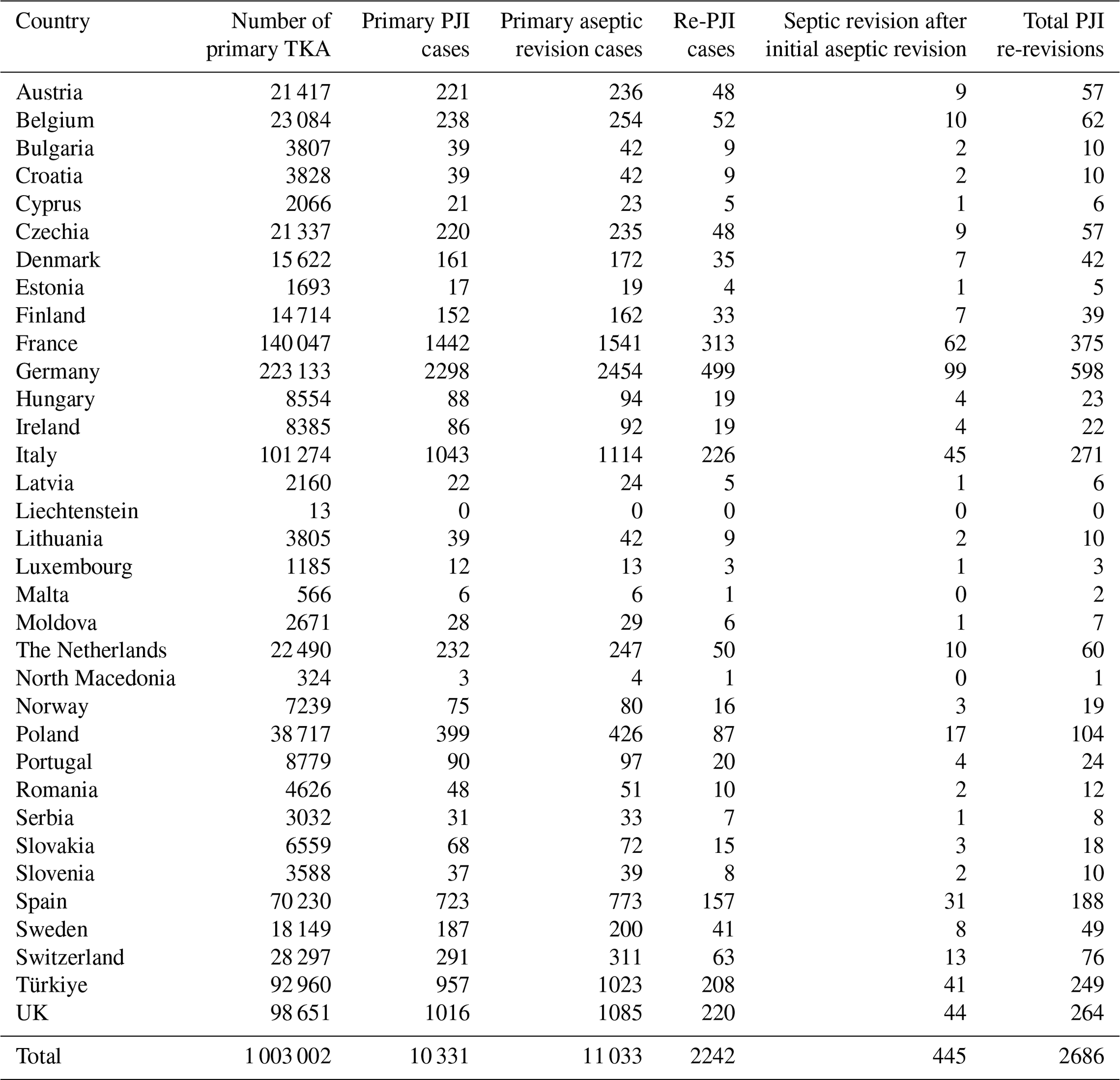
According to the data provided by Eurostat, the Statistical Office of the European Union for 2023, there were 1 003 002 primary TKA and 1 284 887 primary THA performed, with a combined total of 2 287 889 primary THA and TKA procedures in Europe. Most procedures were performed in Germany (THA: 292 143, TKA: 223 133, THA + TKA: 515 276), followed by France (THA: 184 264, TKA: 140 047, THA + TKA: 324 311), the UK (THA: 124 322, TKA: 98 651, THA + TKA: 222 973), and Italy (THA: 130 640, TKA: 101 274, THA + TKA: 231 914) (Tables 2 and 3).
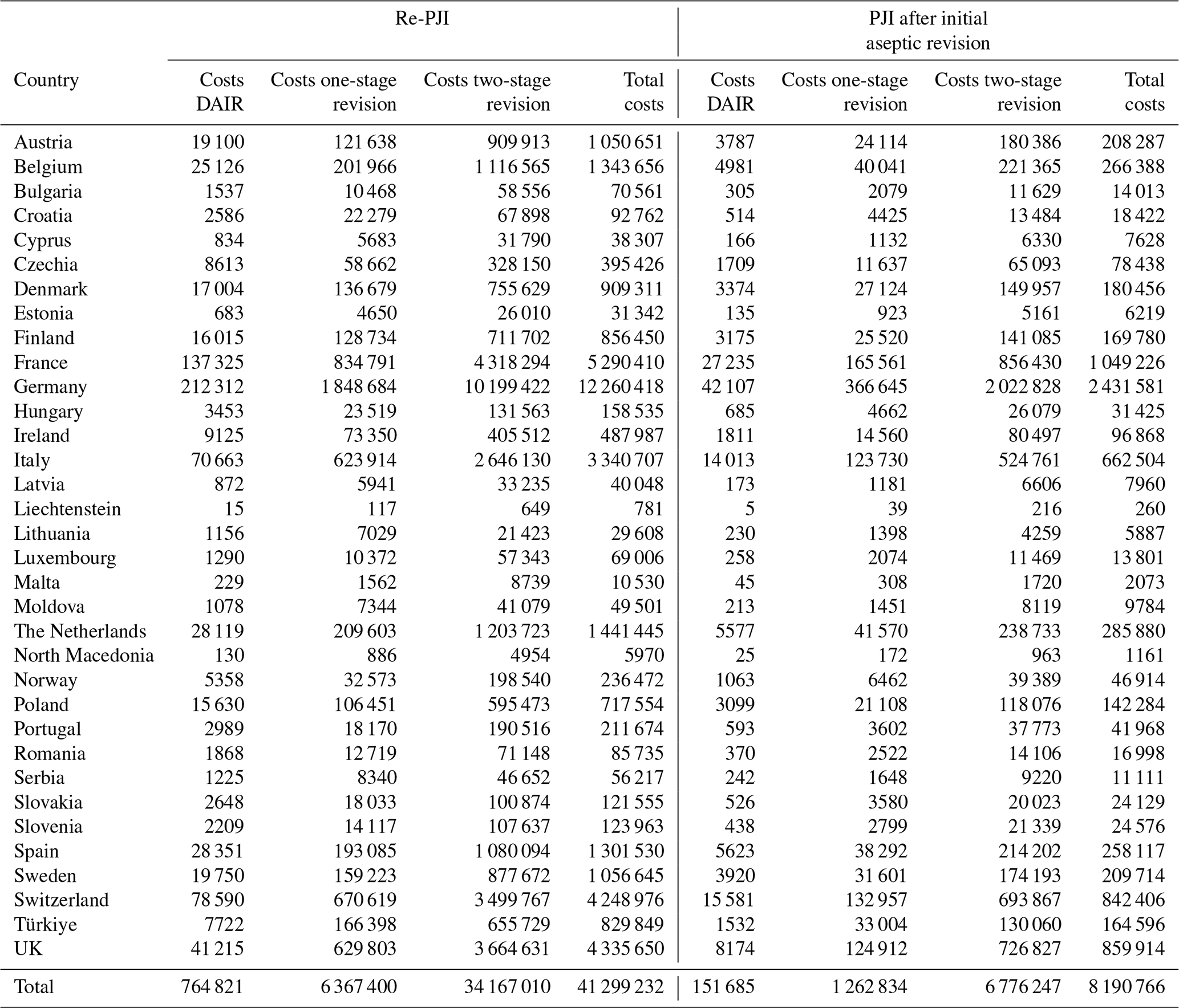
Assuming infection rates for TKA and THA of 1.03 % and 0.97 %, respectively, as reported by Springer et al. (2017) in a review analysing PJI incidence rates from several international arthroplasty registries, the estimated total annual number of hip and knee PJIs is 22 794. This figure includes 12 463 hip PJI cases and 10 331 knee PJI cases, arising from primary THA and TKA performed in 2023 (Tables 2 and 3). These base-case rates already represent an unweighted average across six national/regional arthroplasty registries (AOANJRR, New Zealand, Swedish Hip and Knee Arthroplasty Registers, National Joint Registry, American Joint Replacement Registry) rather than a single-source estimate. A more recent registry-based estimate combining the Danish Knee Arthroplasty Registry with the Danish national infection surveillance system reported a cumulative 1-year PJI incidence of 0.8 %–1.1 % for TKA, closely consistent with the 1.03 % base-case value used here; this comparison is retained as a validation check rather than a base-case change, as fully registry-stratified rates by joint and fixation type (cemented vs cementless) were not available for all 30 countries at the time of this analysis. To quantify the impact of this range on the model rather than reporting it only as a qualitative validation check, we re-ran the TKA reimbursement calculation with the PJI incidence fixed at 0.8 % and at 1.1 %, holding all other parameters at their base-case values. TKA re-PJI reimbursement costs, EUR 41,299,232 at the 1.03 % base case, changed to EUR 32 077 073 (−22.3 %) at 0.8 % and EUR 44 105 976 (+6.8 %) at 1.1 %; propagated through the full model, the European grand total shifted from EUR 123.6 million to EUR 114.3 million (−7.5 %) and EUR 126.4 million (+2.3 %) at the low and high ends of the Danish range, respectively. As this sensitivity range lies within the ±20 % deterministic bounds already reported above, we retain the Springer et al. (2017) base-case rate but present this arm explicitly rather than as a narrative aside.
Based on the reported septic re-revision rate after already performed surgical treatment of PJI of 30 % in THA and 21.7 % in TKA by Resl et al. (2024) and Becker et al. (2025), the number of septic re-revisions was 5981 (THA: 3739; TKA: 2242).
Simultaneously, to address septic re-revisions after an initial aseptic revision surgery in arthroplasties, a total of 23 882 aseptic revisions (THA: 12 849; TKA: 11 033) were identified, based on previous reported rates in the literature by Szymski et al. (2023) and Straub et al. (2024). Within the aseptic revision population, a total number of septic re-revisions of 648 (THA: 203; TKA: 445) was assumed based on Lenguerrand et al. (2022) and Leta et al. (2015) (Tables 2 and 3).
Table 2Number of primary THA in Europe in 2023, with estimated primary PJI and aseptic revision cases, and number of re-revisions.
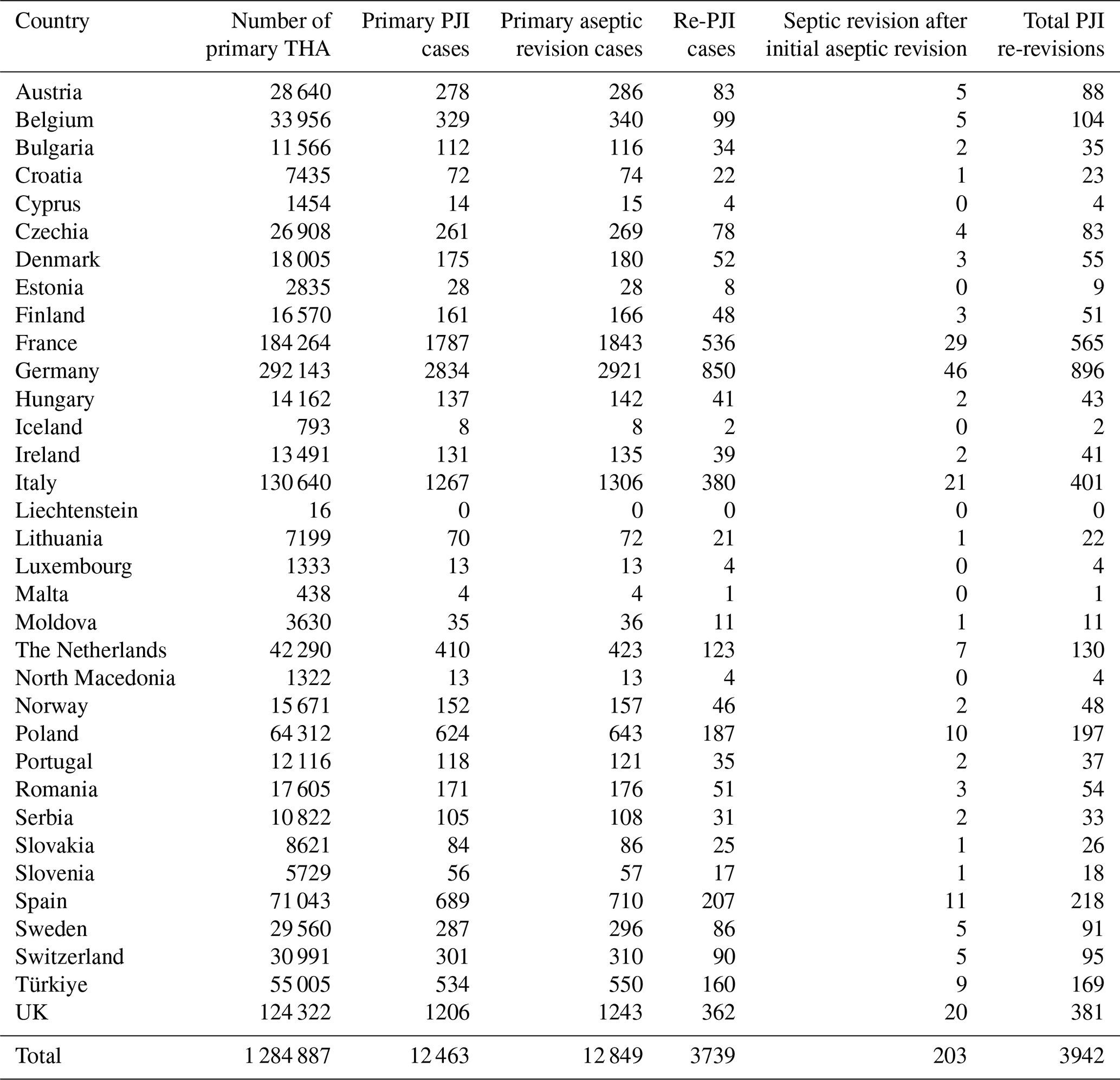
Table 3Number of primary TKA in Europe in 2023, with estimated primary PJI and aseptic revision cases, and number of re-revisions.
3.2 Estimation of DAIR, one-stage, and two-stage procedures per country
Based on the data of Lenguerrand et al. (2022), performed procedures in Europe were estimated for re-revisions, with 3.8 % being treated with a DAIR procedure, 23.1 % with a one-stage revision, and 70.4 % with a two-stage procedure.
By treatment strategy, THA re-revisions comprised 150 DAIR, 911 one-stage, and 2775 two-stage procedures; TKA comprised 102 DAIR, 621 one-stage, and 1891 two-stage procedures.
For THA, this comprised DAIR/one-stage/two-stage cases for re-PJI and after aseptic revision.
For TKA, this comprised for re-PJI and after aseptic revision.
3.3 Reimbursement payments for DAIR, one-stage, and two-stage PJI procedures per country
Reimbursement per procedure was taken from published country-specific billing data for 13 countries, as reported by Alt et al. (2025), stratified by surgical strategy and joint (Table 1).
3.4 Health-economic burden of septic re-revision after PJI and aseptic revision in THA and TKA in 2023 in Europe
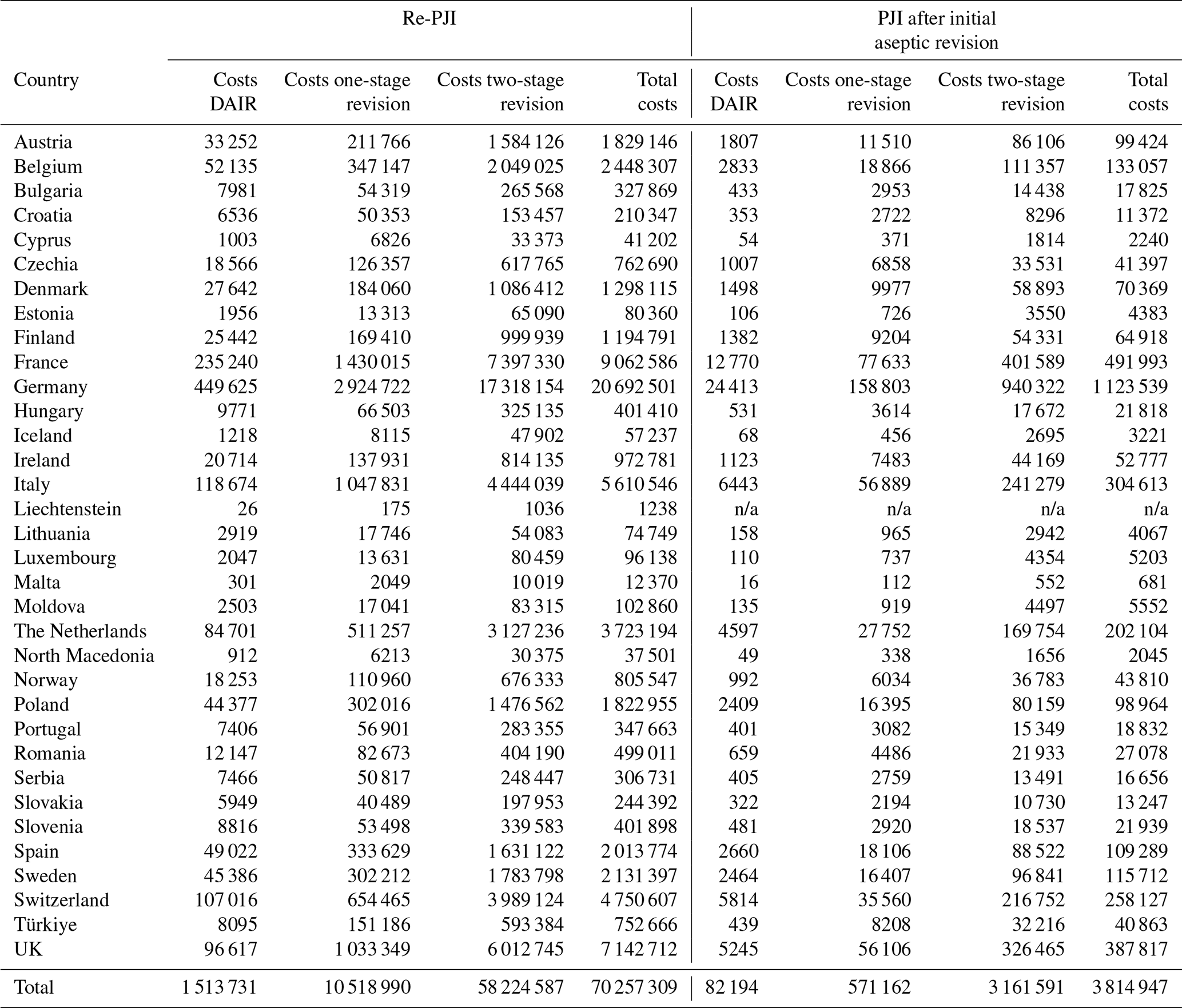
For re-PJI treatment in hip arthroplasty performed in 2023, total reimbursement payments across all European countries were estimated at EUR 70 257 309, with the highest country-specific costs of EUR 20 692 501 in Germany. For septic revision after initial aseptic revision surgery, the total costs of EUR 3 814 947 in Europe in 2023 were identified.
Major drivers were two-stage revisions, with a total of EUR 58 224 587 in re-PJI of the hip and EUR 3 814 947 in septic revisions after aseptic revisions (Table 4).
In knee arthroplasty, total reimbursement payments for re-PJI treatments were EUR 41 299 231, with the highest country-specific costs in Germany (EUR 12 260 418) and France (EUR 5 290 410). Septic revisions after an initial aseptic revision of TKA accounted for EUR 8 190 765 in Europe in 2023. Simultaneously, two-stage revision was the major cost driver in TKA for re-PJI and septic revisions after initial aseptic exchange, with costs of EUR 34 167 010 and EUR 6 776 247, respectively (Table 5).
Overall, European healthcare systems are expected to face a total reimbursement burden of EUR 123 562 255 (≈ EUR 123.6 million) for septic re-revision surgery performed in 2023. Because the two source populations are epidemiologically distinct (see Methods), this total is reported as the sum of two separate estimates rather than a single aggregated figure: EUR 111 556 541 for re-revision following surgical treatment of primary PJI (THA EUR 70 257 309; TKA EUR 41 299 232) and EUR 12 005 714 for septic re-revision after an initially aseptic revision (THA EUR 3 814 948; TKA EUR 8 190 766). Of this total, the 13 directly surveyed countries (Austria, Croatia, France, Germany, Italy, Lithuania, the Netherlands, Norway, Portugal, Slovenia, Switzerland, Türkiye, and the UK) account for EUR 98 547 420 (79.8 %), with the GDP-tier extrapolation for the remaining 21–22 countries contributing the remaining EUR 25 014 835 (20.2 %); this subtotal is reported alongside the total, rather than in place of it, so that readers can judge the relative weight of directly observed versus extrapolated reimbursement data.
Varying PJI incidence or septic failure rates by ±20 % changed overall costs to EUR 101.3–145.9 million (±18.1 %); varying the two-stage share by ±20 % changed costs to EUR 114.5–132.6 million (±7.3 %). Fluctuations were larger for THA (EUR 68.6–79.6 million) than TKA (EUR 46.0–53.0 million), reflecting THA's greater share of baseline expenditure.
A country-level Monte Carlo PSA (10 000 iterations; Methods) yielded a median total of EUR 126.2 million (95 % credibility interval EUR 102.0–156.2 million; THA EUR 55.5–101.3 million, TKA EUR 38.2–66.6 million), consistent with the deterministic bounds above.
Leave-one-out cross-validation of the GDP-tier extrapolation showed a mean absolute percentage error of 70.7 % (THA) and 80.8 % (TKA), confirming GDP per capita is an imperfect proxy for individual-country reimbursement, although errors partially offset when aggregated to the European total (see Supplement).
Two counterfactual scenarios were modelled to illustrate the potential impact of prevention and treatment-pathway optimization. A 25 % reduction in PJI incidence (holding all other parameters at base-case values) reduced the projected total to EUR 95.7 million, a saving of EUR 27.9 million per year (22.6 %), avoiding an estimated 935 THA and 560 TKA re-revisions. Shifting 50 % of two-stage candidates to one-stage exchange (holding incidence constant) reduced the projected total to EUR 100.9 million, a saving of EUR 22.6 million (18.3 %). Combining both interventions reduced the projected total to EUR 78.2 million, a saving of EUR 45.4 million (36.8 %).
Table 4Costs for treatment of re-revisions of THA in Europe (n/a – not available).
The most important finding of the present study is that septic re-revision surgery after hip and knee arthroplasty represents a substantial and previously under-recognized economic burden for European healthcare systems. Based on current procedure volumes and published failure rates, more than 8000 septic re-revisions are expected annually across Europe, generating direct hospital reimbursement costs exceeding EUR 120 million. The majority of these expenditures were attributable to two-stage exchange procedures, which accounted for 82.8 % of total costs despite representing 70.4 % of all interventions.
These data demonstrate that treatment failure after an initial PJI intervention is not only a major clinical challenge but also a key driver of rising arthroplasty-related healthcare spending (Becker et al., 2025; Resl et al., 2024).
Previous health-economic analyses have largely focused on the costs of primary PJI management (Szymski et al., 2024; Alt et al., 2025). Several national studies have shown that two-stage revision is associated with the highest resource consumption due to prolonged hospital stay, repeated surgeries, and extensive antimicrobial therapy (Kasch et al., 2016; Serrier et al., 2021; Sousa et al., 2018; Assmann et al., 2014). The present analysis expands this knowledge by specifically addressing the re-revision setting at a European level. Patients requiring septic re-revision typically present with compromised bone stock, poor soft-tissue conditions, and multiple comorbidities, all of which increase surgical complexity and complication rates. Note that the high two-stage proportion driving costs reflects the input treatment strategy distribution (applied uniformly from a single registry), not an observation from the underlying European re-revision data (Lenguerrand et al., 2022).
A further relevant aspect of this study is the inclusion of septic failures after the initial aseptic revision arthroplasty. While most previous reports considered only reinfections after treatment of a primary PJI, registry data indicate that infection is also a frequent mode of failure following aseptic revision procedures (Lenguerrand et al., 2022; Leta et al., 2015). Our estimates suggest that this subgroup alone generates more than EUR 12 million in additional annual costs in Europe. Ignoring this component would therefore lead to a significant underestimation of the true socioeconomic burden of arthroplasty-related infections.
These findings have clinical and health-policy implications, underlining the importance of preventing not only primary PJI but also treatment failure. The optimization of DAIR patient selection is essential, as inadequate selection and delayed recognition of persistent infection are major drivers of early failure (Okafor et al., 2023); careful consideration of infection chronicity, implant stability, soft-tissue condition, and host comorbidities is needed to identify patients at higher risk who warrant alternative strategies (Sigmund et al., 2025). The cost differential between an appropriately selected DAIR, and a DAIR that fails and requires two-stage exchange is substantial (THA: EUR 10 654 vs EUR 32 774, TKA: EUR 8978 vs EUR 30 626), underscoring the fact that DAIR selection criteria carry direct economic implications. The centralization of care in specialized PJI centres with multidisciplinary teams may improve outcomes and reduce the need for costly re-revisions (Rupp et al., 2023; Walter et al., 2022; Winter et al., 2024). Second, the current reimbursement structures in many European countries may not adequately reflect the complexity of these procedures. Underfunding of re-revision surgery could threaten access to specialized treatment and disincentivize hospitals from accepting these high-risk patients (Alt et al., 2025).
Registry data confirm that septic revision and revision history are among the strongest predictors of re-revision, with risk concentrated in the first postoperative year (Becker et al., 2025; Resl et al., 2024), underscoring the value of close early postoperative surveillance.
Several limitations must be considered when interpreting the results. The model relied on uniform infection and failure rates derived from the literature, although true incidences vary between countries, hospitals, and patient populations. Reimbursement data were directly available for only part of Europe; for the remaining countries, GDP-based extrapolation was used, which cannot capture all national specificities of reimbursement systems and, in leave-one-out validation, produced a mean absolute percentage error of 71 %–81 % per country (Supplement). The model was not validated against an independent national cost dataset (e.g. German InEK DRG statistics), which we recommend for future collaborative work with national registries. Only direct hospital payments were considered; outpatient care, rehabilitation, antimicrobial therapy, productivity loss, and quality-of-life costs were excluded. From a societal perspective, the true burden is likely considerably higher than the EUR 123.6 million reported: applying the 2- to 4-fold underestimation factor reported for indirect costs in PJI modelling (Parisi et al., 2017), the societal-perspective burden may plausibly reach EUR 247–494 million annually (illustrative estimate). The study focused on DAIR, one-stage, and two-stage procedures; resection, arthrodesis, or fistula formation could not be included due to insufficient data.
Despite these limitations, the study provides the first comprehensive European estimate of the financial consequences of septic re-revision surgery after hip and knee arthroplasty. The results highlight the fact that failure after PJI treatment is not a rare exception but a frequent event (Becker et al., 2025; Resl et al., 2024), with major economic repercussions. Future research should aim to generate country-specific real-world cost data to evaluate the cost-effectiveness of preventive strategies and to identify modifiable risk factors for treatment failure. Reducing the incidence of septic re-revisions would not only improve patient outcomes but also offer substantial savings for European healthcare systems.
Septic re-revision surgery following hip and knee arthroplasty constitutes a major socioeconomic challenge in Europe, resulting in annual hospital reimbursement costs exceeding EUR 120 million. Two-stage exchange procedures are the predominant cost driver. In addition to failures after primary PJI treatment, infections occurring after initially aseptic revisions contribute substantially to this burden.
These findings emphasize the urgent need for effective prevention strategies, optimized treatment algorithms, and adequate reimbursement structures. Investment in specialized PJI care and research aimed at reducing re-revision rates has the potential to yield significant clinical and economic benefits for European healthcare systems.
The model draws on three categories of input data with different access statuses: (1) primary arthroplasty volumes are public Eurostat data (dataset hlth_co_proc3, custom extraction ID 19281055, https://ec.europa.eu/eurostat, last access: 20 April 2026), freely accessible without restriction; (2) epidemiological rates (infection, failure, and treatment strategy proportions) are taken from the published, peer-reviewed literature cited throughout the paper and are publicly available via the respective journals; (3) country-specific reimbursement values were collected through a survey coordinated by the EBJIS Country Delegates Group (see Alt et al., 2025). Reimbursement values were recorded and are retained only in euro as reported by country delegates, and the original local-currency figures underlying these conversions were not retained by the authors.
The supplement related to this article is available online at https://doi.org/10.5194/jbji-11-523-2026-supplement.
Conceptualization: DS, VA, and KH. Methodology: VA, SB, and MR. Formal analysis and investigation: NW and DS. Writing (original draft preparation): DS and SB. Writing (review and editing): all authors. Supervision: MR and VA. All authors read and approved the final paper.
At least one of the (co-)authors is a member of the editorial board of Journal of Bone and Joint Infection. The peer-review process was guided by an independent editor, and the authors also have no other competing interests to declare.
Ethical approval was not required for this study, as it is a health-economic modelling analysis based exclusively on publicly available aggregated data.
Publisher's note: Copernicus Publications remains neutral with regard to jurisdictional claims made in the text, published maps, institutional affiliations, or any other geographical representation in this paper. The authors bear the ultimate responsibility for providing appropriate place names. Views expressed in the text are those of the authors and do not necessarily reflect the views of the publisher.
This paper was edited by Derek Amanatullah and reviewed by two anonymous referees.
Alt, V., Szymski, D., Rupp, M., Fontalis, A., Vaznaisiene, D., Marais, L. C., Wagner, C., and Walter, N.: The health-economic burden of hip and knee periprosthetic joint infections in Europe: a comprehensive analysis following primary arthroplasty, Bone Jt. Open, 6, 298–311, https://doi.org/10.1302/2633-1462.63.BJO-2024-0225.R1, 2025.
Assmann, G., Kasch, R., Maher, C. G., Hofer, A., Barz, T., Merk, H., and Flessa, S.: Comparison of health care costs between aseptic and two stage septic hip revision, J. Arthroplasty, 29, 1925–1931, https://doi.org/10.1016/j.arth.2014.04.043, 2014.
Becker, L., Resl, M., Grimberg, A., Wu, Y., Gwinner, C., and Perka, C.: Much higher re-revision rates and mortality following septic revision total knee arthroplasty compared to meta-analyses: a registry study, Bone Jt. J., 107-B, 896–904, https://doi.org/10.1302/0301-620X.107B9.BJJ-2024-1440.R1, 2025.
Garrido-Gómez, J., Arrabal-Polo, M. A., Girón-Prieto, M. S., Cabello-Salas, J., Torres-Barroso, J., and Parra-Ruiz, J.: Descriptive analysis of the economic costs of periprosthetic joint infection of the knee for the public health system of Andalusia, J. Arthroplasty, 28, 1057–1060, https://doi.org/10.1016/j.arth.2013.02.012, 2013.
Kasch, R., Assmann, G., Merk, S., Barz, T., Melloh, M., Hofer, A., Merk, H., and Flessa, S.: Economic analysis of two-stage septic revision after total hip arthroplasty: What are the relevant costs for the hospital's orthopedic department?, BMC Musculoskelet. Disord, 17, 112, https://doi.org/10.1186/s12891-016-0962-6, 2016.
Kasch, R., Merk, S., Assmann, G., Lahm, A., Napp, M., Merk, H., and Flessa, S.: Comparative Analysis of Direct Hospital Care Costs between Aseptic and Two-Stage Septic Knee Revision, PLOS ONE, 12, e0169558, https://doi.org/10.1371/journal.pone.0169558, 2017.
Lawrence, K. W., Raymond, H. E., Sicat, C. S., Roof, M. A., Arshi, A., Rozell, J. C., and Schwarzkopf, R.: Indications, Clinical Outcomes, and Re-Revisions Following Revision Total Hip Arthroplasty – Does Age Matter?, J. Arthroplasty, 39, 1036–1043, https://doi.org/10.1016/j.arth.2023.10.034, 2024.
Lenguerrand, E., Whitehouse, M. R., Kunutsor, S. K., Beswick, A. D., Baker, R. P., Rolfson, O., Reed, M. R., and Blom, A. W., on behalf of the National Joint Registry for England, Wales, Northern Ireland and the Isle of Man: Mortality and re-revision following single-stage and two-stage revision surgery for the management of infected primary knee arthroplasty in England and Wales: evidence from the National Joint Registry, Bone Jt. Res., 11, 690–699, https://doi.org/10.1302/2046-3758.1110.BJR-2021-0555.R1, 2022.
Leta, T. H., Lygre, S. H. L., Skredderstuen, A., Hallan, G., and Furnes, O.: Failure of aseptic revision total knee arthroplasties: 145 revision failures from the Norwegian Arthroplasty Register, 1994–2011, Acta Orthop., 86, 48–57, https://doi.org/10.3109/17453674.2014.964097, 2015.
Okafor, C. E., Nghiem, S., and Byrnes, J.: One-stage revision versus debridement, antibiotics, and implant retention (DAIR) for acute prosthetic knee infection: an exploratory cohort study, Arch. Orthop. Trauma Surg., 143, 5787–5792, https://doi.org/10.1007/s00402-023-04891-1, 2023.
Parisi, T. R., Konopka, J. F., and Bedair, H. S.: What is the Long-term Economic Societal Effect of Periprosthetic Infections After THA? A Markov Analysis, Clin. Orthop. Relat. Res., 475, 1891–900, https://doi.org/10.1007/s11999-017-5333-6, 2017.
Resl, M., Becker, L., Steinbrück, A., Wu, Y., and Perka, C.: Re-revision and mortality rate following revision total hip arthroplasty for infection: an underestimated problem, Bone Jt. J., 106-B, 565–572, https://doi.org/10.1302/0301-620X.106B6.BJJ-2023-1181.R1, 2024.
Rodriguez-Merchan, E. C.: Re-revision Total Knee Arthroplasty: Causes Risk Factors and Results, Arch. Bone Jt. Surg., 12, 328–332, https://doi.org/10.22038/abjs.2024.75456.3490, 2024.
Romanò, C. L., Romanò, D., Logoluso, N., and Meani, E.: Septic versus aseptic hip revision: how different?, J. Orthop. Traumatol., 11, 167–174, https://doi.org/10.1007/s10195-010-0106-y, 2010.
Rupp, M., Walter, N., Popp, D., Hitzenbichler, F., Heyd, R., Geis, S., Kandulski, M., Thurn, S., Betz, T., Brochhausen, C., and Alt, V.: Multidisciplinary Treatment of Fracture-Related Infection Has a Positive Impact on Clinical Outcome – A Retrospective Case Control Study at a Tertiary Referral Center, Antibiotics, 12, 230, https://doi.org/10.3390/antibiotics12020230, 2023.
Serrier, H., Julien, C., Batailler, C., Mabrut, E., Brochier, C., Thevenon, S., Maynard-Muet, M., Henry, A., Lustig, S., Huot, L., Ferry, T., and Lyon BJI Study group: Economic Study of 2-Stage Exchange in Patients With Knee or Hip Prosthetic Joint Infection Managed in a Referral Center in France: Time to Use Innovative(s) Intervention(s) at the Time of Reimplantation to Reduce the Risk of Superinfection, Front Med., 8, 552669, https://doi.org/10.3389/fmed.2021.552669, 2021.
Sigmund, I. K., Ferry, T., Sousa, R., Soriano, A., Metsemakers, W.-J., Clauss, M., Trebse, R., and Wouthuyzen-Bakker, M.: Debridement, antimicrobial therapy, and implant retention (DAIR) as curative strategy for acute periprosthetic hip and knee infections: a position paper of the European Bone & Joint Infection Society (EBJIS), J. Bone Jt. Infect., 10, 101–138, https://doi.org/10.5194/jbji-10-101-2025, 2025.
Sousa, A., Carvalho, A., Pereira, C., Reis, E., Santos, A. C., Abreu, M., Soares, D., Fragoso, R., Ferreira, S., Reis, M., and Sousa, R.: Economic Impact of Prosthetic Joint Infection – an Evaluation Within the Portuguese National Health System, J. Bone Jt. Infect., 3, 197–202, https://doi.org/10.7150/jbji.28508, 2018.
Springer, B. D., Cahue, S., Etkin, C. D., Lewallen, D. G., and McGrory, B. J.: Infection burden in total hip and knee arthroplasties: an international registry-based perspective, Arthroplasty Today, 3, 137–140, https://doi.org/10.1016/j.artd.2017.05.003, 2017.
Straub, J., Szymski, D., Walter, N., Wu, Y., Melsheimer, O., Grimberg, A., Alt, V., Steinbrueck, A., and Rupp, M.: What are the age-related factors linked to aseptic revisions in constrained and unconstrained TKA as well as UKA? A register-based study from the German arthroplasty registry (EPRD), Arch. Orthop. Trauma Surg., 144, 4463–4474, https://doi.org/10.1007/s00402-024-05550-9, 2024.
Szymski, D., Walter, N., Krull, P., Melsheimer, O., Schindler, M., Grimberg, A., Alt, V., Steinbrueck, A., and Rupp, M.: Comparison of mortality rate and septic and aseptic revisions in total hip arthroplasties for osteoarthritis and femoral neck fracture: an analysis of the German Arthroplasty Registry, J. Orthop. Traumatol., 24, 29, https://doi.org/10.1186/s10195-023-00711-9, 2023.
Szymski, D., Walter, N., Hierl, K., Rupp, M., and Alt, V.: Direct Hospital Costs per Case of Periprosthetic Hip and Knee Joint Infections in Europe – A Systematic Review, J. Arthroplasty, 39, 1876–1881, https://doi.org/10.1016/j.arth.2024.01.032, 2024.
Walter, N., Rupp, M., Baertl, S., and Alt, V.: The role of multidisciplinary teams in musculoskeletal infection, Bone Jt. Res., 11, 6–7, https://doi.org/10.1302/2046-3758.111.BJR-2021-0498, 2022.
Winter, L., Mendelsohn, D. H., Walter, N., Popp, D., Geis, S., Niedermair, T., Mamilos, A., Gessner, A., Salzberger, B., Pfister, K., Stroszczynski, C., Alt, V., Rupp, M., and Brochhausen, C.: Multidisciplinary Teams in Musculoskeletal Infection – From a Pathologist's Perspective, Pathol.-Res. Pract., 262, 155539, https://doi.org/10.1016/j.prp.2024.155539, 2024.
Yu, S., Saleh, H., Bolz, N., Buza, J., Iorio, R., Rathod, P. A., Schwarzkopf, R., and Deshmukh, A. J.: Re-revision total hip arthroplasty: Epidemiology and factors associated with outcomes, J. Clin. Orthop. Trauma, 11, 43–46, https://doi.org/10.1016/j.jcot.2018.08.021, 2020.