Articles | Volume 11, issue 4
https://doi.org/10.5194/jbji-11-523-2026
© Author(s) 2026. This work is distributed under
the Creative Commons Attribution 4.0 License.
https://doi.org/10.5194/jbji-11-523-2026
© Author(s) 2026. This work is distributed under
the Creative Commons Attribution 4.0 License.
Socioeconomic burden of septic re-revision surgeries for periprosthetic joint infections in Europe – a comprehensive analysis of re-revision costs

Dominik Szymski
CORRESPONDING AUTHOR
Department of Trauma Surgery, University Medical Centre Regensburg, Regensburg, Germany
Susanne Baertl
Department of Trauma Surgery, University Medical Centre Regensburg, Regensburg, Germany
Nike Walter
Department of Trauma Surgery, University Medical Centre Regensburg, Regensburg, Germany
Markus Rupp
Department of Trauma, Hand and Reconstructive Surgery, University Hospital Giessen, Giessen, Germany
Katja Hierl
Department of Trauma Surgery, University Medical Centre Regensburg, Regensburg, Germany
Volker Alt
Department of Trauma Surgery, University Medical Centre Regensburg, Regensburg, Germany
Related authors
Markus Rupp, Nike Walter, Dominik Szymski, Christian Taeger, Martin Franz Langer, and Volker Alt
J. Bone Joint Infect., 8, 165–173, https://doi.org/10.5194/jbji-8-165-2023, https://doi.org/10.5194/jbji-8-165-2023, 2023
Short summary
Short summary
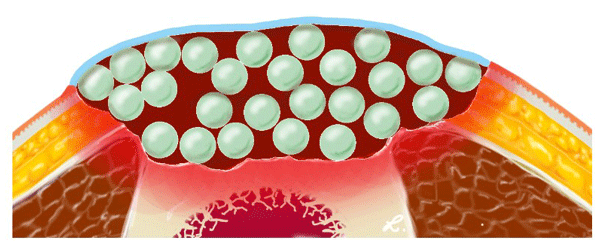
The antibiotic bead pouch is a useful technique for temporary soft tissue coverage. After the introduction of negative wound pressure therapy, it has fallen into oblivion. However, the technique has several advantages, which are highlighted in the present review article. After debridement, the antibiotic beads deliver high dosages of antibiotics suitable for bone cements. This enables a sterile wound, which might help to avoid either infection or progress of infection.
Belal Abdo, Daniel Strack, Marcel Schäuffele, Tim Ludwig Tüngler, Can Imirzalioglu, Anita Windhorst, Moritz Fritzenwanker, Christian Heiss, and Markus Rupp
J. Bone Joint Infect., 11, 555–563, https://doi.org/10.5194/jbji-11-555-2026, https://doi.org/10.5194/jbji-11-555-2026, 2026
Short summary
Short summary
Fracture-related infections after bone surgery are difficult to diagnose because bacteria can attach to metal implants and become hard to detect, especially when antibiotics have already been given. We compared two laboratory methods used to identify bacteria on removed implants in 157 patients. Each method alone missed some infections, but using both together improved detection and helped guide antibiotic treatment. Our findings support combining diagnostic approaches to improve patient care.
Goran Georgievski, Nike Walter, Ronald Man Yeung Wong, Irene Katharina Sigmund, Ashok Kanuri, Christian Heiss, and Markus Rupp
J. Bone Joint Infect., 11, 219–228, https://doi.org/10.5194/jbji-11-219-2026, https://doi.org/10.5194/jbji-11-219-2026, 2026
Short summary
Short summary
This article outlines 20 common errors in the prevention, diagnosis, and management of fracture-related infection (FRI), highlighting their clinical consequences and providing practical recommendations for avoiding them. By addressing typical pitfalls and emphasizing standardized procedures and interdisciplinary collaboration, the article aims to improve patient safety and treatment outcomes.
Lorenz Huber, Hasan S. Aguicenoglu, Susanne Baertl, Julia Elisabeth Lenz, Kristina Gerhardinger, Frank Hanses, Florian Zeman, Nike Walter, Volker Alt, and Markus Rupp
J. Bone Joint Infect., 11, 175–183, https://doi.org/10.5194/jbji-11-175-2026, https://doi.org/10.5194/jbji-11-175-2026, 2026
Short summary
Short summary
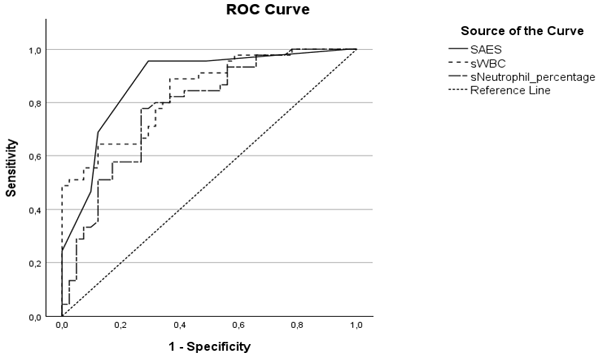
Septic arthritis is a dangerous joint infection that requires rapid treatment. We analysed patient data to test common blood and synovial fluid markers and a newly developed composite score combining these markers. The score demonstrated higher sensitivity than individual tests alone within this dataset. Prospective validation in larger cohorts is required before clinical application.
Markus Rupp, Nike Walter, Dominik Szymski, Christian Taeger, Martin Franz Langer, and Volker Alt
J. Bone Joint Infect., 8, 165–173, https://doi.org/10.5194/jbji-8-165-2023, https://doi.org/10.5194/jbji-8-165-2023, 2023
Short summary
Short summary
The antibiotic bead pouch is a useful technique for temporary soft tissue coverage. After the introduction of negative wound pressure therapy, it has fallen into oblivion. However, the technique has several advantages, which are highlighted in the present review article. After debridement, the antibiotic beads deliver high dosages of antibiotics suitable for bone cements. This enables a sterile wound, which might help to avoid either infection or progress of infection.
Julia Elisabeth Lenz, Volker Alt, and Thomas Dienemann
J. Bone Joint Infect., 7, 71–74, https://doi.org/10.5194/jbji-7-71-2022, https://doi.org/10.5194/jbji-7-71-2022, 2022
Short summary
Short summary
This case report is the first description of severe metabolic acidosis due to flucloxacillin therapy without relevant comedication that we know of. The described patient had been treated with flucloxacillin for 14 d due to intraoperative evidence of multisensitive Staphylococcus aureus due to periprosthetic shoulder infection. In patients on flucloxacillin therapy, acidosis should therefore always be considered as a differential diagnosis of tachypnoea or impaired mental status.
Cited articles
Alt, V., Szymski, D., Rupp, M., Fontalis, A., Vaznaisiene, D., Marais, L. C., Wagner, C., and Walter, N.: The health-economic burden of hip and knee periprosthetic joint infections in Europe: a comprehensive analysis following primary arthroplasty, Bone Jt. Open, 6, 298–311, https://doi.org/10.1302/2633-1462.63.BJO-2024-0225.R1, 2025.
Assmann, G., Kasch, R., Maher, C. G., Hofer, A., Barz, T., Merk, H., and Flessa, S.: Comparison of health care costs between aseptic and two stage septic hip revision, J. Arthroplasty, 29, 1925–1931, https://doi.org/10.1016/j.arth.2014.04.043, 2014.
Becker, L., Resl, M., Grimberg, A., Wu, Y., Gwinner, C., and Perka, C.: Much higher re-revision rates and mortality following septic revision total knee arthroplasty compared to meta-analyses: a registry study, Bone Jt. J., 107-B, 896–904, https://doi.org/10.1302/0301-620X.107B9.BJJ-2024-1440.R1, 2025.
Garrido-Gómez, J., Arrabal-Polo, M. A., Girón-Prieto, M. S., Cabello-Salas, J., Torres-Barroso, J., and Parra-Ruiz, J.: Descriptive analysis of the economic costs of periprosthetic joint infection of the knee for the public health system of Andalusia, J. Arthroplasty, 28, 1057–1060, https://doi.org/10.1016/j.arth.2013.02.012, 2013.
Kasch, R., Assmann, G., Merk, S., Barz, T., Melloh, M., Hofer, A., Merk, H., and Flessa, S.: Economic analysis of two-stage septic revision after total hip arthroplasty: What are the relevant costs for the hospital's orthopedic department?, BMC Musculoskelet. Disord, 17, 112, https://doi.org/10.1186/s12891-016-0962-6, 2016.
Kasch, R., Merk, S., Assmann, G., Lahm, A., Napp, M., Merk, H., and Flessa, S.: Comparative Analysis of Direct Hospital Care Costs between Aseptic and Two-Stage Septic Knee Revision, PLOS ONE, 12, e0169558, https://doi.org/10.1371/journal.pone.0169558, 2017.
Lawrence, K. W., Raymond, H. E., Sicat, C. S., Roof, M. A., Arshi, A., Rozell, J. C., and Schwarzkopf, R.: Indications, Clinical Outcomes, and Re-Revisions Following Revision Total Hip Arthroplasty – Does Age Matter?, J. Arthroplasty, 39, 1036–1043, https://doi.org/10.1016/j.arth.2023.10.034, 2024.
Lenguerrand, E., Whitehouse, M. R., Kunutsor, S. K., Beswick, A. D., Baker, R. P., Rolfson, O., Reed, M. R., and Blom, A. W., on behalf of the National Joint Registry for England, Wales, Northern Ireland and the Isle of Man: Mortality and re-revision following single-stage and two-stage revision surgery for the management of infected primary knee arthroplasty in England and Wales: evidence from the National Joint Registry, Bone Jt. Res., 11, 690–699, https://doi.org/10.1302/2046-3758.1110.BJR-2021-0555.R1, 2022.
Leta, T. H., Lygre, S. H. L., Skredderstuen, A., Hallan, G., and Furnes, O.: Failure of aseptic revision total knee arthroplasties: 145 revision failures from the Norwegian Arthroplasty Register, 1994–2011, Acta Orthop., 86, 48–57, https://doi.org/10.3109/17453674.2014.964097, 2015.
Okafor, C. E., Nghiem, S., and Byrnes, J.: One-stage revision versus debridement, antibiotics, and implant retention (DAIR) for acute prosthetic knee infection: an exploratory cohort study, Arch. Orthop. Trauma Surg., 143, 5787–5792, https://doi.org/10.1007/s00402-023-04891-1, 2023.
Parisi, T. R., Konopka, J. F., and Bedair, H. S.: What is the Long-term Economic Societal Effect of Periprosthetic Infections After THA? A Markov Analysis, Clin. Orthop. Relat. Res., 475, 1891–900, https://doi.org/10.1007/s11999-017-5333-6, 2017.
Resl, M., Becker, L., Steinbrück, A., Wu, Y., and Perka, C.: Re-revision and mortality rate following revision total hip arthroplasty for infection: an underestimated problem, Bone Jt. J., 106-B, 565–572, https://doi.org/10.1302/0301-620X.106B6.BJJ-2023-1181.R1, 2024.
Rodriguez-Merchan, E. C.: Re-revision Total Knee Arthroplasty: Causes Risk Factors and Results, Arch. Bone Jt. Surg., 12, 328–332, https://doi.org/10.22038/abjs.2024.75456.3490, 2024.
Romanò, C. L., Romanò, D., Logoluso, N., and Meani, E.: Septic versus aseptic hip revision: how different?, J. Orthop. Traumatol., 11, 167–174, https://doi.org/10.1007/s10195-010-0106-y, 2010.
Rupp, M., Walter, N., Popp, D., Hitzenbichler, F., Heyd, R., Geis, S., Kandulski, M., Thurn, S., Betz, T., Brochhausen, C., and Alt, V.: Multidisciplinary Treatment of Fracture-Related Infection Has a Positive Impact on Clinical Outcome – A Retrospective Case Control Study at a Tertiary Referral Center, Antibiotics, 12, 230, https://doi.org/10.3390/antibiotics12020230, 2023.
Serrier, H., Julien, C., Batailler, C., Mabrut, E., Brochier, C., Thevenon, S., Maynard-Muet, M., Henry, A., Lustig, S., Huot, L., Ferry, T., and Lyon BJI Study group: Economic Study of 2-Stage Exchange in Patients With Knee or Hip Prosthetic Joint Infection Managed in a Referral Center in France: Time to Use Innovative(s) Intervention(s) at the Time of Reimplantation to Reduce the Risk of Superinfection, Front Med., 8, 552669, https://doi.org/10.3389/fmed.2021.552669, 2021.
Sigmund, I. K., Ferry, T., Sousa, R., Soriano, A., Metsemakers, W.-J., Clauss, M., Trebse, R., and Wouthuyzen-Bakker, M.: Debridement, antimicrobial therapy, and implant retention (DAIR) as curative strategy for acute periprosthetic hip and knee infections: a position paper of the European Bone & Joint Infection Society (EBJIS), J. Bone Jt. Infect., 10, 101–138, https://doi.org/10.5194/jbji-10-101-2025, 2025.
Sousa, A., Carvalho, A., Pereira, C., Reis, E., Santos, A. C., Abreu, M., Soares, D., Fragoso, R., Ferreira, S., Reis, M., and Sousa, R.: Economic Impact of Prosthetic Joint Infection – an Evaluation Within the Portuguese National Health System, J. Bone Jt. Infect., 3, 197–202, https://doi.org/10.7150/jbji.28508, 2018.
Springer, B. D., Cahue, S., Etkin, C. D., Lewallen, D. G., and McGrory, B. J.: Infection burden in total hip and knee arthroplasties: an international registry-based perspective, Arthroplasty Today, 3, 137–140, https://doi.org/10.1016/j.artd.2017.05.003, 2017.
Straub, J., Szymski, D., Walter, N., Wu, Y., Melsheimer, O., Grimberg, A., Alt, V., Steinbrueck, A., and Rupp, M.: What are the age-related factors linked to aseptic revisions in constrained and unconstrained TKA as well as UKA? A register-based study from the German arthroplasty registry (EPRD), Arch. Orthop. Trauma Surg., 144, 4463–4474, https://doi.org/10.1007/s00402-024-05550-9, 2024.
Szymski, D., Walter, N., Krull, P., Melsheimer, O., Schindler, M., Grimberg, A., Alt, V., Steinbrueck, A., and Rupp, M.: Comparison of mortality rate and septic and aseptic revisions in total hip arthroplasties for osteoarthritis and femoral neck fracture: an analysis of the German Arthroplasty Registry, J. Orthop. Traumatol., 24, 29, https://doi.org/10.1186/s10195-023-00711-9, 2023.
Szymski, D., Walter, N., Hierl, K., Rupp, M., and Alt, V.: Direct Hospital Costs per Case of Periprosthetic Hip and Knee Joint Infections in Europe – A Systematic Review, J. Arthroplasty, 39, 1876–1881, https://doi.org/10.1016/j.arth.2024.01.032, 2024.
Walter, N., Rupp, M., Baertl, S., and Alt, V.: The role of multidisciplinary teams in musculoskeletal infection, Bone Jt. Res., 11, 6–7, https://doi.org/10.1302/2046-3758.111.BJR-2021-0498, 2022.
Winter, L., Mendelsohn, D. H., Walter, N., Popp, D., Geis, S., Niedermair, T., Mamilos, A., Gessner, A., Salzberger, B., Pfister, K., Stroszczynski, C., Alt, V., Rupp, M., and Brochhausen, C.: Multidisciplinary Teams in Musculoskeletal Infection – From a Pathologist's Perspective, Pathol.-Res. Pract., 262, 155539, https://doi.org/10.1016/j.prp.2024.155539, 2024.
Yu, S., Saleh, H., Bolz, N., Buza, J., Iorio, R., Rathod, P. A., Schwarzkopf, R., and Deshmukh, A. J.: Re-revision total hip arthroplasty: Epidemiology and factors associated with outcomes, J. Clin. Orthop. Trauma, 11, 43–46, https://doi.org/10.1016/j.jcot.2018.08.021, 2020.
Short summary
A health-economic study estimating the cost of septic re-revision surgery for periprosthetic joint infections (PJIs) across 30 European countries. Using 2023 Eurostat data plus a 13-country reimbursement survey, the study estimates 22 794 PJIs and 8629 septic re-revisions in 2023, costing ~€123.6 million (95% CI €102–156 million). Two-stage exchanges drive 82.8% of costs. Cutting PJI incidence by 25% could save €27.9 million/year; shifting half of two-stage cases to one-stage a further €22.6 million.
A health-economic study estimating the cost of septic re-revision surgery for periprosthetic...