Articles | Volume 10, issue 6
https://doi.org/10.5194/jbji-10-597-2025
© Author(s) 2025. This work is distributed under
the Creative Commons Attribution 4.0 License.
https://doi.org/10.5194/jbji-10-597-2025
© Author(s) 2025. This work is distributed under
the Creative Commons Attribution 4.0 License.
A human-scale porcine fasciocutaneous and muscle flap model for the evaluation of ortho-plastic reconstructions of lower-limb defects
Josefine Slater
CORRESPONDING AUTHOR
Aarhus Denmark Microdialysis Research (ADMIRE), Orthopaedic Research Laboratory, Aarhus University Hospital, Aarhus, 8200, Denmark
Department of Clinical Medicine, Aarhus University, Aarhus, 8200, Denmark
Maiken Stilling
Aarhus Denmark Microdialysis Research (ADMIRE), Orthopaedic Research Laboratory, Aarhus University Hospital, Aarhus, 8200, Denmark
Department of Clinical Medicine, Aarhus University, Aarhus, 8200, Denmark
Department of Orthopaedic Surgery, Aarhus University Hospital, Aarhus, 8200, Denmark
Andreas Engel Krag
Aarhus Denmark Microdialysis Research (ADMIRE), Orthopaedic Research Laboratory, Aarhus University Hospital, Aarhus, 8200, Denmark
Department of Clinical Medicine, Aarhus University, Aarhus, 8200, Denmark
Department of Plastic and Breast Surgery, Aarhus University Hospital, Aarhus, 8200, Denmark
Sara Kousgaard Tøstesen
Aarhus Denmark Microdialysis Research (ADMIRE), Orthopaedic Research Laboratory, Aarhus University Hospital, Aarhus, 8200, Denmark
Department of Clinical Medicine, Aarhus University, Aarhus, 8200, Denmark
Mads Kristian Duborg Mikkelsen
Aarhus Denmark Microdialysis Research (ADMIRE), Orthopaedic Research Laboratory, Aarhus University Hospital, Aarhus, 8200, Denmark
Department of Clinical Medicine, Aarhus University, Aarhus, 8200, Denmark
Martin McNally
Bone Infection Unit, Nuffield Orthopaedic Centre, Oxford University Hospital, Oxford, OX3 7LD, United Kingdom
Alexander James Ramsden
Bone Infection Unit, Nuffield Orthopaedic Centre, Oxford University Hospital, Oxford, OX3 7LD, United Kingdom
Louise Kruse Jensen
Department of Veterinary Animal Sciences, University of Copenhagen, Frederiksberg, Denmark
Birgitte Jul Kiil
Department of Plastic and Breast Surgery, Aarhus University Hospital, Aarhus, 8200, Denmark
Aarhus Denmark Microdialysis Research (ADMIRE), Orthopaedic Research Laboratory, Aarhus University Hospital, Aarhus, 8200, Denmark
Department of Clinical Medicine, Aarhus University, Aarhus, 8200, Denmark
Department of Orthopaedic Surgery, Aarhus University Hospital, Aarhus, 8200, Denmark
Related authors
Josephine Olsen Kipp, Pelle Hanberg, Josefine Slater, Line Møller Nielsen, Stig Storgaard Jakobsen, Maiken Stilling, and Mats Bue
J. Bone Joint Infect., 6, 99–106, https://doi.org/10.5194/jbji-6-99-2021, https://doi.org/10.5194/jbji-6-99-2021, 2021
Short summary
Short summary
To evaluate bone and tissue concentrations following intraosseous vancomycin administration, eight pigs were injected with 500 mg vancomycin into the tibia followed by a 12 h sampling period. This provided high concentrations in the tibia bone nearby the injection site the entire period, though with a wide range of peak concentration. The systemic absorption was high and immediate, thus mirroring an intravenous administration. Low mean concentrations were found in adjacent tissue compartments.
Mads Kristian Duborg Mikkelsen, Andrea René Jørgensen, Niranjan G. Kotla, Maiken Stilling, Maria Bech Damsgaard, Christoph Crocoll, Michal Poborsky, Hans Christian Rasmussen, Jonas Rosager Henriksen, Anders Elias Hansen, and Mats Bue
J. Bone Joint Infect., 10, 327–334, https://doi.org/10.5194/jbji-10-327-2025, https://doi.org/10.5194/jbji-10-327-2025, 2025
Short summary
Short summary
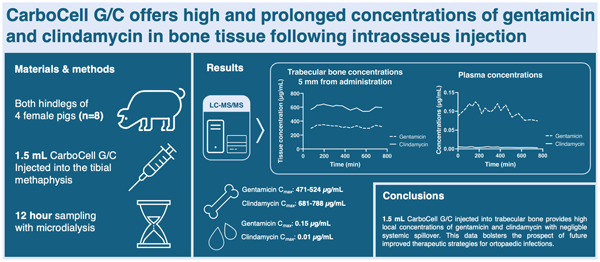
In recent decades, there has been a growing emphasis on the use of local antibiotics in orthopaedic surgery, but development of new technologies has been limited. In this study we observe that a 1.5 mL injection of the novel technology CarboCell G/C into the bone provides very high levels of the antibiotics gentamicin and clindamycin in bones, with almost no spill to the bloodstream. These findings bolster the prospect of new and improved technologies for combatting orthopaedic infections.
Anton Alexander Nolte Peterlin, Louise Kruse Jensen, Emil Gleipner-Andersen, and Hans Gottlieb
J. Bone Joint Infect., 10, 199–206, https://doi.org/10.5194/jbji-10-199-2025, https://doi.org/10.5194/jbji-10-199-2025, 2025
Short summary
Short summary
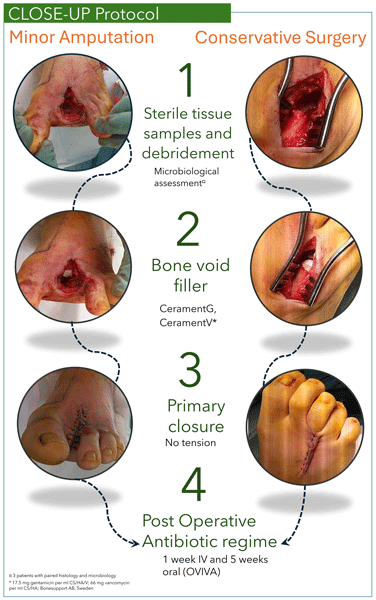
Diabetic foot osteomyelitis is a severe diabetes complication that increases the risk of limb loss and death. This study assessed a one-stage surgical approach with primary wound closure and local antibiotics, showing favourable results. Among 97 patients, 13 needed further treatment, but only 4 required major amputation. Poor circulation was the main factor in failure. These findings challenge traditional methods and may improve quality of life, although further high-quality trials are needed.
Antonio Loro, Fulvio Franceschi, Muhumuza M. Fisha, Emmanuel Ewochu, Geoffrey Mwanje, Annamaria Dal Lago, and Martin McNally
J. Bone Joint Infect., 10, 155–163, https://doi.org/10.5194/jbji-10-155-2025, https://doi.org/10.5194/jbji-10-155-2025, 2025
Short summary
Short summary
This retrospective study shows that autogenous non-vascularized bone graft is a viable option for managing post-osteomyelitis bone defects in children in low-resource settings. Bone union was achieved in all cases at the last follow-up (minimum of 7 years). Recurrence of infection was seen in two cases. Studies into this specific technique are important as it does not require super-specialized centres or skills, both of which are scarce in low-resource settings.
Louise Kruse Jensen, Thomas Bjarnsholt, Hans Gottlieb, and Mats Bue
J. Bone Joint Infect., 10, 1–5, https://doi.org/10.5194/jbji-10-1-2025, https://doi.org/10.5194/jbji-10-1-2025, 2025
Short summary
Short summary
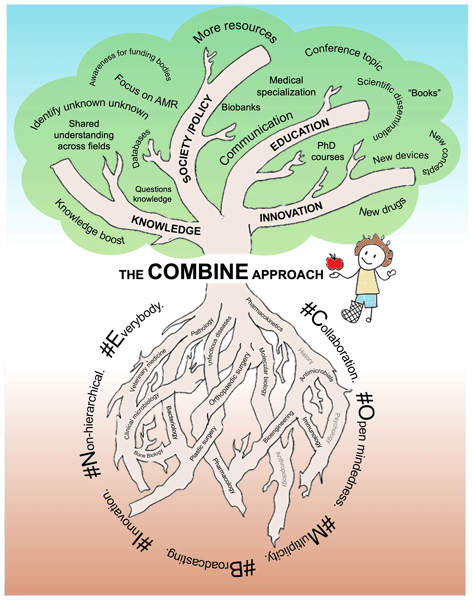
To improve the existing knowledge and treatment of bone and joint infections, it is essential to unite medical disciplines and bridge the gap between basic and clinical sciences. In 2018, the Centrum fOr translational Medicine on Bone and joint INfEctions (COMBINE) was created to facilitate collaboration among Danish scientists and researchers dedicated to bone and joint infection research. This paper aims to share the COMBINE approach and values.
Asanka Wijendra, Alex Ramsden, and Martin McNally
J. Bone Joint Infect., 8, 183–188, https://doi.org/10.5194/jbji-8-183-2023, https://doi.org/10.5194/jbji-8-183-2023, 2023
Short summary
Short summary
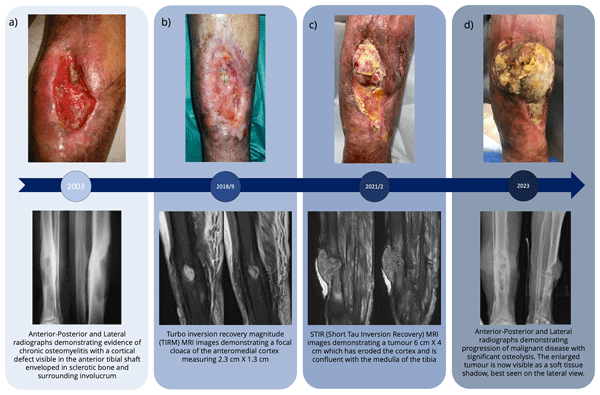
Cancerous transformation is a rare but potentially life-threatening complication of chronic bone infection. As with all forms of cancer, early detection and diagnosis is crucial to outcome.
Whilst there have been over 100 cases of chronic bone infection with cancerous transformation reported in the literature between 1999 and 2020, this is the first case report to document transformation with 20 years of concordant imaging and clinical review.
Niels Vanvelk, Esther M. M. Van Lieshout, Jolien Onsea, Jonathan Sliepen, Geertje Govaert, Frank F. A. IJpma, Melissa Depypere, Jamie Ferguson, Martin McNally, William T. Obremskey, Charalampos Zalavras, Michael H. J. Verhofstad, and Willem-Jan Metsemakers
J. Bone Joint Infect., 8, 133–142, https://doi.org/10.5194/jbji-8-133-2023, https://doi.org/10.5194/jbji-8-133-2023, 2023
Short summary
Short summary
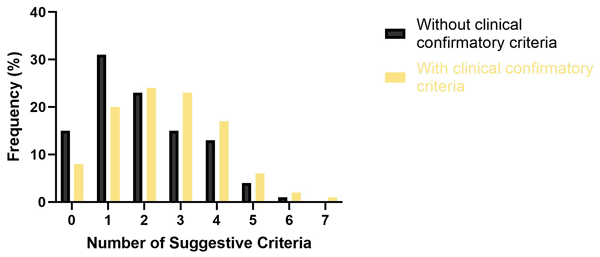
This international retrospective cohort study displays the diagnostic characteristics of 609 patients who were treated for fracture-related infection (FRI). Clinical confirmatory criteria were present in 77% of patients. In the remaining patients, the decision to operatively collect deep tissue cultures had to be based on a set of suggestive criteria. The combined use of these suggestive criteria should guide treating physicians in the management pathway of FRI.
Rehne Lessmann Hansen, Mats Bue, Anna Bertoli Borgognoni, and Klaus Kjær Petersen
J. Bone Joint Infect., 7, 35–42, https://doi.org/10.5194/jbji-7-35-2022, https://doi.org/10.5194/jbji-7-35-2022, 2022
Short summary
Short summary
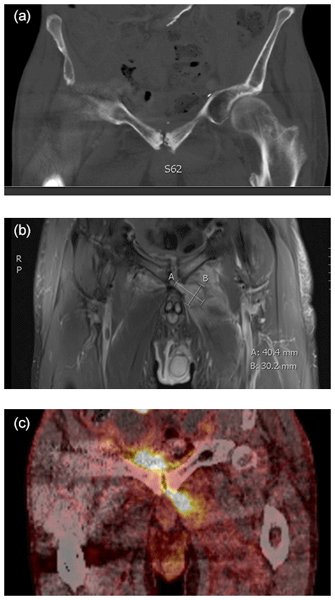
This study consists of 26 patients with infection of the pubic symphysis. The authors believe that by drawing awareness to this condition patients may be diagnosed and undergo surgery faster; 21 of the patients had pelvic surgery before onset of pubic infection. The diagnostic delay was between 1 and 12 months. All patients underwent surgical debridement and received a minimum of 6 weeks antibiotic treatment; 23 patients had postoperative pain relief and 19 patients were ambulant without aids.
Maria Dudareva, Andrew Hotchen, Martin A. McNally, Jamie Hartmann-Boyce, Matthew Scarborough, and Gary Collins
J. Bone Joint Infect., 6, 257–271, https://doi.org/10.5194/jbji-6-257-2021, https://doi.org/10.5194/jbji-6-257-2021, 2021
Short summary
Short summary
Clinical prognostic models are tools that predict treatment outcomes for individual patients. For adults with bone and joint infection treated with surgery and implant removal, this review found no existing unbiased clinical prediction models that took modifiable health factors into account to estimate prognosis. Developing a clinical prognostic model may help treatment decisions and future targeted research in orthopaedic infection.
Martin McNally
J. Bone Joint Infect., 6, 199–201, https://doi.org/10.5194/jbji-6-199-2021, https://doi.org/10.5194/jbji-6-199-2021, 2021
Short summary
Short summary
This paper provides further evidence that treatment of osteomyelitis by serial debridement without the use of local antimicrobials has high recurrence rates (20 %–30 %). The addition of bioglass did not improve this compared to using bone graft alone. Additional systemic antibiotic was required in many cases, increasing the risk of antimicrobial resistance. Recent series of single-stage surgery with local antibiotic delivery have reported better outcomes.
Jamie Ferguson, Myriam Alexander, Stuart Bruce, Matthew O'Connell, Sue Beecroft, and Martin McNally
J. Bone Joint Infect., 6, 151–163, https://doi.org/10.5194/jbji-6-151-2021, https://doi.org/10.5194/jbji-6-151-2021, 2021
Martina Galea Wismayer, Kurstein Sant, Ryan Giordmaina, and Martin McNally
J. Bone Joint Infect., 6, 141–145, https://doi.org/10.5194/jbji-6-141-2021, https://doi.org/10.5194/jbji-6-141-2021, 2021
Short summary
Short summary
We report the treatment of bone infection in a patient with a rare disease which causes overgrowth of the limb. Careful assessment of the scans showed that the infection was in some new bone which had formed in the soft tissues after a minor injury to the leg and not in one of the major bones. This made treatment much easier with a successful outcome.
Mats Bue, Arnar Óskar Bjarnason, Jan Duedal Rölfing, Karina Larsen, and Juozas Petruskevicius
J. Bone Joint Infect., 6, 135–140, https://doi.org/10.5194/jbji-6-135-2021, https://doi.org/10.5194/jbji-6-135-2021, 2021
Short summary
Short summary
In order to monitor pin site infections, facilitate communication between team members, and assist treatment decision-making, we aimed to develop a registration tool. The present pilot study evaluates the feasibility of a prospective registration procedure for reporting, evaluating, and monitoring of pin site infections in 39 trauma, limb deformity, and bone infection patients with external ring fixation.
Josephine Olsen Kipp, Pelle Hanberg, Josefine Slater, Line Møller Nielsen, Stig Storgaard Jakobsen, Maiken Stilling, and Mats Bue
J. Bone Joint Infect., 6, 99–106, https://doi.org/10.5194/jbji-6-99-2021, https://doi.org/10.5194/jbji-6-99-2021, 2021
Short summary
Short summary
To evaluate bone and tissue concentrations following intraosseous vancomycin administration, eight pigs were injected with 500 mg vancomycin into the tibia followed by a 12 h sampling period. This provided high concentrations in the tibia bone nearby the injection site the entire period, though with a wide range of peak concentration. The systemic absorption was high and immediate, thus mirroring an intravenous administration. Low mean concentrations were found in adjacent tissue compartments.
Max Mifsud, Jamie Y. Ferguson, David A. Stubbs, Alex J. Ramsden, and Martin A. McNally
J. Bone Joint Infect., 6, 63–72, https://doi.org/10.5194/jbji-6-63-2020, https://doi.org/10.5194/jbji-6-63-2020, 2020
Short summary
Short summary
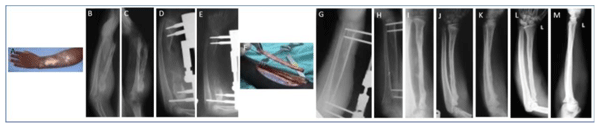
Chronic bone infections often present with major bone and soft tissue loss which can be difficult to manage. In this study, we treated the most complex infections using surgery which reconstructed all of the tissues in one operation.
We showed that this was a safe approach with very good outcomes. All of the bones healed and 96.5 % of patients were infection-free at final follow-up. This type of surgery requires close cooperation of a multidisciplinary team with expertise in major infections.
Cited articles
Acland, R. D., Anderson, G., Siemionow, M., and McCabe, S.: Direct in vivo observations of embolic events in the microcirculation distal to a small-vessel anastomosis, Plast. Reconstr. Surg., 84, 280–288; 1989.
Angelini, A., Tiengo, C., Cerchiaro, M. C., Soto, F., Biz, C., Messana, F., Bassetto, F., and Ruggieri, P.: Ortho-oncoplastic surgery in foot and ankle: A narrative overview on reconstruction of soft-tissue defects after oncologic resections, Microsurgery, 44, e31168, https://doi.org/10.1002/micr.31168, 2024.
Bjarnsholt, T., Whiteley, M., Rumbaugh, K. P., Stewart, P. S., Jensen, P. O., and Frimodt-Moller, N.: The importance of understanding the infectious microenvironment, Lancet Infect Dis., 22, e88–e92, https://doi.org/10.1016/S1473-3099(21)00122-5, 2022.
Calderon, W., Chang, N., and Mathes, S. J.: Comparison of the effect of bacterial inoculation in musculocutaneous and fasciocutaneous flaps, Plast Reconstr. Surg., 77, 785–794, https://doi.org/10.1097/00006534-198605000-00016, 1986.
Cierny, G., 3rd, Mader, J. T., and Penninck, J. J.: A clinical staging system for adult osteomyelitis, Clin. Orthop. Relat. Res., 7–24, https://doi.org/10.1097/01.blo.0000088564.81746.62, 2003.
Fisher, J. and Wood, M. B.: Experimental comparison of bone revascularization by musculocutaneous and cutaneous flaps, Plast. Reconstr. Surg., 79, 81–90, https://doi.org/10.1097/00006534-198701000-00014, 1987.
Goes, A. M. O., Chaves, R. H. F., Furlaneto, I. P., Rodrigues, E. M., de Albuquerque, F. B. A., Smit, J. H. A., de Oliveira, C. P., and Abib, S. C. V.: Comparative angiotomographic study of swine vascular anatomy: contributions to research and training models in vascular and endovascular surgery, J. Vasc. Bras., 20, e20200086, https://doi.org/10.1590/1677-5449.200086, 2021.
Gonzalez-Garcia, J. A., Chiesa-Estomba, C. M., Larruscain, E., Alvarez, L., and Sistiaga, J. A.: Porcine experimental model for gracilis free flap transfer to the head and neck area with novel donor site description, J Plast. Reconstr. Aesthet. Surg., 73, 111–117, https://doi.org/10.1016/j.bjps.2019.05.032, 2020.
Gosain, A., Chang, N., Mathes, S., Hunt, T. K., and Vasconez, L.: A study of the relationship between blood flow and bacterial inoculation in musculocutaneous and fasciocutaneous flaps, Plast. Reconstr. Surg., 86, 1152–1162, 1990.
Goudot, G., Berkane, Y., de Clermont-Tonnerre, E., Guinier, C., Filz von Reiterdank, I., van Kampen, A., Uygun, K., Cetrulo, C. L., Jr., Uygun, B. E., Dua, A., and Lellouch, A. G.: Microvascular assessment of fascio-cutaneous flaps by ultrasound: A large animal study, Front. Physiol., 13, 1063240, https://doi.org/10.3389/fphys.2022.1063240, 2022.
Hanberg, P., Bue, M., Kabel, J., Jorgensen, A. R., Soballe, K., and Stilling, M.: Tourniquet-induced ischemia and reperfusion in subcutaneous tissue, skeletal muscle, and calcaneal cancellous bone, APMIS, 129, 225–231, https://doi.org/10.1111/apm.13121, 2021.
Harry, L. E., Sandison, A., Paleolog, E. M., Hansen, U., Pearse, M. F., and Nanchahal, J.: Comparison of the healing of open tibial fractures covered with either muscle or fasciocutaneous tissue in a murine model, J. Orthop. Res., 26, 1238–1244, https://doi.org/10.1002/jor.20649, 2008.
Harry, L. E., Sandison, A., Pearse, M. F., Paleolog, E. M., and Nanchahal, J.: Comparison of the vascularity of fasciocutaneous tissue and muscle for coverage of open tibial fractures, Plast. Reconstr. Surg., 124, 1211–1219, https://doi.org/10.1097/PRS.0b013e3181b5a308, 2009.
Heden, P. and Sollevi, A.: Circulatory and metabolic events in pig island skin flaps after arterial or venous occlusion, Plast. Reconstr. Surg., 84, 475–481, https://doi.org/10.1097/00006534-198909000-00014, 1989.
Heden, P., Sollevi, A., and Hamberger, B.: Early circulatory and metabolic events in island skin flaps of the pig, Plast. Reconstr. Surg., 84, 468–474, 1989.
Hjortdal, V. E., Hauge, E., and Hansen, E. S.: Differential effects of venous stasis and arterial insufficiency on tissue oxygenation in myocutaneous island flaps: an experimental study in pigs, Plast. Reconstr. Surg., 89, 521–529, https://doi.org/10.1097/00006534-199203000-00021, 1992.
Kerrigan, C. L., Zelt, R. G., Thomson, J. G., and Diano, E.: The pig as an experimental animal in plastic surgery research for the study of skin flaps, myocutaneous flaps and fasciocutaneous flaps, Lab. Anim. Sci., 36, 408–412, 1986.
Kozusko, S. D., Liu, X., Riccio, C. A., Chang, J., Boyd, L. C., Kokkalis, Z., and Konofaos, P.: Selecting a free flap for soft tissue coverage in lower extremity reconstruction, Injury, 50, S32–S39, https://doi.org/10.1016/j.injury.2019.10.045, 2019.
Krag, A. E., Eschen, G. T., Damsgaard, T. E., Svaerdborg, M., Steiniche, T., and Kiil, B. J.: Remote ischemic perconditioning attenuates acute inflammation of experimental musculocutaneous flaps following ischemia-reperfusion injury, Microsurgery, 37, 148–155, https://doi.org/10.1002/micr.30058, 2017.
Krag, A. E., Hvas, C. L., Kiil, B. J., Eschen, G. T., Damsgaard, T. E., and Hvas, A. M.: Local and systemic coagulation marker response to musculocutaneous flap ischemia-reperfusion injury and remote ischemic conditioning: An experimental study in a porcine model, Microsurgery, 38, 690–697, https://doi.org/10.1002/micr.30287, 2018.
Lu, C., Miclau, T., Hu, D., and Marcucio, R. S.: Ischemia leads to delayed union during fracture healing: a mouse model, J. Orthop. Res., 25, 51–61, https://doi.org/10.1002/jor.20264, 2007.
Marais, L. C., Hungerer, S., Eckardt, H., Zalavras, C., Obremskey, W. T., Ramsden, A., McNally, M. A., Morgenstern, M., Metsemakers, W. J., and Group, F. R. I. C.: Key aspects of soft tissue management in fracture-related infection: recommendations from an international expert group, Arch. Orthop. Trauma Surg., 144, 259–268, https://doi.org/10.1007/s00402-023-05073-9, 2024.
May, J. W., Jr., Chait, L. A., O'Brien, B. M., and Hurley, J. V.: The no-reflow phenomenon in experimental free flaps, Plast. Reconstr. Surg., 61, 256–267, https://doi.org/10.1097/00006534-197802000-00017, 1978.
Metsemakers, W. J., Fragomen, A. T., Moriarty, T. F., Morgenstern, M., Egol, K. A., Zalavras, C., Obremskey, W. T., Raschke, M., McNally, M. A., and Fracture-Related Infection consensus, g.: Evidence-Based Recommendations for Local Antimicrobial Strategies and Dead Space Management in Fracture-Related Infection, J. Orthop. Trauma, 34, 18–29, https://doi.org/10.1097/BOT.0000000000001615, 2020.
Morgenstern, M., Athanasou, N. A., Ferguson, J. Y., Metsemakers, W. J., Atkins, B. L., and McNally, M. A.: The value of quantitative histology in the diagnosis of fracture-related infection, Bone Joint J., 100-B, 966–972, https://doi.org/10.1302/0301-620X.100B7.BJJ-2018-0052.R1, 2018.
Rauff-Mortensen, A., Berggren-Olsen, M. M., Kirkegaard, H., Houlind, K., and Birke-Sorensen, H.: Faster Detection of Ischemia in Free Muscle Transfer When Using Microdialysis, J. Reconstr. Microsurg., 36, 228–234, https://doi.org/10.1055/s-0039-3401036, 2020.
Rezkalla, S. H. and Kloner, R. A.: No-reflow phenomenon, Circulation, 105, 656–662, https://doi.org/10.1161/hc0502.102867, 2002.
Richards, R. R., McKee, M. D., Paitich, C. B., Anderson, G. I., and Bertoia, J. T.: A comparison of the effects of skin coverage and muscle flap coverage on the early strength of union at the site of osteotomy after devascularization of a segment of canine tibia, J. Bone Joint Surg. Am., 73, 1323–1330, 1991.
Rojdmark, J., Heden, P., and Ungerstedt, U.: Prediction of border necrosis in skin flaps of pigs with microdialysis, J. Reconstr. Microsurg., 16, 129–134, https://doi.org/10.1055/s-2000-7547, 2000.
Röjdmark, J., Ungerstedt, J., Blomqvist, L., Ungerstedt, U., and Hedén, P.: Comparing metabolism during ischemia and reperfusion in free flaps of different tissue composition, Eur. J. Plast. Surg., 24, 349–355, https://doi.org/10.1007/s002380100294, 2002.
Rosdahl, H., Hamrin, K., Ungerstedt, U., and Henriksson, J.: Metabolite levels in human skeletal muscle and adipose tissue studied with microdialysis at low perfusion flow, Am. J. Physiol., 274, E936–945, https://doi.org/10.1152/ajpendo.1998.274.5.E936, 1998.
Rose, E. H., Vistnes, L. M., and Ksander, G. A.: The panniculus carnosus in the domestic pig, Plast. Reconstr. Surg., 59, 94–97, https://doi.org/10.1097/00006534-197701000-00017, 1977.
Sarcon, A. K., Wan, R., Reisdorf, R. L., Jacobs, J. F., Selim, O. A., Boynton, F. D. D., Gingery, A., Behfar, A., Zhao, C., and Moran, S. L.: Ischemia-Reperfusion Injury in a Composite Tissue Microsurgical Model, Plast. Reconstr. Surg., https://doi.org/10.1097/PRS.0000000000012343, 2025.
Schultz, G. S., Davidson, J. M., Kirsner, R. S., Bornstein, P., and Herman, I. M.: Dynamic reciprocity in the wound microenvironment, Wound Repair Regen., 19, 134–148, https://doi.org/10.1111/j.1524-475X.2011.00673.x, 2011.
Setala, L. P., Korvenoja, E. M., Harma, M. A., Alhava, E. M., Uusaro, A. V., and Tenhunen, J. J.: Glucose, lactate, and pyruvate response in an experimental model of microvascular flap ischemia and reperfusion: a microdialysis study, Microsurgery, 24, 223–231, https://doi.org/10.1002/micr.20045, 2004.
Setala, L., Papp, A., Romppanen, E. L., Mustonen, P., Berg, L., and Harma, M.: Microdialysis detects postoperative perfusion failure in microvascular flaps, J. Reconstr. Microsurg., 22, 87–96, https://doi.org/10.1055/s-2006-932502, 2006.
Short, W. D., Olutoye, O. O., 2nd, Padon, B. W., Parikh, U. M., Colchado, D., Vangapandu, H., Shams, S., Chi, T., Jung, J. P., and Balaji, S.: Advances in non-invasive biosensing measures to monitor wound healing progression, Front. Bioeng. Biotechnol., 10, 952198, https://doi.org/10.3389/fbioe.2022.952198, 2022.
Sigmund, I. K., McNally, M. A., Luger, M., Bohler, C., Windhager, R., and Sulzbacher, I.: Diagnostic accuracy of neutrophil counts in histopathological tissue analysis in periprosthetic joint infection using the ICM, IDSA, and EBJIS criteria, Bone Joint Res., 10, 536–547, https://doi.org/10.1302/2046-3758.108.BJR-2021-0058.R1, 2021.
Sorotos, M., Firmani, G., Tornambene, R., Marrella, D., Paolini, G., and Santanelli di Pompeo, F.: DIEP flap perfusion assessment using microdialysis versus Doppler ultrasonography: A comparative study, Microsurgery, 44, e31097, https://doi.org/10.1002/micr.31097, 2024.
Ungerstedt, U.: Microdialysis–principles and applications for studies in animals and man, J. Intern. Med., 230, 365–373, https://doi.org/10.1111/j.1365-2796.1991.tb00459.x, 1991.
Short summary
We developed a pig model to study how different tissue flaps support the healing microenvironment of lower-leg composite defects. By measuring tissue metabolism and examining tissue samples under the microscope, we found distinct early responses between muscle and fascia-based flaps. This model may help researchers and clinicians better understand the healing of complex bone and soft-tissue defects and may provide a platform for evaluating clinically relevant ortho-plastic outcomes.
We developed a pig model to study how different tissue flaps support the healing...