Articles | Volume 9, issue 1
https://doi.org/10.5194/jbji-9-9-2024
© Author(s) 2024. This work is distributed under
the Creative Commons Attribution 4.0 License.
https://doi.org/10.5194/jbji-9-9-2024
© Author(s) 2024. This work is distributed under
the Creative Commons Attribution 4.0 License.
Multiplex PCR test as an intra-operative diagnostic tool for periprosthetic joint infection in presumed aseptic revision hip and knee arthroplasty: a 1-year follow-up study of 200 cases
Thomas J. A. van Schaik
CORRESPONDING AUTHOR
Department of Orthopaedic Surgery, Sint Maartenskliniek, Nijmegen, the Netherlands
Department of Orthopaedic Surgery, Rijnstate Ziekenhuis, Arnhem, the Netherlands
Department of Orthopaedic Surgery, Radboud University Medical Center, Nijmegen, the Netherlands
Petra J. C. Heesterbeek
Department of Research, Sint Maartenskliniek, Nijmegen, the Netherlands
Job L. C. van Susante
Department of Orthopaedic Surgery, Rijnstate Ziekenhuis, Arnhem, the Netherlands
Wim H. C. Rijnen
Department of Orthopaedic Surgery, Radboud University Medical Center, Nijmegen, the Netherlands
Jon H. M. Goosen
Department of Orthopaedic Surgery, Sint Maartenskliniek, Nijmegen, the Netherlands
Related authors
No articles found.
Yoni Lodewijk-van den Brink, Jon H. M. Goosen, Denise S. C. Telgt, Marrigje Nabuurs-Franssen, and Karin C. M. Veerman
J. Bone Joint Infect., 11, 229–235, https://doi.org/10.5194/jbji-11-229-2026, https://doi.org/10.5194/jbji-11-229-2026, 2026
Short summary
Short summary
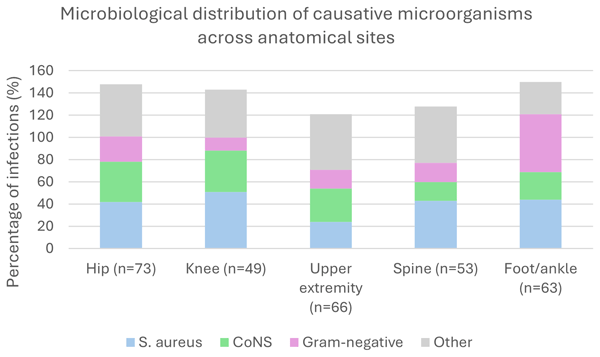
Early postoperative orthopaedic infections require rapid empirical antibiotic treatment, but the optimal regimen may differ by anatomical site. In this retrospective cohort study, empirical coverage was evaluated across anatomical sites. Vancomycin combined with ceftriaxone provided high coverage for most sites, while foot and ankle infections showed higher rates of resistant Gram-negative bacteria. These findings support an anatomy-specific approach to treatment.
Ruben Scholten, Gerjon Hannink, Matthijs P. Somford, and Job L. C. van Susante
J. Bone Joint Infect., 10, 207–215, https://doi.org/10.5194/jbji-10-207-2025, https://doi.org/10.5194/jbji-10-207-2025, 2025
Short summary
Short summary
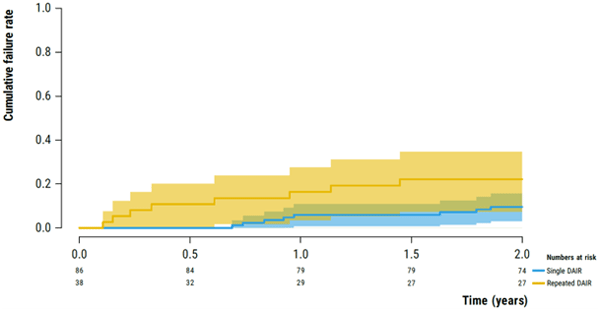
This study explores the effectiveness of repeated debridement, antibiotics, and implant retention (DAIR) for early periprosthetic joint infections (PJIs) after total joint arthroplasty. It shows that repeated DAIR procedures may achieve over 75 % success, which indicates that this approach may have value in managing early PJIs after weighing the benefits and risks of repeated DAIR against implant removal for each patient.
Michelle M. J. Jacobs, Petra J. C. Heesterbeek, Karin Veerman, and Jon H. M. Goosen
J. Bone Joint Infect., 10, 185–192, https://doi.org/10.5194/jbji-10-185-2025, https://doi.org/10.5194/jbji-10-185-2025, 2025
Short summary
Short summary
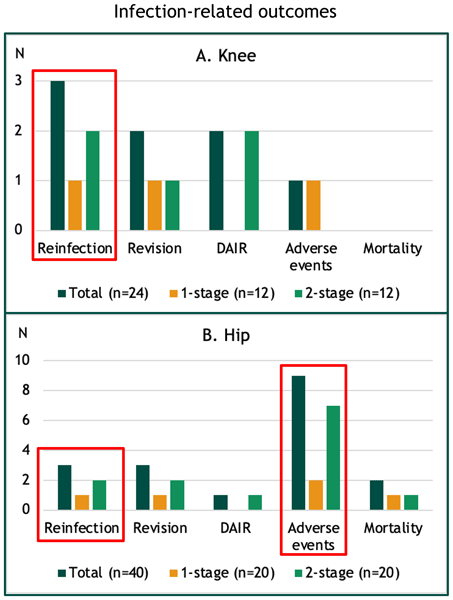
We compared the outcomes of one-stage and two-stage revision surgeries for periprosthetic joint infections of the knee and hip joints. Patients in both groups had similar reinfection rates and functional recovery, but two-stage hip patients experienced more complications, partly due to the temporary use of cement spacers. Our findings suggest that one-stage revision may be a viable alternative to two-stage revision, potentially reducing complications without increasing reinfection risk.
Thomas J. A. van Schaik, Lex D. de Jong, Maurits P. A. van Meer, Jon H. M. Goosen, and Matthijs P. Somford
J. Bone Joint Infect., 7, 259–267, https://doi.org/10.5194/jbji-7-259-2022, https://doi.org/10.5194/jbji-7-259-2022, 2022
Short summary
Short summary
This systematic review presents the results regarding the concordance rate between preoperative synovial fluid and intraoperative tissue culturing in patients with a prosthetic joint infection (PJI). The included studies had heterogeneous results and were at a high risk of bias. Higher-quality future research may help to better understand the true concordance between these cultures. This may result in better guidance for orthopedic surgeons regarding the treatment of patients with PJI.
Joyce van Eck, Wai-Yan Liu, Jon H. M. Goosen, Wim H. C. Rijnen, Babette C. van der Zwaard, Petra Heesterbeek, Walter van der Weegen, and the further members of Regional Prosthetic Joint
Infection Group
J. Bone Joint Infect., 7, 143–149, https://doi.org/10.5194/jbji-7-143-2022, https://doi.org/10.5194/jbji-7-143-2022, 2022
Short summary
Short summary
Patients who receive joint replacement surgery might suffer from infection, which usually requires another surgery to clean the prosthesis and remove infected tissue. This tissue is analysed for bacteria in order to start appropriate antibiotic therapy. Bacteria are not always found, calling the appropriateness of the second surgery into question. We compared the treatment outcome in a large group of culture-positive and culture-negative patients and noticed a better outcome in the latter group.
Cited articles
Aamot, H. V., Johnsen, B. O., and Skråmm, I.: Rapid diagnostics of orthopedic implant-associated infections using Unyvero ITI implant and tissue infection application is not optimal for Staphylococcus species identification, BMC Res. Notes., 12, 725, https://doi.org/10.1186/S13104-019-4755-5, 2019.
Auñón, Á., Coifman, I., Blanco, A., García Cañete, J., Parrón-Cambero, R., and Esteban, J.: Usefulness of a Multiplex PCR Assay for the Diagnosis of Prosthetic Joint Infections in the Routine Setting, Orthop. Surg., 14, 383–388, https://doi.org/10.1111/os.13187, 2022.
Borde, J. P., Häcker, G. A., Guschl, S., Serr, A., Danner, T., Hübner, J., Burrack-Lange, S., Lüdke, G., Helwig, P., Hauschild, O., and Kern, W. V.: Diagnosis of prosthetic joint infections using UMD-Universal Kit and the automated multiplex-PCR Unyvero i60 ITI® cartridge system: a pilot study, Infection, 43, 551–560, https://doi.org/10.1007/s15010-015-0796-4, 2015.
Corvec, S., Portillo, M. E., Pasticci, B. M., Borens, O., and Trampuz, A.: Epidemiology and new developments in the diagnosis of prosthetic joint infection, Int. J. Artif. Organs, 35, 923–934, https://doi.org/10.5301/IJAO.5000168, 2012.
Fernandez-Sampedro, M., Salas-Venero, C., Fariñas-Álvarez, C., Sumillera, M., Pérez-Carro, L., Fakkas-Fernandez, M., Gómez-Román, J., Martínez-Martínez, L., and Fariñas, M. C. M.: Postoperative diagnosis and outcome in patients with revision arthroplasty for aseptic loosening, BMC Infect. Dis., 15, 232, https://doi.org/10.1186/S12879-015-0976-Y, 2015.
Harris, L. G., El-Bouri, K., Johnston, S., Rees, E., Frommelt, L., Siemssen, N., Christner, M., Davies, A. P., Rohde, H., and Mack, D.: Rapid identification of staphylococci from prosthetic joint infections using MALDI-TOF mass-spectrometry, Int. J. Artif. Organs, 33, 568–574, https://doi.org/10.1177/039139881003300902, 2010.
Hischebeth, G. T. R., Randau, T. M., Buhr, J. K., Wimmer, M. D., Hoerauf, A., Molitor, E., Bekeredjian-Ding, I., and Gravius, S.: Unyvero i60 implant and tissue infection (ITI) multiplex PCR system in diagnosing periprosthetic joint infection, J. Microbiol. Methods, 121, 27–32, https://doi.org/10.1016/j.mimet.2015.12.010, 2016.
Jacobs, A. M. E., Bénard, M., Meis, J. F., Van Hellemondt, G., and Goosen, J. H. M.: The unsuspected prosthetic joint infection: incidence and consequences of positive intra-operative cultures in presumed aseptic knee and hip revisions, Bone Joint J., 99-B, 1482–1489, https://doi.org/10.1302/0301-620X.99B11.BJJ-2016-0655.R2, 2017.
Jacobs, A. M. E., Heesterbeek, P. J. C., Bovendeert, F. A. T., Susan, S., Meis, J. F., and Goosen, J. H. M.: Ruling out underlying infection in 200 presumed aseptic knee and hip revision arthroplasties using a multiplex PCR system, European J. Clin. Microbiol. Infect. Dis., 40, 1283–1290, https://doi.org/10.1007/s10096-021-04155-z, 2021.
Jacovides, C. L., Kreft, R., Adeli, B., Hozack, B., Ehrlich, G. D., and Parvizi, J.: Successful identification of pathogens by polymerase chain reaction (PCR)-based electron spray ionization time-of-flight mass spectrometry (ESI-TOF-MS) in culture-negative periprosthetic joint infection, J. Bone Joint Surg. Am., 94, 2247–2254, https://doi.org/10.2106/JBJS.L.00210, 2012.
Kloos, J., Vander Linden, K., Vermote, S., Berger, P., and Vandenneucker, H.: Prevalence, interpretation, and management of unexpected positive cultures in revision TKA: a systematic review, Knee Surgery, Sports Traumatology, Arthroscopy, 30, 3998–4009, https://doi.org/10.1007/S00167-021-06856-6, 2022.
Kurtz, S. M., Lau, E., Watson, H., Schmier, J. K., and Parvizi, J.: Economic Burden of Periprosthetic Joint Infection in the United States, J. Arthroplasty, 27, 61–65, https://doi.org/10.1016/J.ARTH.2012.02.022, 2012.
Lafeuille, E., Jauréguiberry, S., Devriese, F., Sadowski, E., Fourniols, E., and Aubry, A.: First evaluation of the automated-multiplex-PCR Unyvero ITI G2 cartridge for rapid diagnosis of osteo-articular infections, Infect. Dis. Now., 51, 179–186, https://doi.org/10.1016/J.MEDMAL.2020.09.010, 2021.
Lausmann, C., Zahar, A., Citak, M., Brañes, J., Schmidl, S., Frommelt, L., Gehrke, T., and Gebauer, M.: Are There Benefits In Early Diagnosis Of Prosthetic Joint Infection With Multiplex Polymerase Chain Reaction?, J. Bone Joint Infect., 2, 175–183, https://doi.org/10.7150/jbji.22062, 2017.
Lausmann, C., Kolle, K. N., Citak, M., Abdelaziz, H., Schulmeyer, J., Delgado, G. D., Gehrke, T., Gebauer, M., and Zahar, A.: How reliable is the next generation of multiplex-PCR for diagnosing prosthetic joint infection compared to the MSIS criteria? Still missing the ideal test, HIP Int., 30, 72–77, https://doi.org/10.1177/1120700020938576, 2020.
Lüdemann, M., Sulastyanto, S., Raab, P., Schoen, C., and Rudert, M.: Periprosthetic joint infection: Comparison of automated multiplex-PCR Unyvero i60 ITI cartridge system with bacterial culture and real-time PCR, Technol. Health Care, 30, 1005–1015, https://doi.org/10.3233/THC-213248, 2022.
Malandain, D., Bémer, P., Leroy, A. G., Léger, J., Plouzeau, C., Valentin, A. S., Jolivet-Gougeon, A., Tandé, D., Héry-Arnaud, G., Lemarié, C., Kempf, M., Bret, L., Burucoa, C., Corvec, S., Cottin, J., Ducellier, F., Abgueguen, P., Balan, V., Stindel, E., Ansart, S., Greves, A., Aubin, G., Touchais, S., Gouin, F., Boutoille, D., Asseray, N., Happi, L., Guinard, J., Razanabola, F., Mille, C., Cognée, A. S., Gayet, L. E., Le Moal, G., Thomas, C., Polard, J. L., Arvieux, C., Meheut, A., Bernard, L., Rosset, P., Gras, G., Druon, J., and Fèvre, K.: Assessment of the automated multiplex-PCR Unyvero i60 ITI® cartridge system to diagnose prosthetic joint infection: a multicentre study, Clin. Microbiol. Infect., 24, 83.e1–83.e6, https://doi.org/10.1016/j.cmi.2017.05.017, 2018.
Marculescu, C. E., Berbari, E. F., Hanssen, A. D., Steckelberg, J. M., and Osmon, D. R.: Prosthetic joint infection diagnosed postoperatively by intraoperative culture, Clin. Orthop. Relat. Res., 439, 38–42, https://doi.org/10.1097/01.BLO.0000183091.83509.D8, 2005.
McNally, M., Sousa, R., Wouthuyzen-Bakker, M., Chen, A. F., Soriano, A., Vogely, H. C., Clauss, M., Higuera, C. A., and Trebše, R.: The EBJIS definition of periprosthetic joint infection, Bone Joint J., 103-B, 18–25, https://doi.org/10.1302/0301-620, 2021.
Metso, L., Mäki, M., Tissari, P., Remes, V., Piiparinen, P., Kirveskari, J., Tarkka, E., Anttila, V. J., Vaara, M., and Huotari, K.: Efficacy of a novel PCR- and microarray-based method in diagnosis of a prosthetic joint infection, Acta Orthop., 85, 165–170, https://doi.org/10.3109/17453674.2014.889978, 2014.
Middleton, R., Khan, T., and Alvand, A.: Update on the diagnosis and management of prosthetic joint infection in hip and knee arthroplasty, Bone Joint, 360, 5–13, https://doi.org/10.1302/2048-0105.84.360701, 2019.
Moojen, D. J. F., Van Hellemondt, G., Vogely, H. C., Burger, B. J., Walenkamp, G. H. I. M., Tulp, N. J. A., Schreurs, B. W., De Meulemeester, F. R. A. J., Schot, C. S., Van De Pol, I., Fujishiro, T., Schouls, L. M., Bauer, T. W., and Dhert, W. J. A.: Incidence of low-grade infection in aseptic loosening of total hip arthroplasty, Acta Orthop., 81, 667–673, https://doi.org/10.3109/17453674.2010.525201, 2010.
Moran, E., Byren, I., and Atkins, B. L.: The diagnosis and management of prosthetic joint infections, J. Antimicrob. Chemother, 65, iii45–iii54, https://doi.org/10.1093/JAC/DKQ305, 2010.
Morgenstern, C., Cabric, S., Perka, C., Trampuz, A., and Renz, N.: Synovial fluid multiplex PCR is superior to culture for detection of low-virulent pathogens causing periprosthetic joint infection, Diagn. Microbiol. Infect. Dis., 90, 115–119, https://doi.org/10.1016/j.diagmicrobio.2017.10.016, 2018.
Parvizi, J., Tan, T. L., Goswami, K., Higuera, C., Della Valle, C., Chen, A. F., and Shohat, N.: The 2018 Definition of Periprosthetic Hip and Knee Infection: An Evidence-Based and Validated Criteria, J. Arthroplasty, 33, 1309–1314, https://doi.org/10.1016/j.arth.2018.02.078, 2018.
Peel, T. N., Dylla, B. L., Hughes, J. G., Lynch, D. T., Greenwood-Quaintance, K. E., Cheng, A. C., Mandrekar, J. N., and Patel, R.: Improved diagnosis of prosthetic joint infection by culturing periprosthetic tissue specimens in blood culture bottles, mBio, 7, e01776-15, https://doi.org/10.1128/MBIO.01776-15, 2016.
Prieto-Borja, L., Rodriguez-Sevilla, G., Auñon, A., Pérez-Jorge, C., Sandoval, E., Garcia-Cañete, J., Gadea, I., Fernandez-Roblas, R., Blanco, A., and Esteban, J.: Evaluación de una PCR múltiple comercial (Unyvero i60©) diseñada para el diagnóstico de infecciones osteoarticulares utilizando prótesis articulares sonicadas, Enferm. Infecc. Microbiol. Clin., 35, 236–242, https://doi.org/10.1016/j.eimc.2016.09.007, 2017.
Purudappa, P. P., Sharma, O. P., Priyavadana, S., Sambandam, S., and Villafuerte, J. A.: Unexpected positive intraoperative cultures (UPIC) in revision Hip and knee arthroplasty – A review of the literature, J. Orthop., 17, 1–6, https://doi.org/10.1016/J.JOR.2019.06.028, 2020.
Rak, M., KavčIč, M., Trebše, R., and Cőr, A.: Detection of bacteria with molecular methods in prosthetic joint infection: sonication fluid better than periprosthetic tissue, Acta Orthop., 87, 339–345, https://doi.org/10.3109/17453674.2016.1165558, 2016.
Ribera, A., Morata, L., Moranas, J., Agulló, J. L., Martínez, J. C., López, Y., García, D., Cabo, J., García-Ramiro, S., Soriano, A., and Murillo, O.: Clinical and microbiological findings in prosthetic joint replacement due to aseptic loosening, J. Infect., 69, 235–243, https://doi.org/10.1016/J.JINF.2014.05.003, 2014.
Saleh, A., Guirguis, A., Klika, A. K., Johnson, L., Higuera, C. A., and Barsoum, W. K.: Unexpected positive intraoperative cultures in aseptic revision arthroplasty, J. Arthroplasty, 29, 2181–2186, https://doi.org/10.1016/J.ARTH.2014.07.010, 2014.
Sigmund, I. K., Windhager, R., Sevelda, F., Staats, K., Puchner, S. E., Stenicka, S., Thalhammer, F., and Holinka, J.: Multiplex PCR Unyvero i60 ITI application improves detection of low-virulent microorganisms in periprosthetic joint infections, Int. Orthop., 43, 1891–1898, https://doi.org/10.1007/s00264-018-4136-z, 2019.
Sigmund, I. K., Renz, N., Feihl, S., Morgenstern, C., Cabric, S., and Trampuz, A.: Value of multiplex PCR for detection of antimicrobial resistance in samples retrieved from patients with orthopaedic infections, BMC Microbiol., 20, 88, https://doi.org/10.1186/s12866-020-01741-7, 2020.
Suren, C., Feihl, S., Cabric, S., Banke, I. J., Haller, B., Trampuz, A., von Eisenhart-Rothe, R., and Prodinger, P. M.: Improved pre-operative diagnostic accuracy for low-grade prosthetic joint infections using second-generation multiplex Polymerase chain reaction on joint fluid aspirate, Int. Orthop., 44, 1629–1637, https://doi.org/10.1007/s00264-020-04552-7, 2020.
Swearingen, M. C., DiBartola, A. C., Dusane, D., Granger, J., and Stoodley, P.: 16S rRNA analysis provides evidence of biofilms on all components of three infected periprosthetic knees including permanent braided suture, Pathog. Dis., 74, ftw083, https://doi.org/10.1093/FEMSPD/FTW083, 2016.
Tande, A. J. and Patel, R.: Prosthetic Joint Infection, Clin. Microbiol. Rev., 27, 302–345, https://doi.org/10.1128/CMR.00111-13, 2014.
Tidwell, J. E., Dawson-Andoh, B., Adedipe, E. O., Nkansah, K., and Dietz, M. J.: Can Near-infrared Spectroscopy Detect and Differentiate Implant-associated Biofilms?, Clin. Orthop. Relat. Res., 473, 3638–3646, https://doi.org/10.1007/S11999-015-4497-1, 2015.
Villa, F., Toscano, M., De Vecchi, E., Bortolin, M., and Drago, L.: Reliability of a multiplex PCR system for diagnosis of early and late prosthetic joint infections before and after broth enrichment, International J. Med. Microbiol., 307, 363–370, https://doi.org/10.1016/j.ijmm.2017.07.005, 2017.
Zannoli, S., Sambri, A., Morotti, M., Tassinari, M., Torri, A., Bianchi, G., De Paolis, M., Donati, D. M., and Sambri, V.: Unyvero ITI® system for the clinical resolution of discrepancies in periprosthetic joint infection diagnosis, Musculoskelet. Surg., 105, 39–42, https://doi.org/10.1007/s12306-019-00626-x, 2021.
Short summary
This study evaluated the use of an automated custom-made multiplex PCR (mPCR) test of synovial fluid in presumed aseptic revision hip and knee arthroplasties. Of all 200 patients, none developed a periprosthetic joint infection (PJI) within the first year after surgery. The study showed that a positive mPCR test did not have value for prediction of PJI development. Therefore, the authors do not recommend using this test in presumed aseptic hip or knee revision surgery.
This study evaluated the use of an automated custom-made multiplex PCR (mPCR) test of synovial...