the Creative Commons Attribution 4.0 License.
the Creative Commons Attribution 4.0 License.
 | 06 Oct 2026
Risk factors for treatment failure of surgical site deep infections following spinal instrumentation: multicentre observational study (DeFEndO study)
Renato Pascale

Mena Gallo
Nicolò Regge Gianas
Giacomo Fornaro
Irene Grassi
Manuel Zagarrigo
Andrea Grechi
Alberto Zuppiroli
Dario Santoro
Elena Tenti
Luca Boriani
Eleonora Zamparini
Alessandro Gasbarrini
Pierluigi Viale
Maddalena Giannella
Stefania Curti
Introduction: To describe the characteristics and outcome of patients diagnosed with deep surgical-site infections following spinal instrumentation (DSIIs) and to investigate risk factors for treatment failure including antimicrobial treatment duration as the main exposure. Materials and methods: An observational retrospective study on patients diagnosed with DSII from January 2018 to June 2022 in two large hospitals. Two multivariable analyses were carried out to evaluate risk factors for treatment failure considering two treatment schedules: 8-week versus 12-week. Results: We enrolled 161 patients, median age 62 years (IQR: 51–69), 55.1 % male, median Charlson comorbidity index of 3 (IQR: 1–4). Gram-positive and Gram-negative bacteria were responsible for DSII in 60.3 % and 33.8 % of cases. Polymicrobial infections accounted for 42 cases (26.4 %). Treatment failure was observed in 51 (31.7 %) patients. Multivariable analyses were conducted to evaluate risk factors for treatment failure using treatment duration cutoffs of 8 weeks and 12 weeks. Quinolone administration was associated with a lower risk of treatment failure in both treatment schedules (8 weeks: OR 0.11, 95 % CI 0.02–0.71, p=0.020; 12 weeks: OR 0.11, 95 % CI 0.02–0.64, p=0.015). Gram-negative aetiology of DSII was a risk factor for treatment failure (8 weeks: OR 4.20, 95 % CI 1.08–16.38, p=0.039; 12 weeks: OR 4.46, 95 % CI 1.15–17.23, p=0.030). Conclusions: DSII caused by Gram-negative bacteria was associated with a higher risk of worse outcomes. Quinolone use appeared to be associated with a lower risk of treatment failure, but this finding should be interpreted with caution given the potential for residual confounding. No significant association between treatment duration and outcome was observed in our exploratory analyses.
- Article
(865 KB) - Full-text XML
-
Supplement
(708 KB) - BibTeX
- EndNote


Deep infections following spinal instrumentation (DSII) are a major complication with mortality rates greater than 10 % and long-term morbidity due to prolonged hospitalization and the need of multiple surgical revisions (Buser et al., 2018; de la Hera et al., 2021; Yao et al., 2018). The optimal management of DSII requires surgical treatment followed by prolonged antibiotic therapy. Surgical treatment can be conservative, with debridement without implant removal, or more aggressive, with complete replacement/removal of the instrumentation, depending on the clinical patient's characteristics and the type of infection (Tai et al., 2024; Zimmerli and Ochsner, 2003). The choice and duration of antimicrobial therapy for DSII is based on microorganism susceptibility as well as the patient's characteristics (de la Hera et al., 2021; Rodríguez-Baño et al., 2018) Usually, a total duration of 8–12 weeks of antibiotic treatment is reported in the literature (de la Hera et al., 2021; Spatenkova et al., 2021; Tai et al., 2024). However, short-term treatments are reported (Benavent et al., 2021; Fernandez-Gerlinger et al., 2019; Karamian et al., 2022) Therefore, the optimal treatment duration is still a matter of debate.
The aims of our study are to describe the characteristics and outcome of patients diagnosed with DSII in two high-volume hospitals and to define risk factors for treatment failure including antimicrobial treatment duration as the main exposure.
2.1 Study design and setting
This is a retrospective, multicentre study on patients diagnosed with DSII from January 2018 to June 2022, managed at two referral centres for bone and joint infection: the Spine Surgery Unit of the IRCCS Istituto Ortopedico Rizzoli (Bologna, Italy) and the Neurosurgery Unit of Maria Cecilia Hospital, GVM Care & Research (Cotignola, Ravenna, Italy). All patients with DSII underwent surgical debridement followed by antimicrobial therapy. A dedicated ID consultant team was responsible for the DSII diagnosis process and the prescription and monitoring of antibiotic therapy.
Empirical broad-spectrum antibiotic therapy was started immediately after surgery, including coverage of methicillin-resistant Staphylococcus spp. plus an agent active against Gram-negative rods; whenever possible, antibiotic therapy was de-escalated according to culture results and continued up to 12 weeks after surgical debridement. Treatment duration was defined by the ID consultant managing the patient and not dictated by study procedures. The choice of surgical strategy (implant retention, removal, or substitution) was individualized according to patient characteristics, primarily based on the assessment of spinal stability (more details in the Supplement).
Data were collected from hospital records and inserted in a dedicated REDCap electronic case report form (eCRF) hosted by IRCCS Azienda Ospedaliero-Universitaria di Bologna (Harris et al., 2019). The study was conducted according to the Declaration of Helsinki and good clinical practice guidelines and was approved by the local ethics committee (no. 712/2022/Oss/AOUBo).
2.2 Population
All adult (≥18 years) patients diagnosed with DSII and hospitalized at study centres during the study period were screened for inclusion using local registries. Patients' follow-ups were at minimum 360 d after the DSII diagnosis.
2.3 Variables and definitions
DSII is defined as infections at surgical site involving all tissues underneath the fascia. DSII diagnosis was established according to a recent Delphi consensus definition (Shaw et al., 2025). Specifically, DSII was defined using a hierarchical set of criteria considering microbiological, clinical, radiological, laboratory, intraoperative, and histological findings. The identification of the same microorganism in at least two deep operative-site specimens was considered diagnostic of infection alone. In its absence, the diagnosis was based on combinations of primary and secondary supporting criteria (Shaw et al., 2025). DSII diagnosis was carried out by a dedicated team of ID specialists (more details in the Supplement). DSIIs were classified as early infections if they appeared in the 3 months after the first surgery, delayed infections between 3 and 24 months, and late infections more than 24 months thereafter (Zimmerli and Ochsner, 2003). Patients were excluded from the study in the case of unavailability of clinical data or follow-up of less than 1 year.
The primary endpoint was treatment failure defined by one or more of the following conditions after appropriate combined medical and surgical treatment: spontaneous reopening of the wound, onset/recurrence of fistula, new onset of pain/clinical impairment developed after a stable resolution following surgical debridement, death related to DSII. Treatment failure was confirmed by ID evaluation to exclude any other cause than relapse of infection due to the same pathogen of the first DSII episode. In cases of suspected mechanical complications, the assessment was integrated with orthopaedic evaluation to ensure appropriate differentiation between infectious and non-infectious causes. Treatment failure was defined as early if detected during antibiotic treatment and late if recorded after the conclusion of antibiotic treatment. Surgical management was classified as removal of spine instrumentation without repositioning, one-stage revision of spine instrumentation (removed and repositioned in a single intervention), or surgical debridement without or with partial replacement (e.g. vertebral cages fixed in place). A full list of definitions and variables is reported in the Supplement.
2.4 Statistical analysis
Continuous variables were expressed as median and interquartile range (IQR) and compared using the Mann–Whitney U test. The assumption of normality of the variables was tested through the skewness and kurtosis test for normality as well as visual inspections. Categorical variables were reported as counts and percentages and compared with Pearson's χ2 test or Fisher's exact test, as appropriate. Comparison of patients' characteristics with and without treatment failure was performed. Antibiotic treatment duration was considered as the main exposure variable. According to commonly recommended cutoffs in the literature, (Tai et al., 2024) two binary variables were defined, namely proposed treatment duration (8-week duration) and standard treatment duration (12-week duration). To investigate the effect of a complete antibiotic course, patients were classified into early failure (i.e. diagnosed during antibiotic treatment) and late failure (i.e. recorded after the conclusion of antibiotic treatment). Main multivariable analyses were carried out among those patients with late failure. A set of a priori variables were chosen for the main analysis as risk factors for treatment failure, namely cancer as the reason of surgery, age, Charlson comorbidities index (CCI), presence of polymicrobial infection, quinolone and/or rifampin antibiotic treatment, and etiological agent group. These variables were entered in two separate multivariable logistic regression models according to 8 and 12 weeks of antibiotic treatment duration, respectively. Age and CCI were entered as binary variables on the basis of Youden's cutoffs (Fluss et al., 2005). A complete case analysis was performed. Odds ratios (ORs) and their corresponding 95 % confidence intervals (95 % CIs) were estimated according to Breslow and Day (Breslow and Day, 1980). A subgroup analysis was performed excluding those patients with negative culture results. Multivariable logistic regression models for treatment failure were fitted according to the two different treatment duration schedules among patients with Gram-positive and Gram-negative bacterial infections. Given the limited number of events, Firth penalized logistic regression was used to reduce small-sample bias and potential separation issues. To address the potential risk of immortal time and selection bias related to treatment duration, we performed prespecified landmark sensitivity analyses at 8 and 12 weeks. For these analyses, we restricted the population to patients who had not experienced the outcome at each landmark time. This approach allows comparison of alternative antibiotic duration strategies among patients who were still at risk at the landmark time, thereby reducing immortal time bias arising from the time-dependent nature of treatment duration.
We performed statistical analyses using Stata 16.1 (Stata Corp., College Station, TX, USA). All statistical tests were two-sided, and an alpha error of 0.05 was accepted.
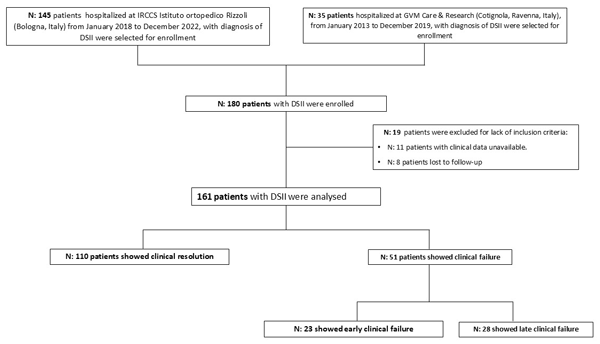
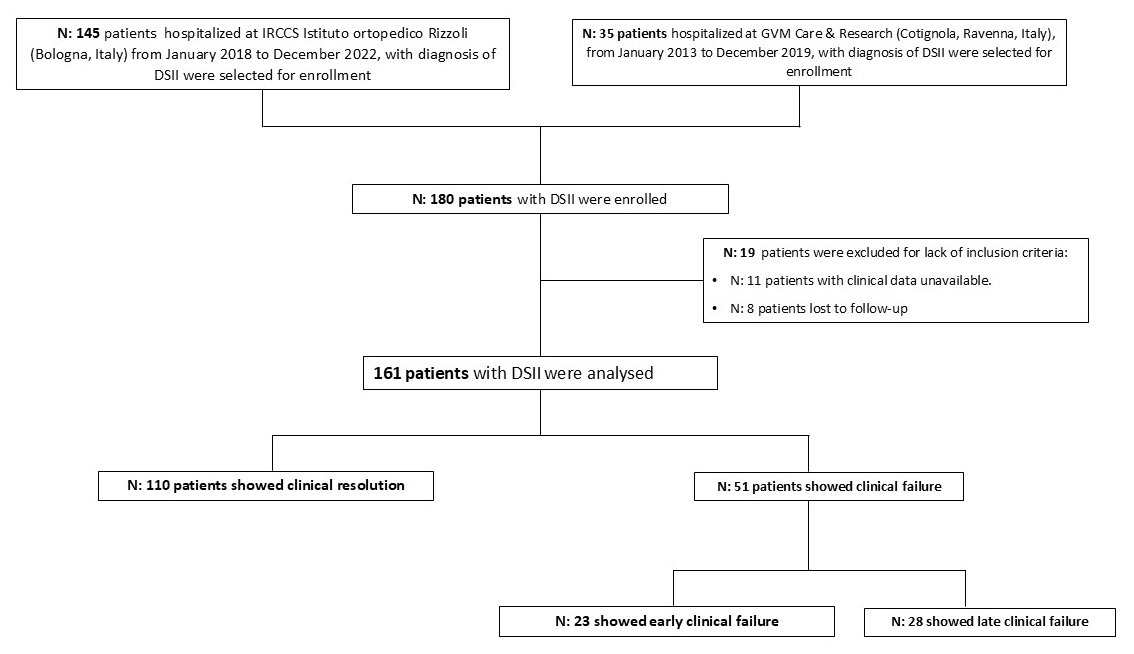
In the study period 180 patients were diagnosed with a DSII. After applying the inclusion and exclusion criteria, 161 patients were analysed (Fig. 1). The diagnostic criteria used to define infection in the study cohort are detailed in Table S1 in the Supplement.
Overall, patients showed a median age of 62 years (IQR: 51–69), 87 (55.1 %) were male, and the median CCI was 3 (IQR: 1–4) (Table 1).
Spinal instrumental surgery was performed due to degenerative disease in 47 patients (29.2 %), scoliosis in 47 (29.2 %), and cancer in 31 (19.3 %). DSIIs were diagnosed at a median of 27 d (IQR: 13–41) after primary surgery and occurred more frequently in patients undergoing extensive spinal instrumentation from the cervical to the sacral region. Specifically, patients were diagnosed with early (by the first 3 months), delayed (from 3 to 24 months), and late (more than 24 months) DSII in 70.2 %, 16.5 %, and 13.3 % of cases, respectively. Wound dehiscence was the main clinical presentation (95, 59 %). Polymicrobial infection was diagnosed in 42 (26.4 %) patients. Gram-positive microorganisms accounted for the majority of DSII cases (91, 60.3%). Among Gram-negative rods, Pseudomonas aeruginosa (16/51, 31.4 %) and Escherichia coli (14/51, 27.5 %) were the most frequent pathogens isolated. As regards antibiotic treatment, the median treatment duration was 82 d (IQR: 43–96). Antibiotics used for empirical and targeted treatment are shown in Fig. 2.
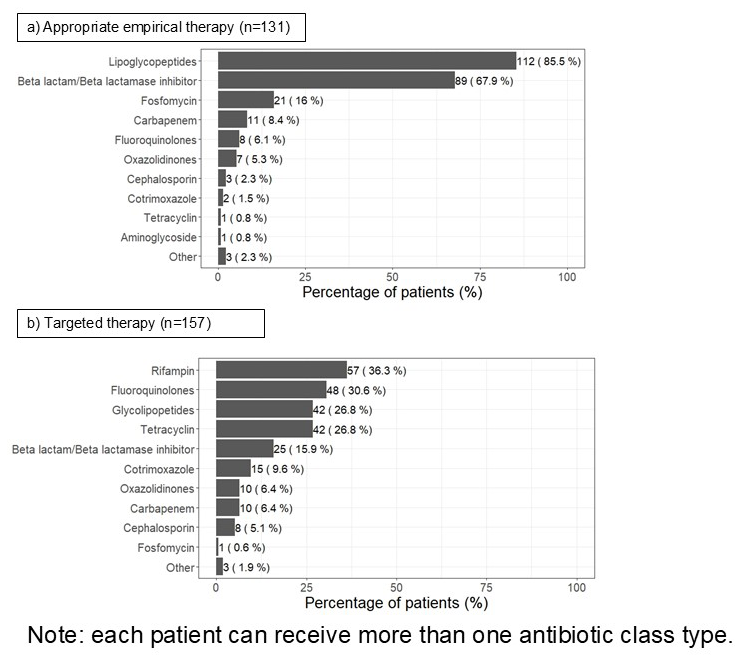
Figure 2Distribution of antibiotic class of appropriate empirical and targeted therapy. Note: each patient can receive more than one antibiotic class type.
Overall, rifampin was used in 57/161 (35.4 %) of targeted treatment regimens. Similarly, quinolones were used for DSII due to Gram-negative bacteria in 6/51 (11.8 %) and 28/51 (54.9 %) of empirical and targeted regimens, respectively. Inappropriate empirical therapy was administered in 19/150 (13 %) patients.
All enrolled patients underwent surgical treatment. Specifically, removal of the spinal implant without reimplantation, one-stage debridement with implant substitution, and surgical debridement without implant replacement were performed in 11/161 (6.8 %), 57/161 (35.4 %), and 93/161 (57.8 %) patients, respectively. Repeat surgical debridement was required in 31 (19 %) patients. The median time from DSII diagnosis to surgical debridement was 6.5 d (IQR: 2–17.5).
Overall, there were 51 (31.7 %) patients with treatment failure. Among them, we observed the reopening of the wound in 33 patients (64.7 %), onset of pain/clinical impairment in 4 (7.8 %), a new onset of a fistula in 11 (21.5 %). Finally, 3 (5.9 %) patients died due to DSII.
The comparison of patients with and without treatment failure is reported in Table 1. Patients with treatment failure showed higher age (66 (IQR: 59–71) versus 60 (IQR: 49–69), p=0.004), more use of corticosteroid treatment (5 (9.8 %) versus 2 (1.8 %), p=0.033), and cancer as the main condition brought to spinal instrumentation (15 (29.4 %) versus 16 (14.6 %), p=0.026). Conversely, appropriate empirical antimicrobial therapy was more frequently recorded in patients with clinical cure (95 (92.2 %) versus 36 (76.6 %), p=0.008).
Although no statistically significant differences were observed in failure rates according to the type of surgical treatment or the timing of its performance relative to infection diagnosis, we noted that patients with early failure (i.e. treatment failure diagnosed during antimicrobial therapy) more frequently underwent surgical debridement without removal or replacement of the spinal instrumentation (i.e. a conservative approach) (Table S2). Furthermore, DSII due to Gram-negative aetiology was observed more frequently in patients with treatment failure compared to patients with clinical cure (25 (52.1 %) versus 26 (25.2 %), p=0.004). The unadjusted distribution of rifampin and quinolone exposure according to treatment outcome is reported in Table S3.
Multivariable analyses were carried out to evaluate risk factors for treatment failure in two separate analyses, using treatment duration cutoffs of 8 weeks and 12 weeks, respectively. Patients with early failure were excluded from multivariable analyses, and only those who completed the full antibiotic course were analysed to assess the impact of antibiotic treatment on clinical cure while excluding the influence of potentially ineffective surgical source control. This analysis did not reveal a significant impact of the treatment schedule on clinical outcomes (Table 2). Landmark sensitivity analyses at 8 and 12 weeks were performed to assess the robustness of the association between treatment duration and outcome while minimizing immortal time bias. The results were overall consistent with the primary analyses, with no significant association between prolonged therapy duration and improved outcomes at either landmark. Effect estimates for the other covariates were generally similar in direction and magnitude, although confidence intervals remained wide due to the limited number of events (Tables S4 and S5). At the 8-week landmark, 90 patients were included, of which 22 experienced treatment failure. At the 12-week landmark, 75 patients were included, of which 20 experienced treatment failure. Excluding those with a negative culture result at the 8-week landmark, 83 patients were included, with 21 treatment failures. At the 12-week landmark, 70 patients were included, with 19 treatment failures.
Gram-negative etiology was confirmed as an independent risk factor for treatment failure in both schedules (8 weeks of treatment: OR 4.20, 95 % CI 1.08–16.38, p=0.039; 12 weeks of treatment: OR 4.46, 95 % CI 1.15–17.23, p=0.030). Conversely, the administration of quinolones was associated with a lower risk of treatment failure (8 weeks: OR 0.11, 95 % CI 0.02–0.71, p=0.020; 12 weeks: OR 0.11, 95 % CI 0.02–0.64, p=0.015). Similar findings were observed in subgroup analyses conducted among patients with Gram-positive and Gram-negative bacterial infections, excluding DSII cases with negative cultures (Table 3).
We analysed a large cohort of patients with DSII to define risk factors for treatment failure with duration of antimicrobial therapy as the main exposure. Patients who experienced treatment failure more frequently had cancer as the primary indication for surgery and a Gram-negative etiology of DSII. The role of Gram-negative pathogens as a risk factor for treatment failure was confirmed in the multivariable analysis. No significant differences were observed between the different treatment duration schedules. In contrast, the use of quinolones was associated with better outcomes.
Table 1Comparison of patients with and without treatment failure of DSII.
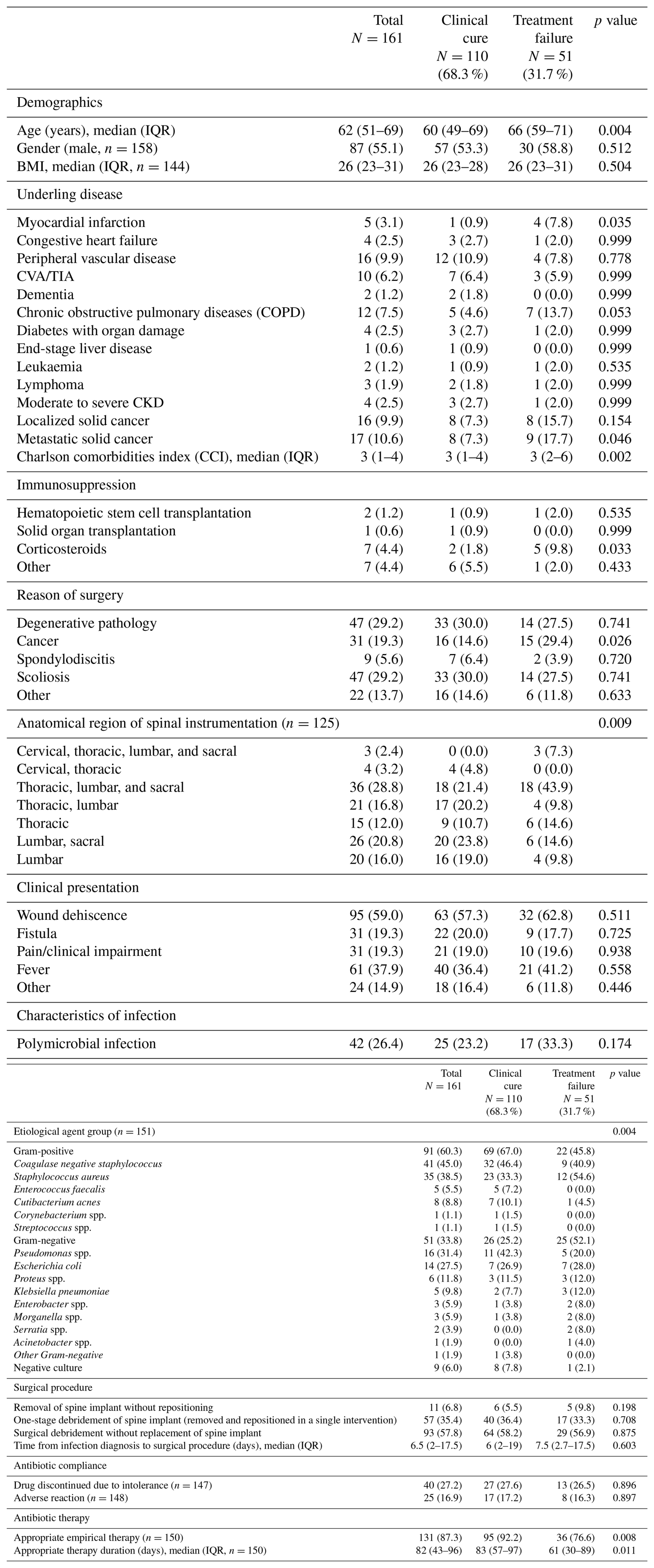
All values given are n (%) unless otherwise stated. Data are available for 161 patients unless otherwise stated. Abbreviations: BMI, body mass index; CVA, cerebral vascular accident; TIA, transient ischemic attack; CKD, chronic kidney disease; HIV, human immunodeficiency virus.
Table 2Firth multivariable logistic regressions for treatment failure according to 8 and 12 weeks of antibiotic treatment duration (n=127).
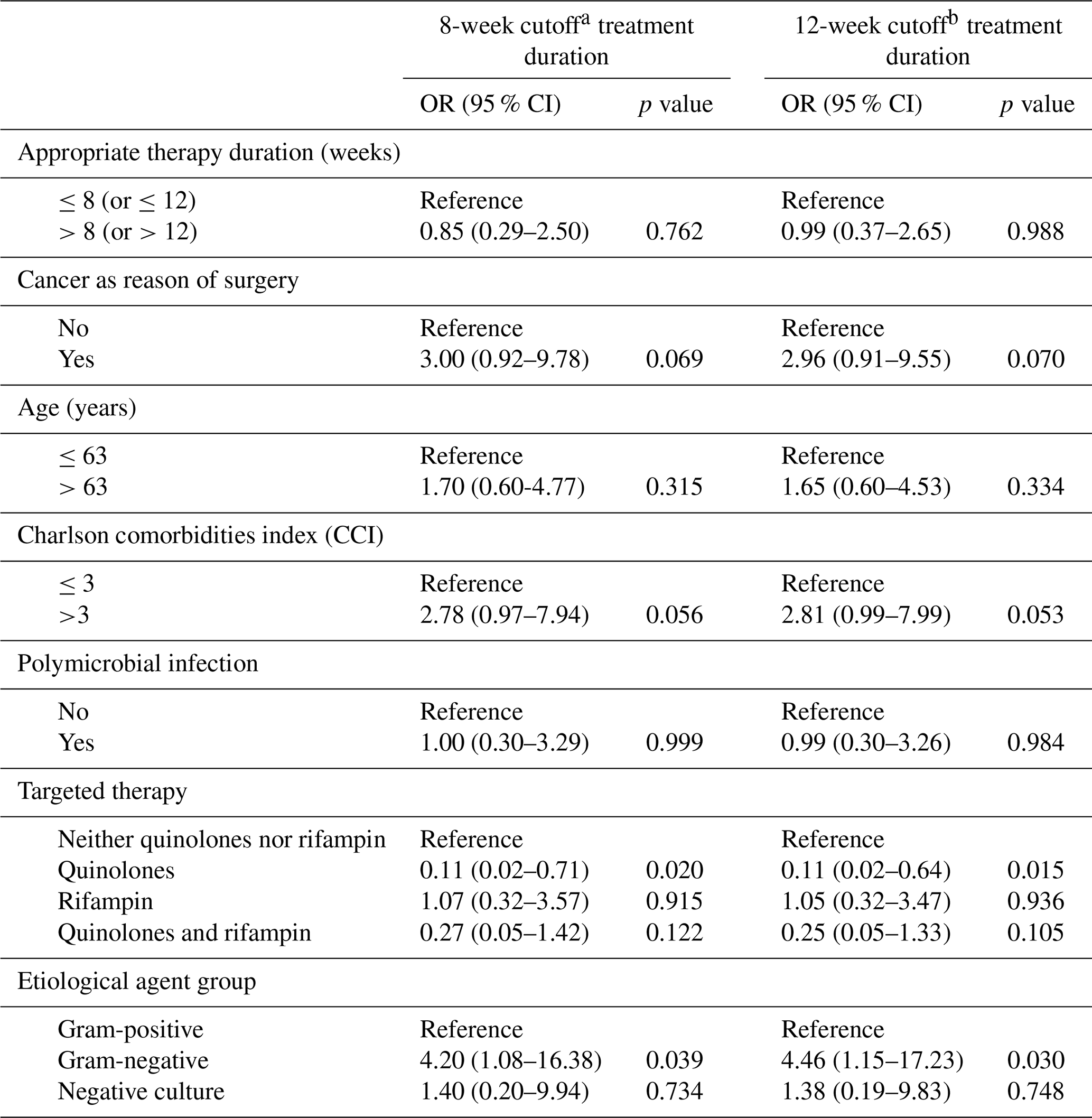
a A total of 35 patients were treated for ≤8 weeks and 92 for >8 weeks. b A total of 73 patients were treated for ≤12 weeks and 54 for >12 weeks. Note: patients with early clinical failure (n=22, i.e. clinical failure diagnosed during antibiotic treatment), a patient with early failure and missing etiological information (n=1), patients without information on etiological agent group (n=8), and patients with missing treatment start/end dates and/or outcome dates (n=3) were excluded from the main analysis.
Table 3Firth multivariable logistic regressions for treatment failure according to antibiotic treatment duration among patients with Gram-positive and Gram-negative bacterial infections (n=118).
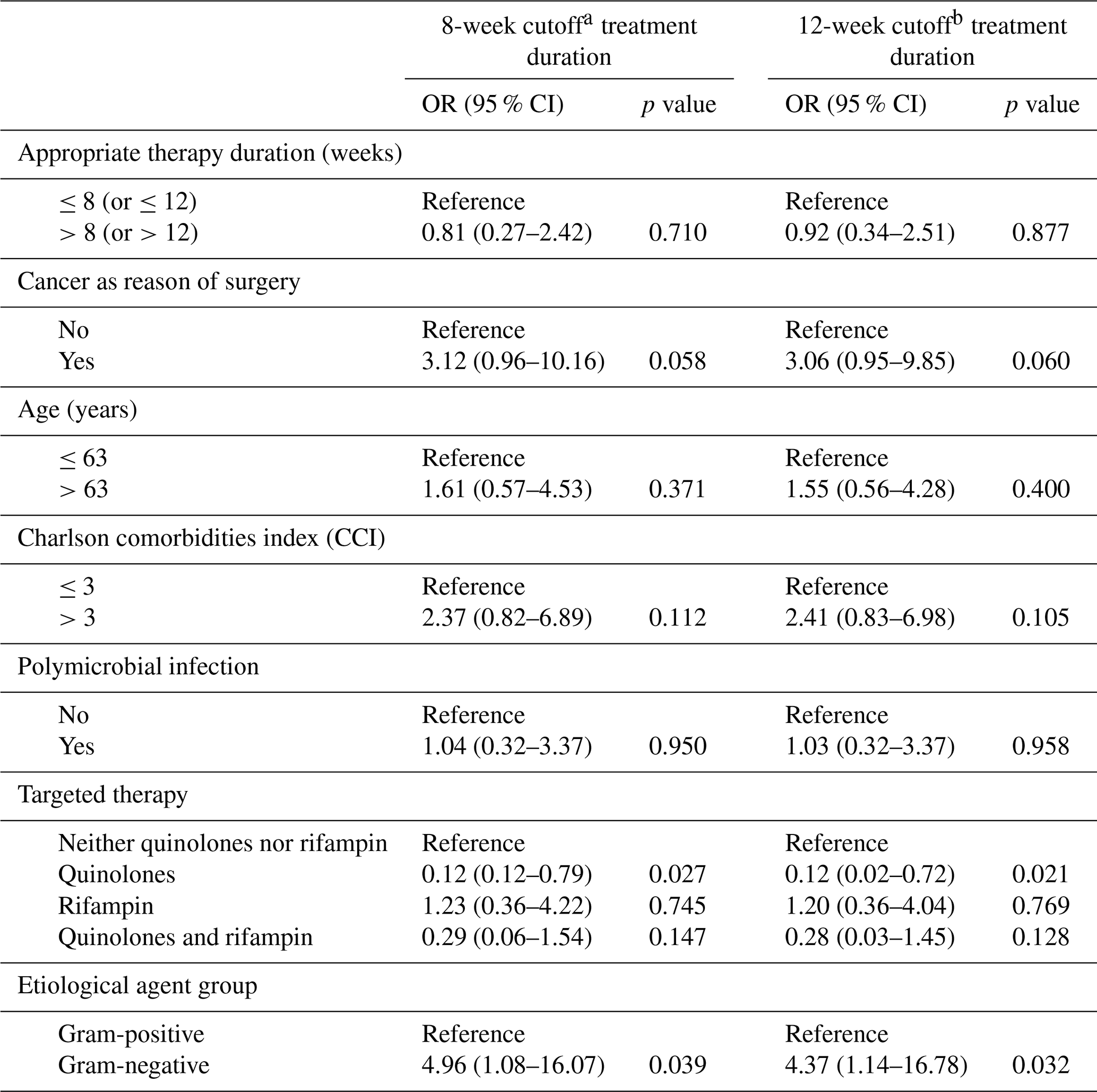
a A total of 34 patients were treated for ≤8 weeks and 84 for >8 weeks. b A total of 69 patients were treated for ≤12 weeks and 49 for >12 weeks. Note: patients with early treatment failure (n=22, i.e. failure diagnosed during antibiotic treatment), a patient with early failure and missing etiological information (n=1), patients with missing treatment start/end dates and/or outcome dates (n=3), negative culture results (n=9), and patients without information on etiological agent group (n=8) were excluded from this subgroup analysis.
Our cohort's epidemiology aligns with the existing literature, where degenerative spinal disease and scoliosis are leading causes for spinal instrumentation (Buser et al., 2018). However, a significant proportion of our patients (19.3 %) underwent spinal instrumentation for cancer and experienced treatment failure, likely reflecting the impaired ability of cancer patients to control infection due to immunosuppression, chemotherapy, disruption of physical barriers, and malnutrition (Seo et al., 2021).
Gram-positive organisms were the most frequent isolated pathogens in our cohort, as expected. However, Gram-negative bacteria, though less frequent, accounted for 34 % of infections, a proportion consistent with prior studies (de la Hera et al., 2021; Margaryan et al., 2020) and associated with a higher risk of treatment failure (Cunningham et al., 2017; Margaryan et al., 2020; Tsilika et al., 2025). Current understanding of implant-associated spinal infections and bone and joint infections caused by Gram-negative bacteria remains limited (Galanakis et al., 1997; Graham et al., 2013; Koutserimpas et al., 2018). However, it is well established that patients with malignancies are predisposed to Gram-negative infections due to immune dysfunction, chemotherapy-induced mucositis, the use of invasive devices, and prolonged hospital stays (Amanati et al., 2021; Islas-Muñoz et al., 2018).
Another important factor in evaluating DSII outcomes is the role of antibiotics with activity against biofilm. Quinolones and rifampin are among the most used for bone and joint infections (Lora-Tamayo et al., 2019; Pupaibool, 2024). In our study, quinolones seem to be associated with a reduced risk of treatment failure, in line with previous reports, particularly in cases with a Gram-negative etiology (Martínez-Pastor et al., 2009; Rodríguez-Pardo et al., 2014). However, the association between quinolone use and improved outcomes should be interpreted cautiously. Although Gram-negative infections seem associated with worse outcomes, quinolones were likely used in selected patients with susceptible pathogens and optimized targeted therapy. Thus, the observed association may reflect appropriate antimicrobial selection within a higher-risk subgroup rather than a true causal effect. Moreover, differences in surgical source control may have influenced both treatment choice and outcomes. Despite excluding early failures, residual confounding cannot be ruled out. Conversely, we did not demonstrate a protective effect of rifampin. However, evidence for rifampin's efficacy in bone and joint infections is limited. While retrospective studies have suggested benefits in prosthetic joint infections (Kruse et al., 2022), randomized controlled trials have failed to confirm a clear advantage (Pushkin et al., 2016; Zimmerli et al., 1998).
Currently, there are no clear guidelines on the optimal antibiotic treatment duration for DSII. From previous experiences, it ranges between 6–24 weeks (Benavent et al., 2021; Fernandez-Gerlinger et al., 2019; de la Hera et al., 2021; Karamian et al., 2022; Spatenkova et al., 2021; Tai et al., 2024). In our cohort, the median duration of antibiotic treatment was 11.7 weeks (IQR: 6–13). To investigate the efficacy of antibiotic therapy duration and minimize the impact of the surgical procedure on the outcome, we excluded early treatment failures (i.e. failure during antibiotic treatment). We investigated different antibiotic therapy schedules without finding a significant association between treatment duration and outcome in our exploratory analyses; however, these findings should not be interpreted as a direct comparison between different treatment durations. More studies are needed to determine the optimal antibiotic treatment duration for Gram-negative spinal infections.
Our study has several limitations. First, it involves two centres in the same geographic area, thus limiting the generalizability of the results. However, the standardized approach to patient care adopted in both centres, particularly regarding ID management, may enhance the reliability of our results. Notably, treatment duration was managed by the physician's personal assessment and not by study procedures. Consequently, confounding by indication cannot be excluded, as patients with more severe infections or poorer clinical conditions may have been preferentially treated with longer antibiotic regimens. A further limitation of our study is the rate of negative culture infections, higher than what has been reported in the literature (de la Hera et al., 2021). To mitigate this limitation, we conducted a sub-analysis of risk factors for treatment failure only in the population with a confirmed microbial etiology. Another limitation of this study is the difficulty in disentangling the relative impact of medical treatment and surgical intervention on clinical outcomes. Surgical factors, including type of procedure, number of debridements, and complexity of the surgery, are major determinants of outcome in DSII. However, these variables were not included in the multivariable models due to incomplete data and concerns of overfitting, and this may have resulted in residual confounding. We attempted to mitigate this issue by excluding patients with early failure from the analysis. However, this approach may have introduced both selection bias and immortal time bias. To mitigate the potential immortal time bias inherent to analyses of treatment duration, we additionally performed landmark sensitivity analyses at 8 and 12 weeks. These analyses yielded findings consistent with the primary models, supporting the robustness of the overall conclusions, although residual confounding and selection bias cannot be fully excluded in this observational setting. However, given the descriptive aim of the study, we focused on exploratory associations using logistic regression models rather than applying more complex time-to-event analyses. In addition, detailed information on the surgical procedure (including surgical magnitude, number of instrumented levels, presence of interbody devices) was not consistently available, potentially limiting adjustment for factors influencing infection severity and treatment complexity. In addition, the relatively low number of events compared to the number of variables included in the multivariable models may have increased the risk of overfitting and produced unstable estimates with wide confidence intervals. Therefore, these findings should be interpreted with caution and considered exploratory.
Another limitation of this study is the relatively short follow-up period for a DSII. However, this duration was chosen to ensure the study's feasibility and is consistent with the follow-up periods used in previous studies (Benavent et al., 2021; Fernandez-Gerlinger et al., 2019). Finally, being a retrospective study, there are missing data and challenges in precisely defining outcomes that are not clearly measurable from the retrospective documentation. However, a careful data review was attempted to minimize this issue.
Our study shows that patients with cancer as the main indication for spinal instrumentation and DSII due to Gram-negative rods seem to have a worse outcome more frequently. Our findings suggest that while treatment duration remains an important consideration, clinical outcome is more strongly influenced by the type of microorganism and the use of appropriate antibiotics rather than the treatment schedule. However, further studies, preferably prospective, are needed to confirm these findings.
The data are not publicly available due to the data-sharing policies of the participating universities and research institutions. De-identified data may be obtained from the corresponding author (Renato Pascale: renato.pascale2@unibo.it) upon reasonable request and subject to institutional approval.
The supplement related to this article is available online at https://doi.org/10.5194/jbji-11-601-2026-supplement.
RP and ST contributed to conceptualization and design of the study; NRG, GF, IG, MZ, AG, AZ, DS, and LB contributed to acquisition of data; MeGa and SC performed the analysis; RP, ST, MeGa, and SC contributed to writing the original draft; MaGi, EZ, AG, and PV supervised the work.
The contact author has declared that none of the authors has any competing interests.
The authors confirm that the present study has been performed in accordance with the principles of the Declaration of Helsinki. The study was approved by the ethics committee of the coordinating centre (no. 712/2022/Oss/AOUBo).
Publisher's note: Copernicus Publications remains neutral with regard to jurisdictional claims made in the text, published maps, institutional affiliations, or any other geographical representation in this paper. The authors bear the ultimate responsibility for providing appropriate place names. Views expressed in the text are those of the authors and do not necessarily reflect the views of the publisher.
The work reported in this publication was funded by the Italian Ministry of Health, RC-2025-2796962.
This paper was edited by Fintan Moriarty and reviewed by two anonymous referees.
Amanati, A., Sajedianfard, S., Khajeh, S., Ghasempour, S., Mehrangiz, S., Nematolahi, S., and Shahhosein, Z.: Bloodstream infections in adult patients with malignancy, epidemiology, microbiology, and risk factors associated with mortality and multi-drug resistance, BMC Infect. Dis., 21, 636, https://doi.org/10.1186/s12879-021-06243-z, 2021.
Benavent, E., Morata, L., Escrihuela-Vidal, F., Reynaga, E. A., Soldevila, L., Albiach, L., Pedro-Botet, M. L., Padullés, A., Soriano, A., and Murillo, O.: Long-Term Use of Tedizolid in Osteoarticular Infections: Benefits among Oxazolidinone Drugs, Antibiot. Basel Switz., 10, 53, https://doi.org/10.3390/antibiotics10010053, 2021.
Breslow, N. E. and Day, N. E.: Statistical methods in cancer research, in: Volume I – The analysis of case-control studies, IARC Sci. Publ., 5–338, ISBN 978-92-832-0132-8, 1980.
Buser, Z., Ortega, B., D'Oro, A., Pannell, W., Cohen, J. R., Wang, J., Golish, R., Reed, M., and Wang, J. C.: Spine Degenerative Conditions and Their Treatments: National Trends in the United States of America, Global Spine J., 8, 57–67, https://doi.org/10.1177/2192568217696688, 2018.
Cunningham, D. J., Kavolus, J. J., Bolognesi, M. P., Wellman, S. S., and Seyler, T. M.: Specific Infectious Organisms Associated With Poor Outcomes in Treatment for Hip Periprosthetic Infection, J. Arthroplasty, 32, 1984–1990.e5, https://doi.org/10.1016/j.arth.2017.01.027, 2017.
de la Hera, B., Sánchez-Mariscal, F., Gómez-Rice, A., Vázquez-Vecilla, I., Zúñiga, L., and Ruano-Soriano, E.: Deep Surgical-Site Infection Following Thoracolumbar Instrumented Spinal Surgery: The Experience of 25 Years, Int. J. Spine Surg., 15, 144–152, https://doi.org/10.14444/8019, 2021.
Fernandez-Gerlinger, M.-P., Arvieu, R., Lebeaux, D., Rouis, K., Guigui, P., Mainardi, J.-L., and Bouyer, B.: Successful 6-Week Antibiotic Treatment for Early Surgical-site Infections in Spinal Surgery, Clin. Infect. Dis. Off. Publ. Infect. Dis. Soc. Am., 68, 1856–1861, https://doi.org/10.1093/cid/ciy805, 2019.
Fluss, R., Faraggi, D., and Reiser, B.: Estimation of the Youden Index and its associated cutoff point, Biom. J. Biom. Z., 47, 458–472, https://doi.org/10.1002/bimj.200410135, 2005.
Galanakis, N., Giamarellou, H., Moussas, T., and Dounis, E.: Chronic osteomyelitis caused by multi-resistant Gram-negative bacteria: evaluation of treatment with newer quinolones after prolonged follow-up, J. Antimicrob. Chemother., 39, 241–246, https://doi.org/10.1093/jac/39.2.241, 1997.
Graham, S. M., Fishlock, A., Millner, P., and Sandoe, J.: The management gram-negative bacterial haematogenous vertebral osteomyelitis: a case series of diagnosis, treatment and therapeutic outcomes, Eur. Spine J. Off. Publ. Eur. Spine Soc. Eur. Spinal Deform. Soc. Eur. Sect. Cerv. Spine Res. Soc., 22, 1845–1853, https://doi.org/10.1007/s00586-013-2750-4, 2013.
Harris, P. A., Taylor, R., Minor, B. L., Elliott, V., Fernandez, M., O'Neal, L., McLeod, L., Delacqua, G., Delacqua, F., Kirby, J., Duda, S. N., and REDCap Consortium: The REDCap consortium: Building an international community of software platform partners, J. Biomed. Inform., 95, 103208, https://doi.org/10.1016/j.jbi.2019.103208, 2019.
Islas-Muñoz, B., Volkow-Fernández, P., Ibanes-Gutiérrez, C., Villamar-Ramírez, A., Vilar-Compte, D., and Cornejo-Juárez, P.: Bloodstream infections in cancer patients. Risk factors associated with mortality, Int. J. Infect. Dis. IJID Off. Publ. Int. Soc. Infect. Dis., 71, 59–64, https://doi.org/10.1016/j.ijid.2018.03.022, 2018.
Karamian, B. A., Lambrechts, M. J., Sirch, F., Gupta, S., D'Antonio, N. D., Levy, H., Reiter, D., Dolhse, N., Qureshi, M., Mao, J., Canseco, J. A., Woods, B. I., Kaye, I. D., Hilibrand, A., Kepler, C. K., Vaccaro, A. R., and Schroeder, G. D.: Does Postoperative Spine Infection Bacterial Gram Type Affect Surgical Debridement or Antibiotic Duration?, Spine, 47, 1497–1504, https://doi.org/10.1097/BRS.0000000000004405, 2022.
Koutserimpas, C., Samonis, G., Plataki, M. N., Bikis, C., Kontakis, G., and Kofteridis, D. P.: Multidrug-resistant Gram-negative osteomyelitis: a 10-year study, Il G. Chir., 34, 284–290, 2018.
Kruse, C. C., Ekhtiari, S., Oral, I., Selznick, A., Mundi, R., Chaudhry, H., Pincus, D., Wolfstadt, J., and Kandel, C. E.: The Use of Rifampin in Total Joint Arthroplasty: A Systematic Review and Meta-Analysis of Comparative Studies, J. Arthroplasty, 37, 1650–1657, https://doi.org/10.1016/j.arth.2022.03.072, 2022.
Lora-Tamayo, J., Murillo, O., and Ariza, J.: Clinical Use of Colistin in Biofilm-Associated Infections, Adv. Exp. Med. Biol., 1145, 181–195, https://doi.org/10.1007/978-3-030-16373-0_13, 2019.
Margaryan, D., Renz, N., Bervar, M., Zahn, R., Onken, J., Putzier, M., Vajkoczy, P., and Trampuz, A.: Spinal implant-associated infections: a prospective multicentre cohort study, Int. J. Antimicrob. Agents, 56, 106116, https://doi.org/10.1016/j.ijantimicag.2020.106116, 2020.
Martínez-Pastor, J. C., Muñoz-Mahamud, E., Vilchez, F., García-Ramiro, S., Bori, G., Sierra, J., Martínez, J. A., Font, L., Mensa, J., and Soriano, A.: Outcome of acute prosthetic joint infections due to gram-negative bacilli treated with open debridement and retention of the prosthesis, Antimicrob. Agents Chemother., 53, 4772–4777, https://doi.org/10.1128/AAC.00188-09, 2009.
Pupaibool, J.: The Role of Rifampin in Prosthetic Joint Infections: Efficacy, Challenges, and Clinical Evidence, Antibiot. Basel Switz., 13, 1223, https://doi.org/10.3390/antibiotics13121223, 2024.
Pushkin, R., Iglesias-Ussel, M. D., Keedy, K., MacLauchlin, C., Mould, D. R., Berkowitz, R., Kreuzer, S., Darouiche, R., Oldach, D., and Fernandes, P.: A Randomized Study Evaluating Oral Fusidic Acid (CEM-102) in Combination With Oral Rifampin Compared With Standard-of-Care Antibiotics for Treatment of Prosthetic Joint Infections: A Newly Identified Drug-Drug Interaction, Clin. Infect. Dis. Off. Publ. Infect. Dis. Soc. Am., 63, 1599–1604, https://doi.org/10.1093/cid/ciw665, 2016.
Rodríguez-Baño, J., Gutiérrez-Gutiérrez, B., Machuca, I., and Pascual, A.: Treatment of Infections Caused by Extended-Spectrum-Beta-Lactamase-, AmpC-, and Carbapenemase-Producing Enterobacteriaceae, Clin. Microbiol. Rev., 31, e00079-17, https://doi.org/10.1128/CMR.00079-17, 2018.
Rodríguez-Pardo, D., Pigrau, C., Lora-Tamayo, J., Soriano, A., del Toro, M. D., Cobo, J., Palomino, J., Euba, G., Riera, M., Sánchez-Somolinos, M., Benito, N., Fernández-Sampedro, M., Sorli, L., Guio, L., Iribarren, J. A., Baraia-Etxaburu, J. M., Ramos, A., Bahamonde, A., Flores-Sánchez, X., Corona, P. S., Ariza, J., and REIPI Group for the Study of Prosthetic Infection: Gram-negative prosthetic joint infection: outcome of a debridement, antibiotics and implant retention approach. A large multicentre study, Clin. Microbiol. Infect. Off. Publ. Eur. Soc. Clin. Microbiol. Infect. Dis., 20, O911–919, https://doi.org/10.1111/1469-0691.12649, 2014.
Seo, S. K., Liu, C., and Dadwal, S. S.: Infectious Disease Complications in Patients with Cancer, Crit. Care Clin., 37, 69–84, https://doi.org/10.1016/j.ccc.2020.09.001, 2021.
Shaw, J. D., Nelson, S. B., Simpfendorfer, C., Berbari, E. F., Henry, M. W., Kleck, C. J., Savage, J., Agarwal, N., Oyekan, A. A., Rodrigues-Pinto, R., Wouthuyzen-Bakker, M., and Tande, A. J.: New Definition for Postoperative Spine Infection (PSI): From the Workgroup of the Musculoskeletal Infection Society (MSIS) and the European Bone & Joint Infection Society (EBJIS), Spine, https://doi.org/10.1097/BRS.0000000000005604, in press, 2025.
Spatenkova, V., Bradac, O., Jindrisek, Z., Hradil, J., Fackova, D., and Halacova, M.: Risk factors associated with surgical site infections after thoracic or lumbar surgery: a 6-year single centre prospective cohort study, J. Orthop. Surg., 16, 265, https://doi.org/10.1186/s13018-021-02418-1, 2021.
Tai, D. B. G., Patel, R., Lovecchio, F., Kwee, T., and Wouthuyzen-Bakker, M.: State-of-the-Art Review: Diagnosis and Management of Spinal Implant Infections, Clin. Infect. Dis. Off. Publ. Infect. Dis. Soc. Am., 79, e65–e71, https://doi.org/10.1093/cid/ciae436, 2024.
Tsilika, M., Ntziora, F., and Giannitsioti, E.: Antimicrobial Treatment Options for Multidrug Resistant Gram-Negative Pathogens in Bone and Joint Infections, Pathog. Basel Switz., 14, 130, https://doi.org/10.3390/pathogens14020130, 2025.
Yao, R., Zhou, H., Choma, T. J., Kwon, B. K., and Street, J.: Surgical Site Infection in Spine Surgery: Who Is at Risk?, Global Spine J., 8, 5S–30S, https://doi.org/10.1177/2192568218799056, 2018.
Zimmerli, W. and Ochsner, P. E.: Management of infection associated with prosthetic joints, Infection, 31, 99–108, https://doi.org/10.1007/s15010-002-3079-9, 2003.
Zimmerli, W., Widmer, A. F., Blatter, M., Frei, R., and Ochsner, P. E.: Role of rifampin for treatment of orthopedic implant-related staphylococcal infections: a randomized controlled trial. Foreign-Body Infection (FBI) Study Group, JAMA, 279, 1537–1541, https://doi.org/10.1001/jama.279.19.1537, 1998.