Articles | Volume 10, issue 6
https://doi.org/10.5194/jbji-10-553-2025
© Author(s) 2025. This work is distributed under
the Creative Commons Attribution 4.0 License.
the Creative Commons Attribution 4.0 License.
https://doi.org/10.5194/jbji-10-553-2025
© Author(s) 2025. This work is distributed under
the Creative Commons Attribution 4.0 License.
the Creative Commons Attribution 4.0 License.
Original full-length article
| 
08 Dec 2025
Original full-length article |
| 08 Dec 2025
| 08 Dec 2025
Clinical characteristics of culture-negative periprosthetic joint infections: findings from an international periprosthetic joint infection registry
Graham S. Goh
Department of Orthopaedic Surgery, Boston University Medical Center, Boston, Massachusetts, USA
Department of Medical Microbiology and Infection Prevention, University Medical Center Groningen, Groningen, the Netherlands
Elise R. Naufal
Department of Surgery, St Vincent's Hospital, Melbourne, Victoria, Australia
Michelle M. Dowsey
Department of Surgery, St Vincent's Hospital, Melbourne, Victoria, Australia
Sina Babazadeh
Department of Surgery, St Vincent's Hospital, Melbourne, Victoria, Australia
Jesse E. Otero
Levitetz Department of Orthopaedic Surgery, Cleveland Clinic Florida, Weston, Florida, USA
Carlos A. Higuera-Rueda
OrthoCarolina Hip and Knee Center, Charlotte, North Carolina, USA
Marjan Wouthuyzen-Bakker
CORRESPONDING AUTHOR

Department of Medical Microbiology and Infection Prevention, University Medical Center Groningen, Groningen, the Netherlands
A full list of authors appears at the end of the paper.
Related authors
Joseph J. Connolly, Marcos R. Gonzalez, Joshua B. Davis, Youssef H. Moussaoui, Graham S. Goh, Antonia F. Chen, Adam S. Olsen, and Santiago A. Lozano-Calderón
J. Bone Joint Infect., 10, 459–469, https://doi.org/10.5194/jbji-10-459-2025, https://doi.org/10.5194/jbji-10-459-2025, 2025
Short summary
Short summary
Periprosthetic joint infection (PJI) is a serious complication of oncologic joint reconstructions with large endoprosthetics. Although the microbiology of PJI in conventional joint replacements is well characterized, it is lacking for oncologic patients. This study found that the microbiology of oncologic PJI is distinct from conventional joint replacement PJI and that microbiology varies in different cancer subpopulations. These findings will help improve targeted antibiotic treatment for PJI.
Irene K. Sigmund, Marjan Wouthuyzen-Bakker, Tristan Ferry, Ricardo Sousa, Daniel Pérez-Prieto, Alex Soriano, Volker Alt, Willem J. Metsemakers, Martin Clauss, and Rihard Trebse
J. Bone Joint Infect., 11, 651–654, https://doi.org/10.5194/jbji-11-651-2026, https://doi.org/10.5194/jbji-11-651-2026, 2026
Short summary
Short summary
Sinus tracts are currently classified as present or absent in PJI definitions. Although appropriate for diagnosis, this binary approach does not reflect the considerable heterogeneity encountered in clinical practice. This Viewpoint highlights characteristics that may determine sinus tract complexity and proposes a framework for future standardized characterization to better inform surgical decision-making and treatment outcomes.
Laura Bessems, Jolien Onsea, Marjan Wouthuyzen-Bakker, Irene K. Sigmund, Tristan Ferry, Richard Kuehl, Martin Clauss, Alex Soriano, Ricardo Sousa, Annette Schuermans, and Willem-Jan Metsemakers
J. Bone Joint Infect., 11, 489–492, https://doi.org/10.5194/jbji-11-489-2026, https://doi.org/10.5194/jbji-11-489-2026, 2026
Short summary
Short summary
We examined whether patients with musculoskeletal infections need to be separated in hospital. A review of published studies found no support for routine isolation or dedicated wards for infections without multidrug-resistant organisms when standard precautions are applied. An international survey showed wide variation in clinician attitudes. These findings highlight a gap between evidence and perception and support a more risk-based approach.
Laura Bessems, Jolien Onsea, Baixing Chen, Marjan Wouthuyzen-Bakker, Irene K. Sigmund, Tristan Ferry, Richard Kuehl, Martin Clauss, Alex Soriano, Ricardo Sousa, Annette Schuermans, and Willem-Jan Metsemakers
J. Bone Joint Infect., 10, 489–500, https://doi.org/10.5194/jbji-10-489-2025, https://doi.org/10.5194/jbji-10-489-2025, 2025
Short summary
Short summary
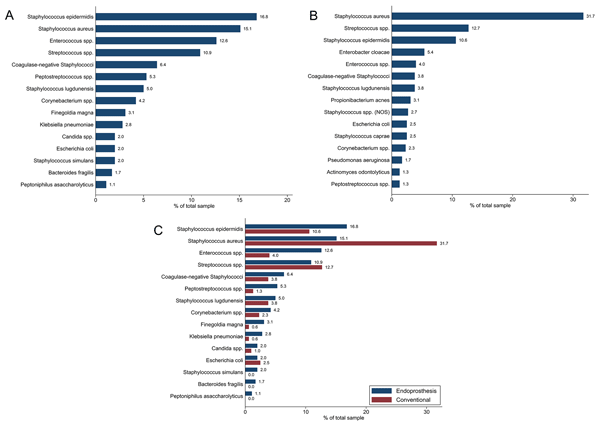
Isolation of patients with musculoskeletal infections in orthopedic care is controversial. Evidence supports selective isolation for certain resistant pathogens but not for non-resistant pathogens, nor does it support the routine use of septic wards. Effective infection control depends on hospital-wide strategies and adherence to standard precautions, with specialized centres offering better care than dedicated isolation units.
Joseph J. Connolly, Marcos R. Gonzalez, Joshua B. Davis, Youssef H. Moussaoui, Graham S. Goh, Antonia F. Chen, Adam S. Olsen, and Santiago A. Lozano-Calderón
J. Bone Joint Infect., 10, 459–469, https://doi.org/10.5194/jbji-10-459-2025, https://doi.org/10.5194/jbji-10-459-2025, 2025
Short summary
Short summary
Periprosthetic joint infection (PJI) is a serious complication of oncologic joint reconstructions with large endoprosthetics. Although the microbiology of PJI in conventional joint replacements is well characterized, it is lacking for oncologic patients. This study found that the microbiology of oncologic PJI is distinct from conventional joint replacement PJI and that microbiology varies in different cancer subpopulations. These findings will help improve targeted antibiotic treatment for PJI.
Hendrika M. Schenk, Marine Sebillotte, Jose Lomas, Adrian Taylor, Eva Benavent, Oscar Murillo, Marta Fernandez-Sampedro, Kaisa Huotari, Craig Aboltins, Rihard Trebse, Alex Soriano, Marjan Wouthuyzen-Bakker, and on behalf of the ESCMID Study Group on Implant Associated Infections (ESGIAI)
J. Bone Joint Infect., 10, 217–224, https://doi.org/10.5194/jbji-10-217-2025, https://doi.org/10.5194/jbji-10-217-2025, 2025
Short summary
Short summary
Patients with rheumatoid arthritis have a high treatment failure rate when faced with a late acute periprosthetic joint infection. Because of the rarity of the condition, we performed a multicenter case-control study. We identified predictors of treatment failure to ultimately improve the treatment outcome. Exchange of modular components seems important in this patient group, likely due to a higher rate of positive blood cultures compared to control patients.
Irene K. Sigmund, Marjan Wouthuyzen-Bakker, Tristan Ferry, Willem-Jan Metsemakers, Martin Clauss, Alex Soriano, Rihard Trebse, and Ricardo Sousa
J. Bone Joint Infect., 10, 139–142, https://doi.org/10.5194/jbji-10-139-2025, https://doi.org/10.5194/jbji-10-139-2025, 2025
Short summary
Short summary
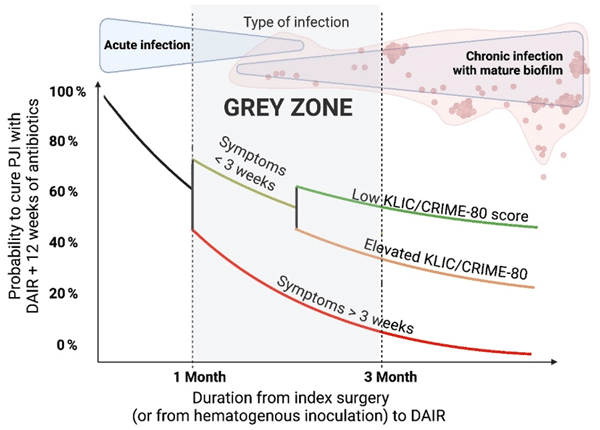
This is a summary of our position paper on debridement, antimicrobial therapy, and implant retention (DAIR) procedures as a curative treatment strategy for acute periprosthetic hip and knee infections. It includes the defined indications as well as the contraindications of DAIR procedures when eradication/cure is intended, based on the currently available literature.
Irene K. Sigmund, Tristan Ferry, Ricardo Sousa, Alex Soriano, Willem-Jan Metsemakers, Martin Clauss, Rihard Trebse, and Marjan Wouthuyzen-Bakker
J. Bone Joint Infect., 10, 101–138, https://doi.org/10.5194/jbji-10-101-2025, https://doi.org/10.5194/jbji-10-101-2025, 2025
Short summary
Short summary
In this paper, we discuss the most relevant factors influencing the outcome and define indications, contraindications, and risk factors of a DAIR procedure based on the currently available literature. Furthermore, we discuss the surgical technique in combination with systemic antimicrobial therapy in patients undergoing a DAIR procedure.
Sebastian Simon, Marjan Wouthuyzen-Bakker, Susana Gardete Hartmann, Jennyfer A. Mitterer, Sujeesh Sebastian, Stephanie Huber, Bernhard J. H. Frank, and Jochen G. Hofstaetter
J. Bone Joint Infect., 10, 51–59, https://doi.org/10.5194/jbji-10-51-2025, https://doi.org/10.5194/jbji-10-51-2025, 2025
Short summary
Short summary
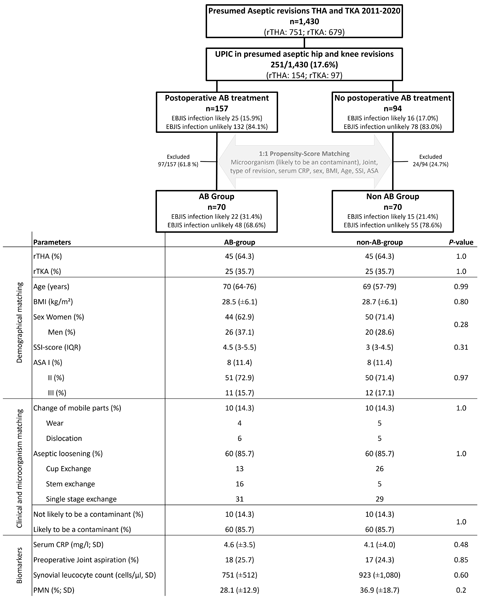
We compared the re-revision rates in rTHA and rTKA (revison total hip and knee arthroplasty) with and without AB (antibiotic) treatment in patients with UPICs (unexpected positive intraoperative cultures). The re-revision rate between the AB group and the non-AB group was similar. Postoperative AB treatment did not result in a decreased re-revision rate in patients with UPICs in presumed aseptic rTHA and rTKA. Patients with pathogens classified as a likely contaminant can be safely ignored.
Seung-Jae Yoon, Paul C. Jutte, Alex Soriano, Ricardo Sousa, Wierd P. Zijlstra, and Marjan Wouthuyzen-Bakker
J. Bone Joint Infect., 9, 231–239, https://doi.org/10.5194/jbji-9-231-2024, https://doi.org/10.5194/jbji-9-231-2024, 2024
Short summary
Short summary
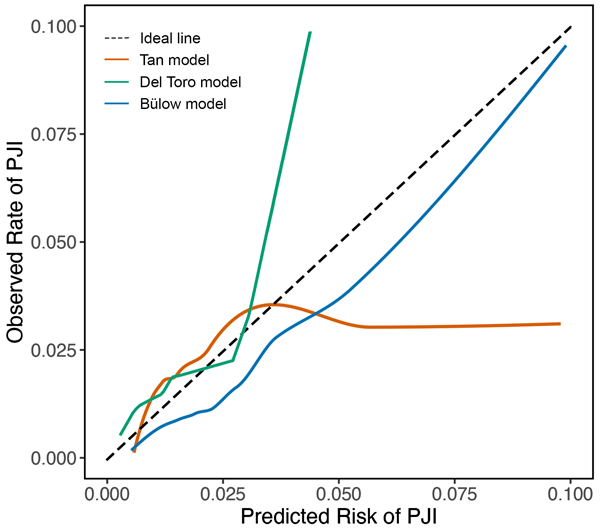
This study validated three models for predicting infection after hip and knee replacement surgery. By analyzing data from 2684 patients in the Netherlands, Portugal, and Spain, we found that the models developed by Tan, Del Toro, and Bülow effectively identified high-risk patients. These models can be used to enhance preoperative counseling and to tailor infection prevention measures individually, potentially improving outcomes and reducing healthcare costs.
Stéphanie Pascual, Brooklyn Noble, Nusreen Ahmad-Saeed, Catherine Aldridge, Simone Ambretti, Sharon Amit, Rachel Annett, Shaan Ashk O'Shea, Anna Maria Barbui, Gavin Barlow, Lucinda Barrett, Mario Berth, Alessandro Bondi, Nicola Boran, Sara E. Boyd, Catarina Chaves, Martin Clauss, Peter Davies, Ileana T. Dianzo-Delgado, Jaime Esteban, Stefan Fuchs, Lennart Friis-Hansen, Daniel Goldenberger, Andrej Kraševac Glaser, Juha O. Groonroos, Ines Hoffmann, Tomer Hoffmann, Harriet Hughes, Marina Ivanova, Peter Jezek, Gwennan Jones, Zeynep Ceren Karahan, Cornelia Lass-Flörl, Frédéric Laurent, Laura Leach, Matilde Lee Horsbøll Pedersen, Caroline Loiez, Maureen Lynch, Robert J. Maloney, Martin Marsh, Olivia Milburn, Shanine Mitchell, Luke S. P. Moore, Lynn Moffat, Marianna Murdjeva, Michael E. Murphy, Deepa Nayar, Giacomo Nigrisoli, Fionnuala O'Sullivan, Büşra Öz, Teresa Peach, Christina Petridou, Mojgan Prinz, Mitja Rak, Niamh Reidy, Gian Maria Rossolini, Anne-Laure Roux, Patricia Ruiz-Garbajosa, Kordo Saeed, Llanos Salar-Vidal, Carlos Salas Venero, Mathyruban Selvaratnam, Eric Senneville, Peter Starzengruber, Ben Talbot, Vanessa Taylor, Rihard Trebše, Deborah Wearmouth, Birgit Willinger, Marjan Wouthuyzen-Bakker, Brianne Couturier, and Florence Allantaz
J. Bone Joint Infect., 9, 87–97, https://doi.org/10.5194/jbji-9-87-2024, https://doi.org/10.5194/jbji-9-87-2024, 2024
Short summary
Short summary
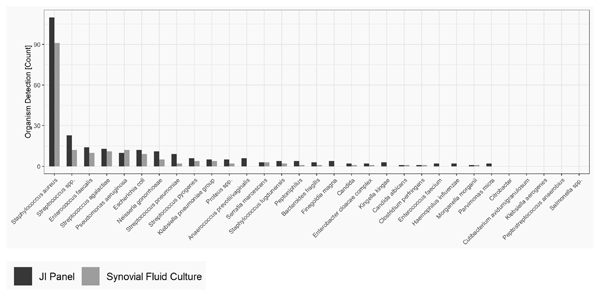
This study conducted in multiple sites across Europe aimed to evaluate the BIOFIRE Joint Infection (JI) Panel, a new technology that uses multiplex PCR to detect microorganisms in synovial fluid of patients with suspicion of joint infections in 1 h, in comparison with synovial fluid culture. Results showed an overall agreement of 85 % to 88.4 % between the two methods. The JI Panel detected additional organisms, and the positive user experience highlights its clinical significance.
Jorrit Willem Adriaan Schoenmakers, Rosanne de Boer, Lilli Gard, Greetje Anna Kampinga, Marleen van Oosten, Jan Maarten van Dijl, Paulus Christiaan Jutte, and Marjan Wouthuyzen-Bakker
J. Bone Joint Infect., 8, 45–50, https://doi.org/10.5194/jbji-8-45-2023, https://doi.org/10.5194/jbji-8-45-2023, 2023
Short summary
Short summary
In a first evaluation, the accuracy of a novel multiplex PCR (polymerase chain reaction) panel for rapid detection of pathogens in patients with a clinical suspicion of acute septic arthritis of native and prosthetic joints is assessed. Clear benefit is seen in patients with a suspected native septic arthritis and late acute prosthetic joint infection. This indicates that the panel allows for fast tailoring of antibiotics and may prompt the surgeon for surgical lavage in doubtful clinical cases.

Anabelle Visperas, Daniel Santana, Minseon Ju, Nathalie B. Milbrandt, Yu Hsin Tsai, Sameera Wickramasinghe, Alison K. Klika, Nicolas S. Piuzzi, Anna Cristina S. Samia, and Carlos A. Higuera-Rueda
J. Bone Joint Infect., 7, 91–99, https://doi.org/10.5194/jbji-7-91-2022, https://doi.org/10.5194/jbji-7-91-2022, 2022
Short summary
Short summary
Periprosthetic joint infection (PJI) is a complication of total joint arthroplasty, and treatment failure rates are still quite high. This study has developed a novel rabbit model of PJI that provides an opportunity to introduce treatments during ongoing infection, with readouts including a quantifiable method to assess biofilm coverage on implants via scanning electron microscopy (SEM).
Murillo Adrados, Michael M. Valenzuela, Bryan D. Springer, Susan M. Odum, Thomas K. Fehring, and Jesse E. Otero
J. Bone Joint Infect., 7, 51–53, https://doi.org/10.5194/jbji-7-51-2022, https://doi.org/10.5194/jbji-7-51-2022, 2022
Short summary
Short summary
Areas in orthopedics, such as spinal metastasis and sarcomas, have shown benefits of concentrated care in specialized centers. Currently in the US, no such centers exist for treatment of periprosthetic joint infection (PJI). We established a PJI center and review our first-year experience. Additionally, we note the complexity and volume of referrals, in addition to the abundant opportunities for research that referral centers provide. PJI centers are feasible and can improve PJI care.
Marjan Wouthuyzen-Bakker and Alexander L. Boerboom
J. Bone Joint Infect., 7, 33–34, https://doi.org/10.5194/jbji-7-33-2022, https://doi.org/10.5194/jbji-7-33-2022, 2022
Short summary
Short summary
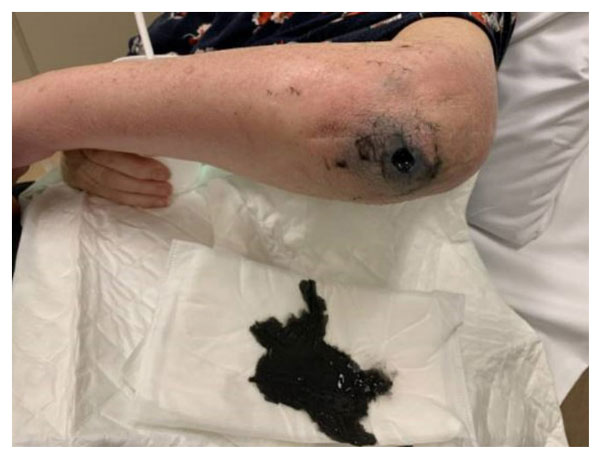
This case illustrates the clinical picture of a worn-out elbow prosthesis resulting in severe metallosis and a subsequent periprosthetic joint infection.
Karsten D. Ottink, Stefan J. Gelderman, Marjan Wouthuyzen-Bakker, Joris J. W. Ploegmakers, Andor W. J. M. Glaudemans, and Paul C. Jutte
J. Bone Joint Infect., 7, 1–9, https://doi.org/10.5194/jbji-7-1-2022, https://doi.org/10.5194/jbji-7-1-2022, 2022
Short summary
Short summary
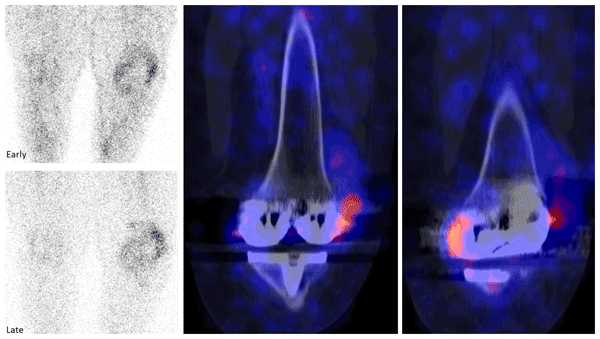
A low-grade periprosthetic joint infection (PJI) may be difficult to diagnose, and nuclear imaging could help in the diagnosis. However, its diagnostic value is unclear. We retrospectively evaluated this diagnostic value. We conclude that in patients presenting with nonspecific symptoms and a low a priori chance of PJI based on clinical evaluation, nuclear imaging is of no clear added value in diagnosing a PJI.
Cited articles
Abdel, M. P., Akgün, D., Akin, G., Akinola, B., Alencar, P., Amanatullah, D. F., Babazadeh, S., Borens, O., Vicente Cabral, R. M., Cichos, K. H., Deirmengian, C., de Steiger, R., Ghanem, E., Radtke Gonçalves, J. R., Goodman, S., Hamlin, B., Hwang, K., Klatt, B. A., Lee, G.-C., Manrique, J., Moon, A. S., Ogedegbe, F., Salib, C. G., Tian, S., and Winkler, T.: Hip and Knee Section, Diagnosis, Pathogen Isolation, Culture: Proceedings of International Consensus on Orthopedic Infections, J. Arthroplasty, 34, S361–S367, https://doi.org/10.1016/j.arth.2018.09.020, 2019.
Berbari, E. F., Marculescu, C., Sia, I., Lahr, B. D., Hanssen, A. D., Steckelberg, J. M., Gullerud, R., and Osmon, D. R.: Culture-Negative Prosthetic Joint Infection, Clin. Infect. Dis., 45, 1113–1119, https://doi.org/10.1086/522184, 2007.
Browning, S., Manning, L., Metcalf, S., Paterson, D. L., Robinson, J. O., Clark, B., and Davis, J. S.: Characteristics and outcomes of culture-negative prosthetic joint infections from the Prosthetic Joint Infection in Australia and New Zealand Observational (PIANO) cohort study, J. Bone Joint Infect., 7, 203–211, https://doi.org/10.5194/jbji-7-203-2022, 2022.
Cazanave, C., Greenwood-Quaintance, K. E., Hanssen, A. D., Karau, M. J., Schmidt, S. M., Gomez Urena, E. O., Mandrekar, J. N., Osmon, D. R., Lough, L. E., Pritt, B. S., Steckelberg, J. M., and Patel, R.: Rapid Molecular Microbiologic Diagnosis of Prosthetic Joint Infection, J. Clin. Microbiol., 51, 2280–2287, https://doi.org/10.1128/JCM.00335-13, 2013.
Choi, H.-R., Kwon, Y.-M., Freiberg, A. A., Nelson, S. B., and Malchau, H.: Periprosthetic Joint Infection with Negative Culture Results: Clinical Characteristics and Treatment Outcome, J. Arthroplasty, 28, 899–903, https://doi.org/10.1016/j.arth.2012.10.022, 2013.
Corona, P. S., Goswami, K., Kobayashi, N., Li, W., Llinás, A., Marín-Peña, Ó., Monsalvo, D., Motta, F., Shope, A. J., Tarabichi, M., Vicente, M., and Yazdi, H.: General Assembly, Diagnosis, Pathogen Isolation: Proceedings of International Consensus on Orthopedic Infections, J. Arthroplasty, 34, S207–S214, https://doi.org/10.1016/j.arth.2018.09.072, 2019.
Fang, X., Li, W., Zhang, C., Huang, Z., Zeng, H., Dong, Z., and Zhang, W.: Detecting the Presence of Bacterial DNA and RNA by Polymerase Chain Reaction to Diagnose Suspected Periprosthetic Joint Infection after Antibiotic Therapy: Diagnose of PJI by DNA and RNA- based PCR, Orthop. Surg., 10, 40–46, https://doi.org/10.1111/os.12359, 2018.
Goh, G. S. and Parvizi, J.: Diagnosis and Treatment of Culture-Negative Periprosthetic Joint Infection, J. Arthroplasty, S0883540322000778, https://doi.org/10.1016/j.arth.2022.01.061, 2022.
Goswami, K., Clarkson, S., Phillips, C. D., Dennis, D. A., Klatt, B. A., O'Malley, M. J., Smith, E. L., Gililland, J. M., Pelt, C. E., Peters, C. L., Malkani, A. L., Palumbo, B. T., Lyons, S. T., Bernasek, T. L., Minter, J., Goyal, N., McDonald, J. F., Cross, M. B., Prieto, H. A., Lee, G.-C., Hansen, E. N., Bini, S. A., Ward, D. T., Shohat, N., Higuera, C. A., Nam, D., Della Valle, C. J., Parvizi, J., and on behalf of the Orthopedic Genomics Workgroup: An Enhanced Understanding of Culture-Negative Periprosthetic Joint Infection with Next-Generation Sequencing: A Multicenter Study, J. Bone Jt. Surg., 104, 1523–1529, https://doi.org/10.2106/JBJS.21.01061, 2022.
Hersh, B. L., Shah, N. B., Rothenberger, S. D., Zlotnicki, J. P., Klatt, B. A., and Urish, K. L.: Do Culture Negative Periprosthetic Joint Infections Remain Culture Negative?, J. Arthroplasty, 34, 2757–2762, https://doi.org/10.1016/j.arth.2019.06.050, 2019.
Huang, W., Yin, C., Wang, G., Rosenblum, J., Krishnan, S., Dimitrova, N., and Fallon, J. T.: Optimizing a Metatranscriptomic Next-Generation Sequencing Protocol for Bronchoalveolar Lavage Diagnostics, J. Mol. Diagn. JMD, 21, 251–261, https://doi.org/10.1016/j.jmoldx.2018.09.004, 2019a.
Huang, Z., Zhang, C., Li, W., Fang, X., Wang, Q., Xing, L., Li, Y., Nie, X., Yang, B., and Zhang, W.: Metagenomic next-generation sequencing contribution in identifying prosthetic joint infection due to Parvimonas micra: a case report, J. Bone Joint Infect., 4, 50–55, https://doi.org/10.7150/jbji.30615, 2019b.
Jeong, H. S., Choi, S. M., Kwon, Y. J., Jang, M. O., Kim, M. J., Kim, S., Lee, A., Kim, S. E., Shin, S. U., Kim, U. J., Kang, S. J., Jung, S.-I., Shin, J.-H., Won, E. J., Kim, M.-N., and Park, K.-H.: Rapid and Accurate Diagnosis of Joint Infections, JBJS Open Access, 10, e25.00217, https://doi.org/10.2106/JBJS.OA.25.00217, 2025.
Kullar, R., Chisari, E., Snyder, J., Cooper, C., Parvizi, J., and Sniffen, J.: Next-Generation Sequencing Supports Targeted Antibiotic Treatment for Culture Negative Orthopedic Infections, Clin. Infect. Dis., 76, 359–364, https://doi.org/10.1093/cid/ciac733, 2023.
Lagier, J.-C., Dubourg, G., Million, M., Cadoret, F., Bilen, M., Fenollar, F., Levasseur, A., Rolain, J.-M., Fournier, P.-E., and Raoult, D.: Culturing the human microbiota and culturomics, Nat. Rev. Microbiol., 16, 540–550, 2018.
McNally, M., Sousa, R., Wouthuyzen-Bakker, M., Chen, A. F., Soriano, A., Vogely, H. C., Clauss, M., Higuera, C. A., and Trebše, R.: The EBJIS definition of periprosthetic joint infection: a practical guide for clinicians, Bone Jt. J., 103-B, 18–25, https://doi.org/10.1302/0301-620X.103B1.BJJ-2020-1381.R1, 2021.
Mortazavi, S. M. J., Vegari, D., Ho, A., Zmistowski, B., and Parvizi, J.: Two-stage Exchange Arthroplasty for Infected Total Knee Arthroplasty: Predictors of Failure, Clin. Orthop. Relat. Res., 469, 3049–3054, https://doi.org/10.1007/s11999-011-2030-8, 2011.
Mundi, R., Pincus, D., Schemitsch, E., Ekhtiari, S., Paterson, J. M., Chaudhry, H., Leis, J. A., Redelmeier, D. A., and Ravi, B.: Association Between Periprosthetic Joint Infection and Mortality Following Primary Total Hip Arthroplasty, J. Bone Jt. Surg., https://doi.org/10.2106/JBJS.23.01160, 2024.
Naufal, E. R., Wouthuyzen-Bakker, M., Soriano, A., Young, S. W., Higuera-Rueda, C. A., Otero, J. E., Fillingham, Y. A., Fehring, T. K., Springer, B. D., Shadbolt, C., Tay, M. L., Aboltins, C., Stevens, J., Darby, J., Poy Lorenzo, Y. S., Choong, P. F. M., Dowsey, M. M., and Babazadeh, S.: The Orthopaedic Device Infection Network: Building an Evidence Base for the Treatment of Periprosthetic Joint Infection Through International Collaboration, J. Arthroplasty, 39, 1391–1393, https://doi.org/10.1016/j.arth.2024.03.010, 2024.
Parvizi, J., Zmistowski, B., Berbari, E. F., Bauer, T. W., Springer, B. D., Della Valle, C. J., Garvin, K. L., Mont, M. A., Wongworawat, M. D., and Zalavras, C. G.: New Definition for Periprosthetic Joint Infection: From the Workgroup of the Musculoskeletal Infection Society, Clin. Orthop., 469, 2992–2994, https://doi.org/10.1007/s11999-011-2102-9, 2011.
Parvizi, J., Tan, T. L., Goswami, K., Higuera, C., Della Valle, C., Chen, A. F., and Shohat, N.: The 2018 Definition of Periprosthetic Hip and Knee Infection: An Evidence-Based and Validated Criteria, J. Arthroplasty, 33, 1309-1314.e2, https://doi.org/10.1016/j.arth.2018.02.078, 2018.
Premkumar, A., Kolin, D. A., Farley, K. X., Wilson, J. M., McLawhorn, A. S., Cross, M. B., and Sculco, P. K.: Projected Economic Burden of Periprosthetic Joint Infection of the Hip and Knee in the United States, J. Arthroplasty, https://doi.org/10.1016/j.arth.2020.12.005, 2020.
Reisener, M. and Perka, C.: Do Culture-Negative Periprosthetic Joint Infections Have a Worse Outcome Than Culture-Positive Periprosthetic Joint Infections? A Systematic Review and Meta-Analysis, BioMed Res. Int., 2018, 1–12, https://doi.org/10.1155/2018/6278012, 2018.
Ruppé, E., Lazarevic, V., Girard, M., Mouton, W., Ferry, T., Laurent, F., and Schrenzel, J.: Clinical metagenomics of bone and joint infections: a proof of concept study, Sci. Rep., 7, https://doi.org/10.1038/s41598-017-07546-5, 2017.
Street, T. L., Sanderson, N. D., Atkins, B. L., Brent, A. J., Cole, K., Foster, D., McNally, M. A., Oakley, S., Peto, L., Taylor, A., Peto, T. E. A., Crook, D. W., and Eyre, D. W.: Molecular Diagnosis of Orthopedic-Device-Related Infection Directly from Sonication Fluid by Metagenomic Sequencing, J. Clin. Microbiol., 55, 2334–2347, https://doi.org/10.1128/JCM.00462-17, 2017.
Tande, A. J. and Patel, R.: Prosthetic Joint Infection, Clin. Microbiol. Rev., 27, 302–345, https://doi.org/10.1128/CMR.00111-13, 2014.
Tarabichi, M., Shohat, N., Goswami, K., Alvand, A., Silibovsky, R., Belden, K., and Parvizi, J.: Diagnosis of Periprosthetic Joint Infection: The Potential of Next-Generation Sequencing, J. Bone Jt. Surg., 100, 147–154, https://doi.org/10.2106/JBJS.17.00434, 2018a.
Tarabichi, M., Alvand, A., Shohat, N., Goswami, K., and Parvizi, J.: Diagnosis of Streptococcus canis periprosthetic joint infection: the utility of next-generation sequencing, Arthroplasty Today, 4, 20–23, https://doi.org/10.1016/j.artd.2017.08.005, 2018b.
Thoendel, M. J., Jeraldo, P. R., Greenwood-Quaintance, K. E., Yao, J. Z., Chia, N., Hanssen, A. D., Abdel, M. P., and Patel, R.: Identification of Prosthetic Joint Infection Pathogens Using a Shotgun Metagenomics Approach, Clin. Infect. Dis., 67, 1333–1338, https://doi.org/10.1093/cid/ciy303, 2018.
Short summary
A multi-center study of 563 periprosthetic joint infections (PJIs) found that 16.5 % were culture negative. These patients more often had prior revision or PJI, longer symptom duration and fewer systemic signs. On multivariable analysis, symptom duration >12 weeks was the only independent risk factor (odds ratio 2.24). The findings support the fact that culture-negative infections present insidiously, informing diagnostic strategies.
A multi-center study of 563 periprosthetic joint infections (PJIs) found that 16.5 % were...


