Articles | Volume 10, issue 2
https://doi.org/10.5194/jbji-10-155-2025
© Author(s) 2025. This work is distributed under
the Creative Commons Attribution 4.0 License.
the Creative Commons Attribution 4.0 License.
https://doi.org/10.5194/jbji-10-155-2025
© Author(s) 2025. This work is distributed under
the Creative Commons Attribution 4.0 License.
the Creative Commons Attribution 4.0 License.
Original full-length article
| 
15 Apr 2025
Original full-length article |
| 15 Apr 2025
| 15 Apr 2025
Autogenous bone graft in the management of post-osteomyelitis bone defects in children in a limited-resource setting – a retrospective cohort study with a minimum follow-up of 7 years
Antonio Loro
CORRESPONDING AUTHOR
Department of Orthopaedics, CoRSU Rehabilitation Hospital, Kisubi, Uganda
Fulvio Franceschi
independent researcher: Trento, Italy
Muhumuza M. Fisha
Department of Orthopaedics, CoRSU Rehabilitation Hospital, Kisubi, Uganda
Emmanuel Ewochu
Department of Orthopaedics, CoRSU Rehabilitation Hospital, Kisubi, Uganda
Geoffrey Mwanje
Department of Orthopaedics, CoRSU Rehabilitation Hospital, Kisubi, Uganda
Annamaria Dal Lago
Department of Paediatrics, CoRSU Rehabilitation Hospital, Kisubi, Uganda
Martin McNally
Honorary Consultant in Limb Reconstruction, Oxford Bone Infection Unit, Oxford University Hospitals, Oxford, UK
Related authors
Antonio Loro
J. Bone Joint Infect., 7, 183–185, https://doi.org/10.5194/jbji-7-183-2022, https://doi.org/10.5194/jbji-7-183-2022, 2022
Short summary
Short summary
Forty years ago I made a radical professional choice: to dedicate a few years of practice to the African continent. Not surprisingly, a few years became many. This paper is dedicated to the children who are battling osteoarticular infections and to those who will be struggling with them in future.
Loïc Fonkoué, Elizabeth K. Tissingh, Leonard C. Marais, Mbonisi Malaba, Kidanemariam Abrha, Jamie Ferguson, Mario Morgenstern, Olivier Cornu, Maritz Laubscher, Randy Buzisa Mbuku, George W. Galiwango, Matthijs Botman, Justyna Wojno, Mtebe Venance Majigo, Claude Martin Jr., William James Harrison, Alexander Thomas Schade, Kebba Marenah, Malvern Nyamutora, Phiona E. Namale, Vuyisa Mdingi, and Martin McNally
J. Bone Joint Infect., 11, 401–411, https://doi.org/10.5194/jbji-11-401-2026, https://doi.org/10.5194/jbji-11-401-2026, 2026
Short summary
Short summary
Fracture-related infection is a serious problem after broken bones, especially in low-resource settings where specialist care and services are limited. An international expert group developed practical recommendations adapted to these realities. The guidance focuses on early fracture care, simple diagnostic approaches, flexible antibiotic use, affordable local treatments, good soft tissue management, and teamwork, aiming to improve safe and effective care in resource-limited environments.
Markus Luger, Martin McNally, Lukas Rabitsch, Reinhard Windhager, Richard Lass, and Irene Katharina Sigmund
J. Bone Joint Infect., 11, 305–313, https://doi.org/10.5194/jbji-11-305-2026, https://doi.org/10.5194/jbji-11-305-2026, 2026
Short summary
Short summary
Sinus tracts communicating with the prosthesis demonstrated high specificity and support their use as a confirmatory criterion for periprosthetic joint infection (PJI). Purulence also showed high specificity but may be better considered to be a suggestive criterion due to challenges in clinical differentiation. Both findings were associated with distinct microbiological patterns and less favourable outcomes, highlighting their clinical relevance.
Loïc Fonkoué, Elizabeth K. Tissingh, Cilia Ngang, Olivier Kennedy Muluem, Jasmine Sibatcheu Simo, Richard Douvamai, Jean Bahebeck, Olivier Cornu, and Martin McNally
J. Bone Joint Infect., 11, 53–63, https://doi.org/10.5194/jbji-11-53-2026, https://doi.org/10.5194/jbji-11-53-2026, 2026
Short summary
Short summary
This study assessed whether the diagnosis and management of fracture-related infections (FRIs) in a low- and middle-income countries (LMICs) currently align with consensus guidelines. We found that two-thirds of cases are managed outside the international guidelines. While the consensus definition is applicable, diagnostic capacity remains limited and microbiological standards are often impractical. Our findings highlight the need to adapt guidelines to local realities and to strengthen capacity in LMICs.
Josefine Slater, Maiken Stilling, Andreas Engel Krag, Sara Kousgaard Tøstesen, Mads Kristian Duborg Mikkelsen, Martin McNally, Alexander James Ramsden, Louise Kruse Jensen, Birgitte Jul Kiil, and Mats Bue
J. Bone Joint Infect., 10, 597–607, https://doi.org/10.5194/jbji-10-597-2025, https://doi.org/10.5194/jbji-10-597-2025, 2025
Short summary
Short summary
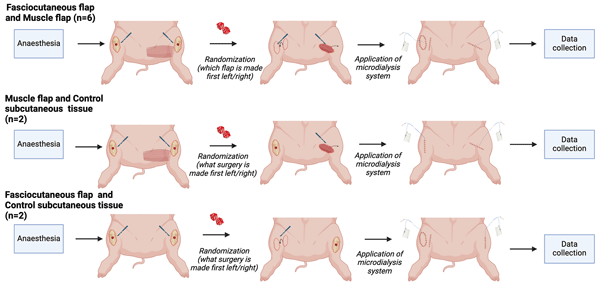
We developed a pig model to study how different tissue flaps support the healing microenvironment of lower-leg composite defects. By measuring tissue metabolism and examining tissue samples under the microscope, we found distinct early responses between muscle and fascia-based flaps. This model may help researchers and clinicians better understand the healing of complex bone and soft-tissue defects and may provide a platform for evaluating clinically relevant ortho-plastic outcomes.
Asanka Wijendra, Alex Ramsden, and Martin McNally
J. Bone Joint Infect., 8, 183–188, https://doi.org/10.5194/jbji-8-183-2023, https://doi.org/10.5194/jbji-8-183-2023, 2023
Short summary
Short summary
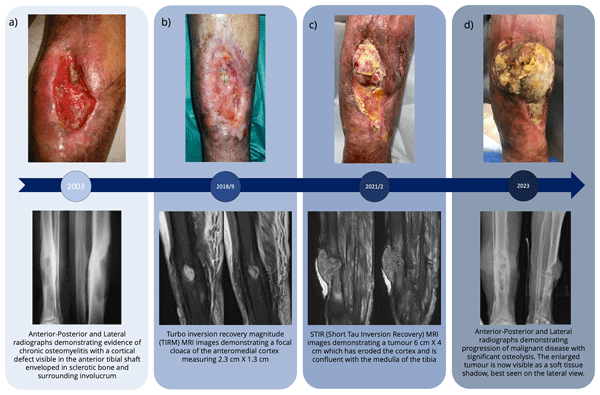
Cancerous transformation is a rare but potentially life-threatening complication of chronic bone infection. As with all forms of cancer, early detection and diagnosis is crucial to outcome.
Whilst there have been over 100 cases of chronic bone infection with cancerous transformation reported in the literature between 1999 and 2020, this is the first case report to document transformation with 20 years of concordant imaging and clinical review.
Niels Vanvelk, Esther M. M. Van Lieshout, Jolien Onsea, Jonathan Sliepen, Geertje Govaert, Frank F. A. IJpma, Melissa Depypere, Jamie Ferguson, Martin McNally, William T. Obremskey, Charalampos Zalavras, Michael H. J. Verhofstad, and Willem-Jan Metsemakers
J. Bone Joint Infect., 8, 133–142, https://doi.org/10.5194/jbji-8-133-2023, https://doi.org/10.5194/jbji-8-133-2023, 2023
Short summary
Short summary
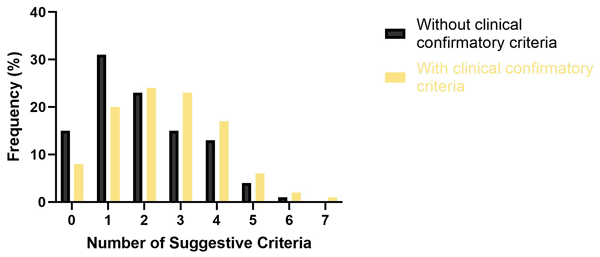
This international retrospective cohort study displays the diagnostic characteristics of 609 patients who were treated for fracture-related infection (FRI). Clinical confirmatory criteria were present in 77% of patients. In the remaining patients, the decision to operatively collect deep tissue cultures had to be based on a set of suggestive criteria. The combined use of these suggestive criteria should guide treating physicians in the management pathway of FRI.
Antonio Loro
J. Bone Joint Infect., 7, 183–185, https://doi.org/10.5194/jbji-7-183-2022, https://doi.org/10.5194/jbji-7-183-2022, 2022
Short summary
Short summary
Forty years ago I made a radical professional choice: to dedicate a few years of practice to the African continent. Not surprisingly, a few years became many. This paper is dedicated to the children who are battling osteoarticular infections and to those who will be struggling with them in future.
Cited articles
Allsopp, B. J., Hunter-Smith, D. J., and Rozen, W. M.: Vascularized versus nonvascularized bone grafts: what is the evidence?, Clin. Orthop. Relat. R., 474, 1319–1327, https://doi.org/10.1007/s11999-016-4769-4, 2016.
Baldan, M., Gosselin, R. A., Osman, Z., and Barrand, K. G.: Chronic osteomyelitis management in austere environments: the International Committee of the Red Cross experience, Trop. Med. Int. Health., 19, 832–837, https://doi.org/10.1111/tmi.12311, 2014.
Bezstarosti, H. M. W., Van Lieshout, E. M. M., Voskamp, L. W., Kortram, K., McNally, M. A., Marais, L. C., and Verhofstad, M. H. J.: Management of critical-sized bone defects in treatment of complex fracture-related infection; a systematic review and pooled analysis, Arch. Orthop. Traum. Su., 141, 1215–1230, https://doi.org/10.1007/s00402-020-03525-0, 2021.
Canavese, F., Corradin, M., Khan, A., Mansour, M., Rousset, M., and Samba, A.: Successful treatment of chronic osteomyelitis in children with debridement, antibiotic-laden cement spacer and bone graft substitute, Eur. J. Orthop. Surg. Tr., 27, 221–228, https://doi.org/10.1007/s00590-016-1859-7, 2017.
Cierny, G. and Mader, J. T.: Adult chronic osteomyelitis, Orthopedics, 7, 1557–1564, https://doi.org/10.3928/0147-7447-19841001-07, 1984.
Daoud, A. and Saighi-Bouaouina, A.: Treatment of sequestra, pseudarthroses, and defects in the long bone of children who have chronic haematogenous osteomyelitis, J. Bone. Joint. Surg. Am., 71, 1448–1468, 1989.
Ebraheim, N. A., Elgafy, H., and Xu, R.: Bone-graft harvesting from iliac and fibular donor site: techniques and complications, J. Am. Acad. Orthop. Sur., 9, 210–208, 2001.
El-Rosasy, M. A.: Ilizarov treatment for pseudarthrosis of the tibia due to haematogenous osteomyelitis, J. Pediatr. Orthop. B., 22, 200–206, https://doi.org/10.1097/BPB.0b013e328360268b, 2013.
Emami, A., Mjoberg, B., and Larsson, S.: Infected tibial nonunion. Good results after open cancellous grafting in 37 cases, Acta. Orthop. Scand., 66, 447–451, https://doi.org/10.3109/17453679508995585, 1995.
Fowles, J. B., Lehoux, J., Zlitni, M., Kassab, M. T., and Nolan, B.: Tibial defect due to acute haematogenous osteomyelitis: treatment and results in twenty-one children, J. Bone Joint Surg. Br., 61, 77–81, https://doi.org/10.1302/0301-620X.61B1.422639, 1979.
Hotchen, A. J., Dudareva, M., Corrigan, R. A., Ferguson, J. Y., and McNally, M. A.: Can we predict outcome after treatment of long bone osteomyelitis? A study of patient-reported quality of life, stratified with the BACH Classification, Bone Joint J., 102B, 1587–1596, https://doi.org/10.1302/0301-620X.102B11.BJJ-2020-0284.R1, 2020.
Loro, F. and Loro, A.: Autogenous bone graft in the management of post-osteomyelitis bone defects in children in a limited-resource setting – a retrospective cohort study with a minimum follow-up of 7 years, figshare [data set], https://doi.org/10.6084/m9.figshare.28689080.v1, 2025.
Loro, A., Hodges, A., Galiwango, G. W., and Loro, F.: Vascularized fibula flap in the management of segmental bone loss following osteomyelitis in children at a Ugandan hospital, J. Bone Joint Infect., 6, 179–187, https://doi.org/10.5194/jbji-6-179-2021, 2021.
Loro, A., Horn, A., Franceschi, F., and Mohan, V. B.: Pediatric Musculoskeletal Infections: a LMIC Perspective, in: Pediatric Musculoskeletal Infections, edited by: Belthur, M. V., Ranade, A. S., Herman, M. J., and Fernandes, J. A., Springer Nature, Switzerland, chap. 10, 165–187, https://doi.org/10.1007/978-3-030-95794-0_10, 2022.
Loro, A., Franceschi, F., Loro, F., and Brown, N.: Bone transport in the management of post-osteomyelitis tibia defects in pediatric population. A long term follow-up study in Uganda, Journal of Pediatric & Child Health Care, 8, 1–8, 2023.
McNally, M. A., Small, J. O., Tofighi, H., and Mollan, R. A. B.: Two stage management of chronic osteomyelitis of the long bones: The Belfast Technique, J. Bone Joint Surg. Br., 75, 375–380, https://doi.org/10.1302/0301-620X.75B3.8496203, 1993.
Panda, M., Ntungila, N., Kalunda, M., and Hinsenkamp, M.: Treatment of chronic osteomyelitis using the Papineau technique, Int. Orthop., 22, 37–40, https://doi.org/10.1007/s002640050204, 1998.
Papineau, L. J.: Osteocutaneous resection reconstruction in diaphyseal osteomyelitis, Clin. Orthop., 101, 306, 1974.
Patwardhan, S., Shyam, A. K., Mody, R. A., Sancheti, P. K., Mehta, R., and Agrawat, H.: Reconstruction of bone defects after osteomyelitis with nonvascularized fibular graft: a retrospective study in twenty-six children, J. Bone Joint Surg. Am., 95, e56, https://doi.org/10.2106/JBJS.K.01338, 2013.
Peterson, H. A.: The ulnius: a one-bone forearm in children, J. Pediatr. Orthop. B., 17, 95–101, https://doi.org/10.1097/bpb.0b013e3282f54849, 2008.
Rasool, M. N.: The treatment of tibial defects following chronic haematogenous pyogenic osteomyelitis in children, SA Orthopaedic Journal, Summer 2008, 34–42, 2008.
Rasool, M. N.: Pyogenic osteomyelitis of the forearm bones in children, SA Orthopaedic Journal, 10, 18–24, 2011.
Weiland, A. J., Moore, J. R., and Daniel, R. K.: Vascularized bone autografts: experience with 41 cases, Clin. Orthop. Relat. R., 174, 87–95, 1983.
Zahiri, C. A., Zahiri, H., and Tehrany, F.: Limb salvage in advanced chronic osteomyelitis in children, Int. Orthop., 21, 249–245, https://doi.org/10.1007/s002640050160, 1997.
Short summary
This retrospective study shows that autogenous non-vascularized bone graft is a viable option for managing post-osteomyelitis bone defects in children in low-resource settings. Bone union was achieved in all cases at the last follow-up (minimum of 7 years). Recurrence of infection was seen in two cases. Studies into this specific technique are important as it does not require super-specialized centres or skills, both of which are scarce in low-resource settings.
This retrospective study shows that autogenous non-vascularized bone graft is a viable option...


