the Creative Commons Attribution 4.0 License.
the Creative Commons Attribution 4.0 License.
 | 18 Nov 2026
Risk of infective endocarditis in patients with orthopedic surgical site device-related infection and Staphylococcus aureus bacteremia
Sébastien Rodrigues

Julie Leitao
Camille Damade
Romain Huguet
Jawad Rahal
Anne-Lise Munier
David Lebeaux
Benjamin Bouyer
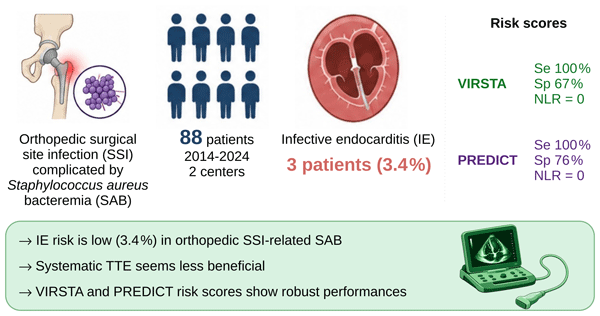
Introduction: Staphylococcus aureus bacteremia (SAB) related to surgical site infections (SSIs) with orthopedic devices pose significant challenges. Given the risk of infective endocarditis (IE), current guidelines recommend transthoracic echocardiography (TTE) in all cases of SAB, although debates persist regarding its utility in low-risk patients. The risk stratification scores VIRSTA and PREDICT have been proposed to guide TTE prioritization. Despite these efforts, limited data exist on IE risk in SAB secondary to peripheral orthopedic SSI. This study aims to evaluate both risk scores and to determine the usefulness of systematic TTE in cases of SAB related to orthopedic SSI. Materials and methods: A retrospective study was conducted of all consecutive patients with orthopedic non-spinal SSI and SAB at two university hospitals in France from 1 January 2014 to 1 January 2024. Descriptive analyses were performed to explore differences between patients with and without IE. Results: Of 88 patients with orthopedic SSI and SAB, only 3 developed IE. The VIRSTA and PREDICT scores showed robust diagnostic performances. Conclusion: Systematic TTE seems to be less beneficial in this context of SSI compared to other settings of SAB. TTE could be guided for high-risk patients.
- Article
(930 KB) - Full-text XML
-
Supplement
(625 KB) - BibTeX
- EndNote


Surgical site infections (SSIs) are one of the main complications in orthopedic surgery, significantly increasing patient morbidity, costs, and hospitalization duration (Patel et al., 2016). The overall incidence of SSIs in orthopedic surgery is estimated to be between 0.5 % and 5 %, depending on the type of surgery and the presence of risk factors (ECDC, 2023; Mellinghoff et al., 2023; Yang et al., 2020). Staphylococcus aureus (SA) is one of the main pathogens involved in SSIs in orthopedic surgery and accounts for approximately 20 % of nosocomial bacteremias (Wisplinghoff et al., 2004). In cases of SA bacteremia (SAB), the rare but most feared complication is infective endocarditis (IE). Due to nonspecific symptoms, clinical recognition of IE can be difficult. Therefore, official guidelines recommend the systematic performance of transthoracic echocardiography (TTE) and, if necessary, transesophageal echocardiography (TEE) in the presence of any SAB (IDSA and ESCMID, 2026).
However, this recommendation has been actively debated in recent years due to the limited impact that echocardiography would have on low-risk patients with SAB (Khatib and Sharma, 2013). Furthermore, due to organizational constraints and its availability, some observational studies have shown that TTE was performed in only approximately half of SAB episodes (Urja et al., 2019). Consequently, several scoring systems have been developed to stratify the risk of IE and prioritize TTE. These include the VIRSTA score (Tubiana et al., 2016) (Table S1 in the Supplement) and the PREDICT score (Palraj et al., 2015) (Table S2), which have validated thresholds with a negative predictive value (NPV) of 99.5 % and 95.1 %, respectively (Peinado-Acevedo et al., 2021). The VIRSTA score appears to be the most effective in discriminating low-risk patients for IE (Van der Vaart et al., 2022).
To our knowledge, only one study has examined the risk of IE and the usefulness of TTE in SAB secondary to orthopedic SSI, focusing on spinal SSIs (Rodrigues et al., 2025). In this retrospective study involving 82 patients, the incidence of IE was very low (one case), and the VIRSTA score tended to overestimate the risk of IE, as previously described (Minter et al., 2023).
The primary aim of our study was (1) to evaluate the performance of the VIRSTA and PREDICT scores in patients with nosocomial SAB secondary to orthopedic SSI unrelated to the spine. The secondary aim was (2) to assess the usefulness of TTE in this specific context.
2.1 Study population
We conducted an observational, retrospective, bicentric cohort study in two French university hospitals based in Paris and Bordeaux from January 2014 to January 2024. We identified, using the health data warehouse of each center, all patients with SSI related to orthopedic surgery concomitant with SAB. Following the initial screening, we also excluded the subgroups “arthrodesis”, “amputation”, and “arthroscopy” due to the very low number of cases, which limited the clinical relevance of including these procedures in the present analysis. Therefore, all patients included in this study had a device-related infection. All adult patients aged ≥ 18 years admitted for early SSI (≤ 3 months) following non-spinal orthopedic surgery (arthroplasties or osteosynthesis) and associated SAB were included. We collected all variables of the VIRSTA and PREDICT scores, as well as individual risk factors for infection such as kidney, liver, or chronic heart failure; diabetes mellitus; smoking; the presence of active cancer; and immunosuppressive therapy. We also collected ASA score and the Charlson Comorbidity Index (CCI) for each case. All the characteristics of the index surgery were collected: indication (trauma surgery, degenerative surgery, deformity surgery, tumor surgery), type of surgery (arthroplasty, arthrodesis, arthroscopy, osteosynthesis, amputation), joint or bone segment, and instrumentation or lack thereof. The interval between the first positive blood culture and the first documented negative blood culture was recorded as a surrogate measure of time to bacteremia clearance.
2.2 Definitions
SSI was suspected based on clinical presentations (local inflammatory signs, fever or sepsis, wound dehiscence, drainage) and confirmed by the identification of SA in surgical samples. Bacteremia was defined by at least one set of blood cultures positive for SA and was considered to be persistent if blood cultures remained positive for ≥ 48 h after the first positive culture. For follow-up blood culture results, we assumed a positive result if no blood culture was collected at 48 h, but subsequent cultures were positive. Polymicrobial SSI referred to SSIs in which multiple pathogens were identified in surgical samples. However, all bacteremia episodes included in the present study corresponded to SAB. A permanent intracardiac device was defined as a prosthetic heart valve, pacemaker, or implantable cardioverter defibrillator. IE was diagnosed by a multidisciplinary team and defined according to modified Duke criteria (Fowler et al., 2023). Sepsis and septic shock were defined according to the Third International Consensus Definition for Sepsis and Septic Shock (Singer et al., 2016). Obesity was defined by a body mass index (BMI) ≥ 30 kg m−2. Diagnosis of chronic heart failure was based on the presence of persistent symptoms and objective evidence of chronic cardiac dysfunction, typically assessed through echocardiography and biomarkers. Chronic kidney disease was defined as an estimated glomerular filtration rate (eGFR) < 60 mL min−1 per 1.73 m2 sustained for at least 3 months.
2.3 Therapeutic management
In both centers, the majority of early SSI undergoes irrigation with debridement, antibiotics ,and implant retention (DAIR), except when the patient's condition prohibits further surgical intervention or in cases of acute infection with symptoms persisting for more than 4 weeks. In the absence of preoperative bacteremia, broad-spectrum antibiotic therapy covering both Gram-positive and Gram-negative bacteria is initiated during surgery, following multiple microbiological sampling. In cases of preoperative bacteremia, targeted antibiotic therapy was initiated before surgery, after performing percutaneous deep-tissue aspiration, if feasible. In all cases, broad-spectrum antibiotic therapy was subsequently initiated after intraoperative microbiological samples had been obtained. Antibiotic therapy was therefore adjusted based on microbiological findings from blood cultures and surgical samples within 7–14 d following surgical revision. The duration of antibiotic therapy ranges from 6 to 12 weeks depending on the presence of implant or prosthetic materials and the complexity of the infection. Patients were monitored for relapse for 1 year after infection by both an infectious disease specialist and an orthopedic surgeon through outpatient consultations and review of medical records. No delayed diagnosis of IE or recurrent SAB was identified during follow-up. Complications related to the infection are of two types: surgical and medical. Surgical complications include failure of debridement, defined as the persistence or recurrence of clinical and biological signs of infection despite surgery and antibiotic therapy, and septic nonunion, defined as the absence of bone healing 3 to 6 months after osteosynthesis. Medical complications identified by the authors include sepsis or septic shock as previously defined, admission to an intensive care unit, or death.
2.4 Study endpoints
-
Evaluation of the VIRSTA and PREDICT scores. The incidence of IE was measured in patients classified as high risk for IE (defined as having a VIRSTA score ≥ 3 or a PREDICT score calculated on the fifth day after the onset of SAB (D5-PREDICT) ≥ 2) (Tubiana et al., 2016; Palraj et al., 2015). and in those classified as low risk. For both scores, sensitivity, specificity, and negative predictive value were calculated.
-
Usefulness of TTE. We aimed to determine the number of positive TTE findings among all TTEs performed. Additionally, we assessed the distribution of TTEs performed in low-risk and high-risk patients according to the VIRSTA and PREDICT scores.
2.5 Statistical analysis
Continuous variables were presented as median and interquartile ranges when appropriate. Categorical variables were presented as numbers and percentages with 95 % confidence intervals when relevant. Comparisons between patients with and without IE were explored using descriptive statistics and chi-square tests. Given the small number of events, no multivariable analysis was performed. All tests were performed with Stata 14 for Mac (StataCorp, College Station, TX, USA).
3.1 Characteristics of the study population
After screening patients with SAB in the context of orthopedic SSI, 107 patients were initially eligible. Following a detailed review of medical records, 88 patients were included in the analysis (Fig. 1). These 88 patients had undergone either arthroplasty or osteosynthesis procedures. Nineteen patients who had undergone arthroscopy, arthrodesis, or amputation were excluded from the final analysis due to small subgroup sizes and the absence of endocarditis cases in these groups in order to improve the relevance and robustness of the findings.
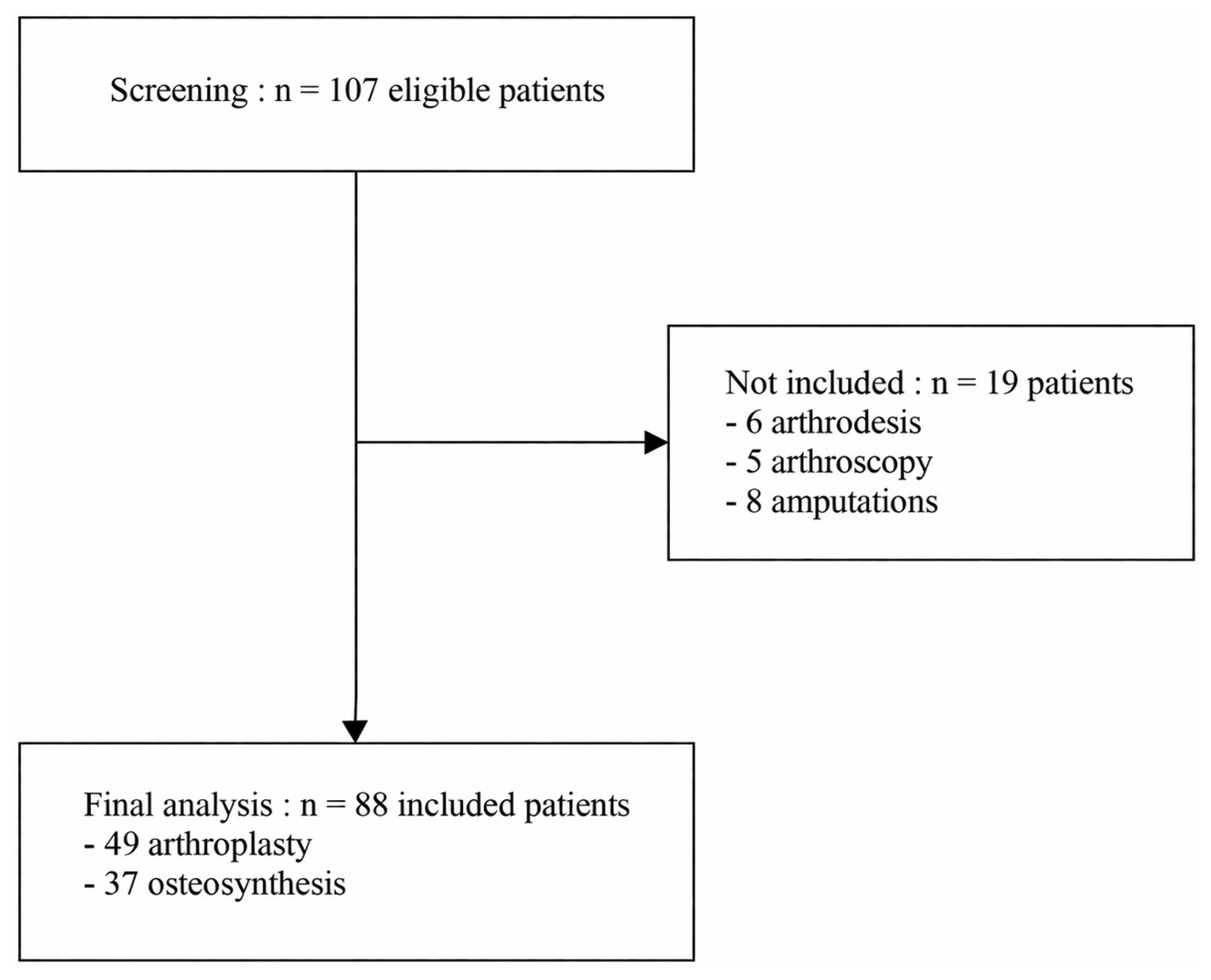
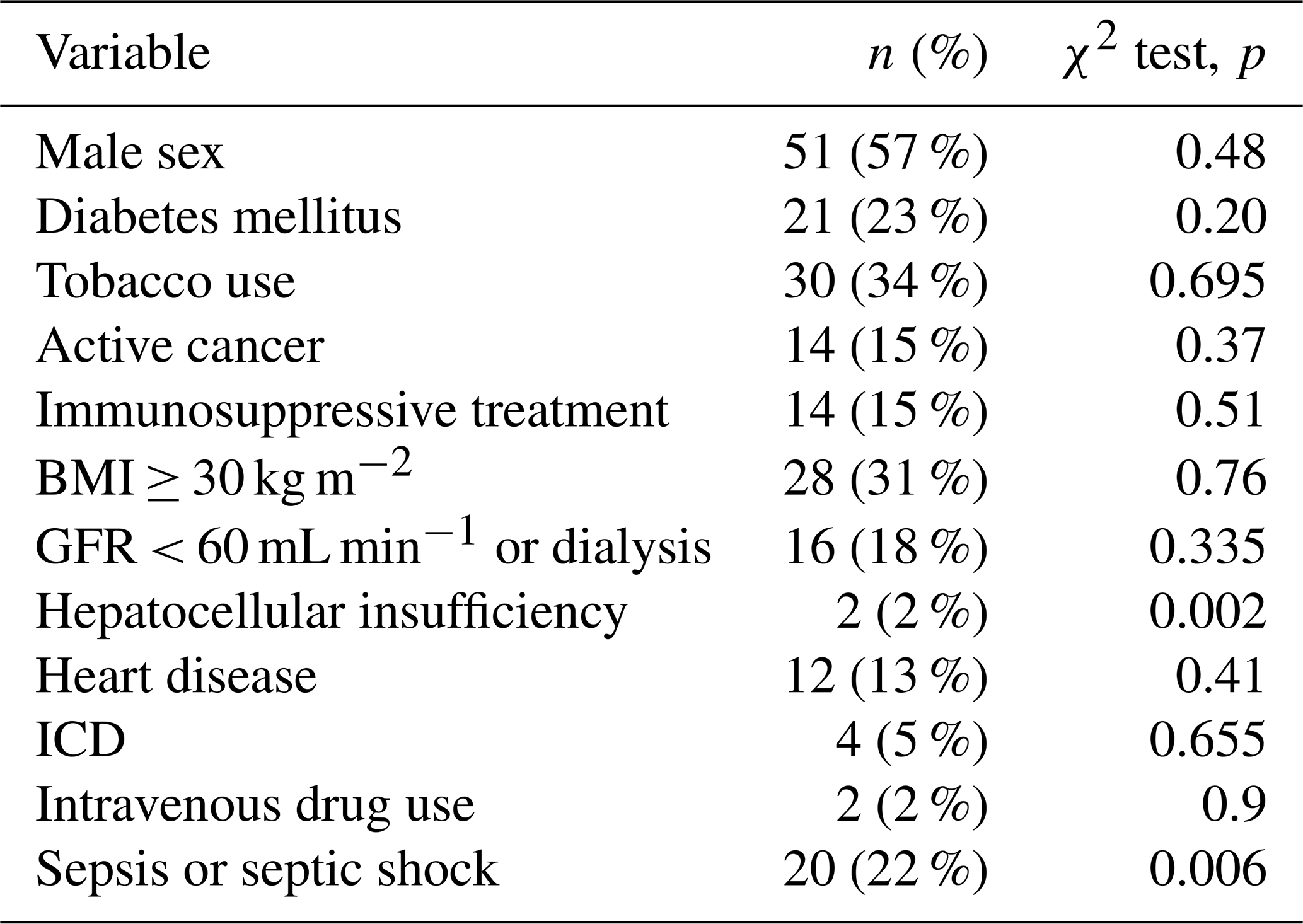
Table 1 reports the characteristics of the included patients at baseline. The mean age was 66.1 ± 15.4 years, with 57 % () of patients being male and 31 % () being obese. The median Charlson index was 4 [2;6], and the median ASA score was 2 [1;3]. A total of 23 % () of patients had diabetes, 55 % () had hypertension, and 18 % () had chronic kidney disease. Nearly 13 % () of patients had heart failure, but only 5 % () had intracardiac material (valvular prosthesis, implantable cardiac defibrillator, or pacemaker). No history of IE was found in the study population. There were two cases of intravenous-drug users.
Table 1Characteristics and surgical parameters of 88 patients presenting a non-spinal orthopedic surgical site infection with Staphylococcus aureus bacteremia.
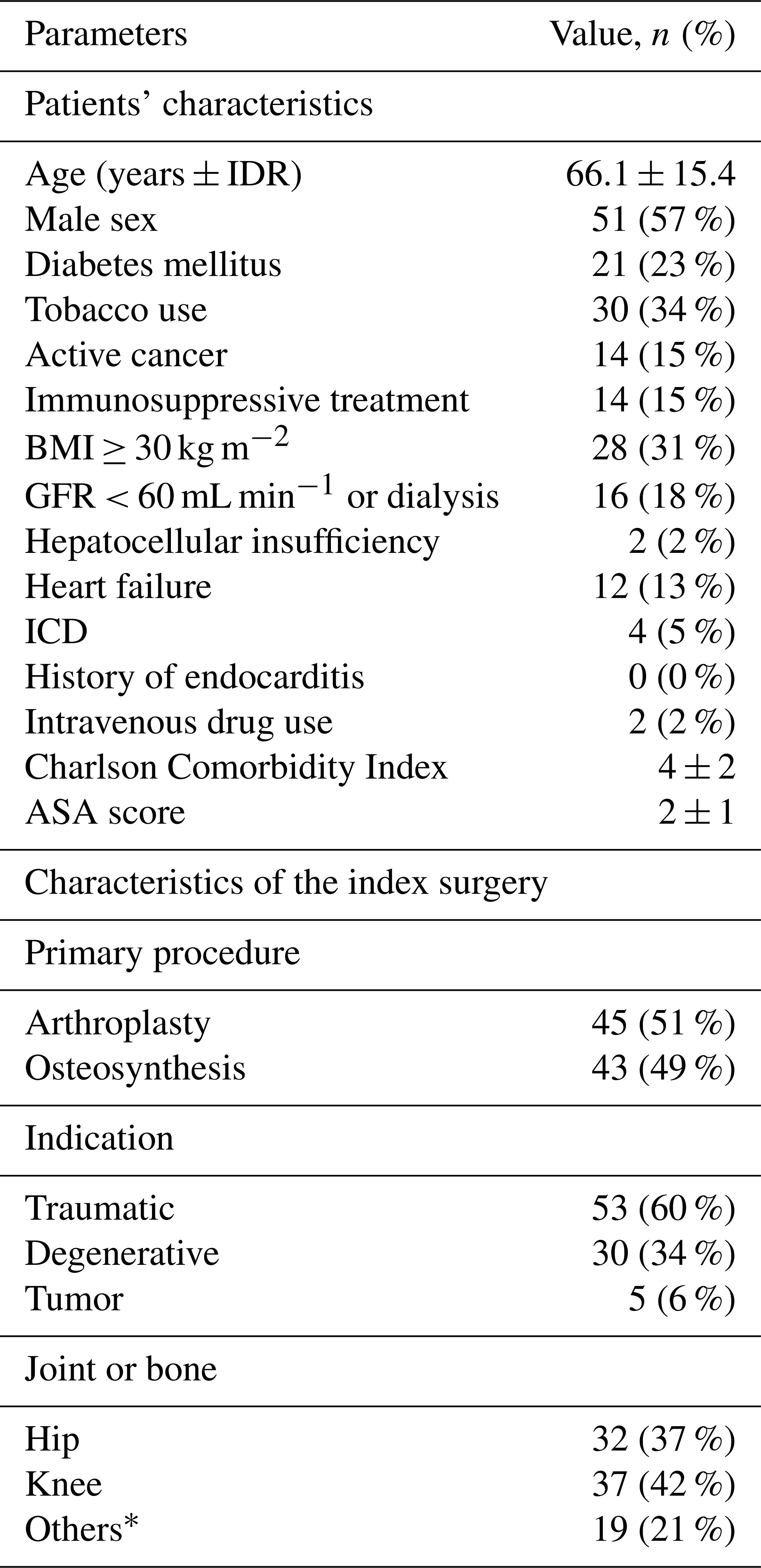
SD: standard deviation; BMI: body mass index; GFR: glomerular filtration rate; ICD: implantable cardioverter-defibrillator. * Leg (n = 5), ankle (n = 4), thigh (n = 2), shoulder (n = 2), elbow (n = 2), arm (n = 1), forearm (n = 1), wrist (n = 1), hand (n = 1).
Regarding the index surgery, the main surgical sites were the knee 42 % () and the hip 36 % (). The primary procedures were arthroplasties 51 % () and osteosyntheses 49 % (), with the main indications being traumatic 60 % () and degenerative 34 % ().
3.2 Surgical and infectious management
All patients had an indication for DAIR, but three patients were rejected due to their medical condition and the anesthetic and operative risks. The median delay between the index surgery and the onset of symptoms was 21 ± 14 d. Surgical revision was performed after a median delay of 24 ± 18 d following the index surgery and 2 ± 2 d following the diagnosis of SSI and the hospitalization. At the time of surgical revision, the median C-reactive protein (CRP) was 268 ± 95 mg L−1. The median duration of hospitalization for SSI was 24 ± 21 d. Nearly 90 % of SSIs were caused by methicillin-susceptible SA, and 75 % were monomicrobial. Nearly two-third of patients received approximately 12 weeks of antibiotic therapy (Table 2). The median interval between the first positive and the first negative blood culture was 2 d (IQR: 1–3 d).
Table 2Infectious disease parameters in the study population (n = 88).
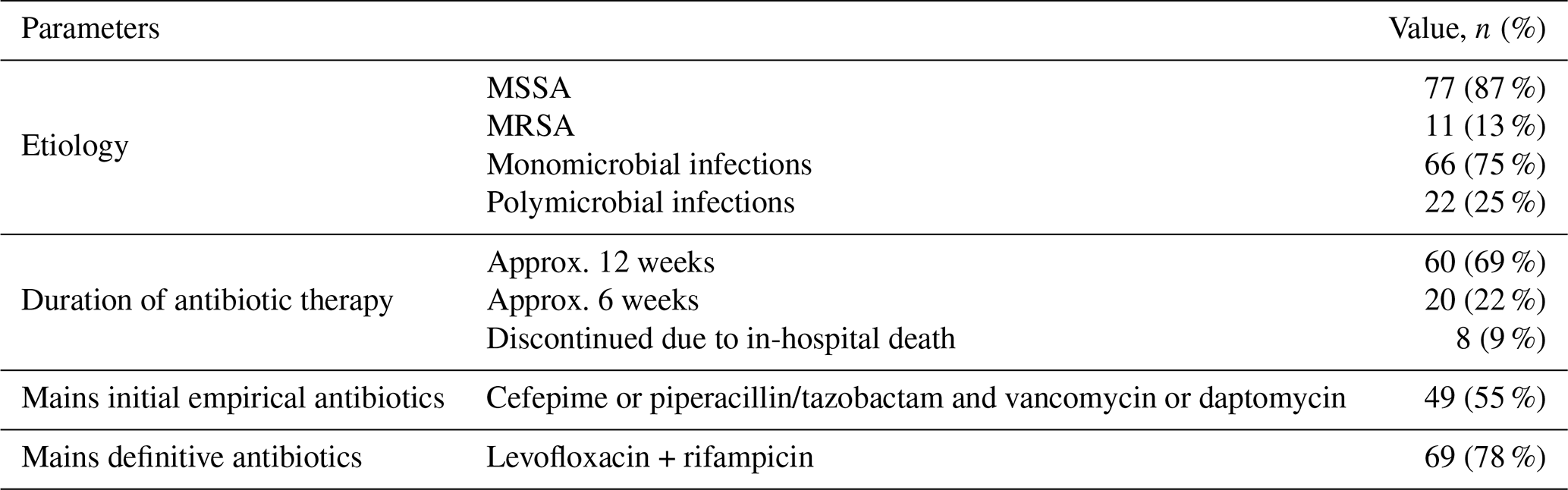
MSSA: methicillin-susceptible Staphylococcus aureus; MRSA: methicillin-resistant Staphylococcus aureus.
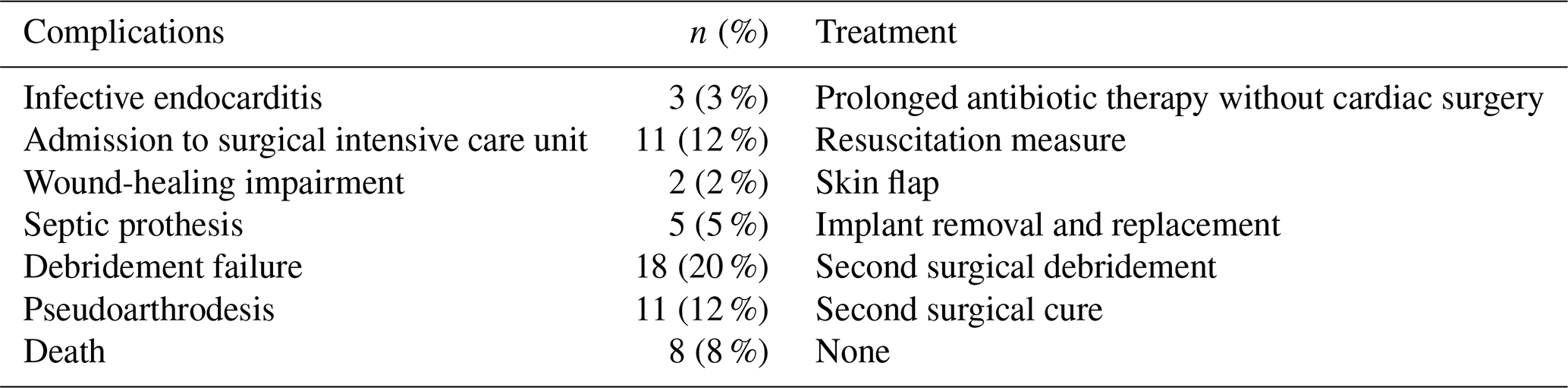
Complications (Table 3) occurred in (44 %) of patients. Nearly 20 % of patients required a second surgical lavage due to initial lavage failure, and 12 % required additional surgery remote from the infectious episode due to septic pseudarthrosis. A total of (22 %) of patients developed sepsis or septic shock, and (9 %) of patients died due to the infectious episode.
3.3 Outcomes
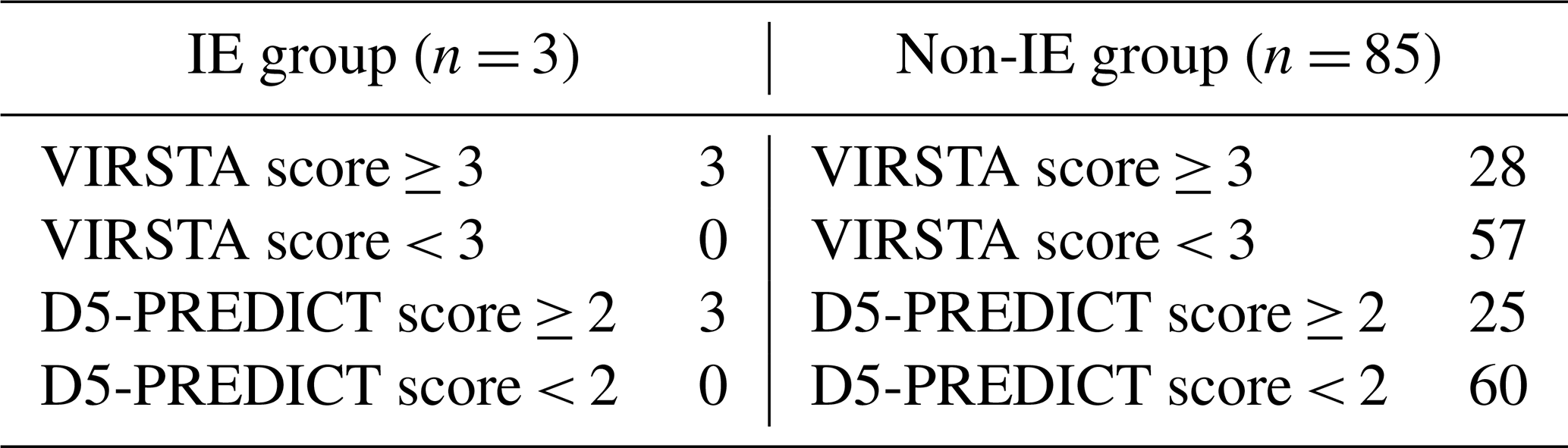
Among the 88 patients included, 3 (3 %) developed IE. Among them, the VIRSTA scores were 6, 7, and 8, and the D5-PREDICT score was 2 for all of them (Table 4). The main factors associated with the risk of IE were hepatocellular insufficiency (p<0.05) and sepsis or septic shock (05) (Table 5). Among the three patients diagnosed with infective endocarditis, these intervals were 25, 5, and 5 d.
Table 4Results of VIRSTA and D5-PREDICT scores in the IE and non-IE groups
IE: infectious endocarditis.
Table 5Parameters associated with infective-endocarditis occurrence.
BMI: body mass index; GFR: glomerular filtration rate; ICD: implantable cardioverter defibrillator.
Among all included patients, the median VIRSTA score was 1 [1;4], and the median D5-PREDICT score was 0 [0;2]. According to the VIRSTA score, (35 %) of patients were classified as high risk for IE, including the 3 cases with a confirmed diagnosis of IE. According to the D5-PREDICT score, (31 %) of patients were classified as high risk for IE, including the 3 cases with a confirmed diagnosis of IE. Among the patients classified as low risk according to the VIRSTA (62 %, n = ) or the D5-PREDICT (68 %, n = ) scores, none developed IE.
Overall, a TTE was performed in (85 %) of patients, with a median delay of 5 ± 4 d following the first positive blood culture. TTE was performed in 78 % of patients classified as low risk of IE according to the VIRSTA score and in 80 % of patients classified as low risk of IE according to the D5-PREDICT score. Among the patients who did not undergo TTE, two cases were at high risk for IE according to the VIRSTA score and the D5-PREDICT score. None of the patients who did not undergo TTE developed subsequent manifestations of IE or recurrent SA infection. Considering these patients to be free of IE, the VIRSTA score showed a sensitivity of 100 % (95 % CI: 29–100) and a specificity of 67 % (95 % CI: 56–76), and the D5-PREDICT score showed a sensitivity of 100 % (95 % CI: 29–100) and a specificity of 76 % (95 % CI: 66–85). The negative likelihood (NLR) ratios were 0 for both scores.
To our knowledge, this is the first study focusing on the VIRSTA and D5-PREDICT scores in patients with non-spinal orthopedic SSIs complicated by SAB. The main findings were that (1) both scores appeared to identify patients at low risk of IE, and (2) the systematic use of TTE may not always be necessary in this specific context and could be guided by additional clinical factors. Our findings should therefore be interpreted as exploratory descriptive observations rather than as a formal validation of these predictive scores in this specific clinical setting.
Our findings are consistent with the available literature. Another study, focusing on the risk of IE in the context of spinal SSIs, reveals similar results, with a very low incidence of IE and a potential for bypassing TTE in low-risk patients (Rodrigues et al., 2025).
Our study suggests that IE is a rare complication of SAB secondary to peripheral orthopedic SSI. The three cases of IE exclusively involved lower-limb surgeries. These cases included two men and one woman, all aged over 75 years, classified as high-risk for IE according to the VIRSTA and D5-PREDICT scores. The surgeries involved a total knee arthroplasty for degenerative disease, another total knee arthroplasty for a tumor-related condition, and an osteosynthesis for a peritrochanteric fracture. The latter two patients developed sepsis, requiring admission to an intensive care unit. None of them died from the episode, and all recovered from the IE. The VIRSTA and PREDICT scores are predictive scores used to estimate the risk of IE and to determine the priority for TTE in patients with SAB. Both scores had an excellent sensitivity and NLR, but they tended to overestimate the risk of IE in this context of SSI because (35 %) patients were considered to be at high risk of IE according to the VIRSTA score, and this was the case for (31 %) according to the D5-PREDICT score for only three cases of IE. It may be appropriate to use additional criteria to adequately select patients for whom TTE is urgently required.
Regarding the utility of TTE, 13 patients in our study did not undergo the examination. These patients were all deemed to be free of comorbidities and showed no suspicious murmurs on heart auscultation. Among them, only one case was considered to be high-risk according to the VIRSTA and PREDICT scores. Their clinical response to antibiotics was favorable. In three patients, TTE was not performed owing to the delays necessary to complete the echocardiography. All patients were subsequently followed as outpatients by both a surgeon and an infectious disease specialist, and none were found to have IE at the conclusion of their medical and surgical care. These findings align with published data, which report a TTE negativity rate exceeding 80 % in patients with SAB (all risk levels included).
However, given the diagnostic challenges and potential severity of IE, it would seem unreasonable not to perform TTE in at least all high-risk IE patients (Rasmussen et al., 2011). This approach, as suggested by others, could reduce the indications for TTE in SSIs (Kaasch et al., 2011; Khatib and Sharma, 2013; Palraj et al., 2015; Tubiana et al., 2016). Our study highlights hepatocellular insufficiency and sepsis or septic shock as factors associated with the risk of IE. However, these results should be interpreted with caution because of the low incidence of IE. Further, larger, and ideally prospective studies are needed to confirm these statistical associations.
Our study has several limitations. Its retrospective nature, its small sample size, and the low incidence of IE suggest that the results should be interpreted with caution. Modifying practices regarding such a serious condition as IE necessitates more robust evidence. TTE is less sensitive than TEE for detecting IE, and no TEE was performed in our study. However, this situation reflects real-world practice and is consistent with previous large studies on SAB. In the pivotal study that developed the VIRSTA score, echocardiography was performed in only 67 % of patients (Tubiana et al., 2016). Similarly, in the SABATO randomized controlled trial evaluating oral switch therapy in SAB, echocardiography was performed in approximately 60 % of cases (Kaasch et al., 2024). These observations suggest that the absence of systematic echocardiographic evaluation is common in clinical practice and should be considered when interpreting studies conducted in this field.
The number of IE cases may be underestimated because not all patients received a TTE and because all patients received at least 6 weeks of antibiotic therapy for their osteoarticular infections, potentially treating subclinical IE that went undetected by TTE. However, no delayed diagnosis of IE or recurrent SAB was identified during the 1-year clinical follow-up. Because only three cases of IE occurred, these comparisons should be interpreted as exploratory descriptive observations and do not allow causal inference. Larger prospective studies would be required to determine whether these factors are independently associated with IE in this population.
Finally, a further limitation concerns the lack of data on the duration of bacteremia and potentially insufficient DAIR. Although the interval between the first positive and the first negative blood culture was available, this measure may not accurately reflect the actual duration of bacteremia as follow-up blood cultures were not systematically obtained at standardized intervals. Persistent bacteremia could therefore not be reliably assessed in all patients, potentially limiting the evaluation of its association with IE. Similarly, the quality of the DAIR procedure and the potential need for revision surgery were not consistently documented in the medical records, thereby preventing us from assessing their potential impact on the risk of IE.
Despite its limitations, our study is the first to focus on peripheral orthopedic SSIs and IE, and its findings appear to be consistent with the available literature. This offers avenues for better identifying patients at high risk of IE, which could reduce the prescription of exams, decrease hospitalization costs, and reserve available equipment for the patients most in need.
This study is the first to examine the risk of IE following non-spinal SSI complicated by SAB. In this exploratory cohort, the VIRSTA and PREDICT scores showed high sensitivity and NPV. We observed a low incidence of IE in this context. Additionally, systematic TTE seems to be less beneficial in this context of SSI compared to other settings of SAB. These findings suggest that TTE could be guided for patients with additional risk factors to optimize its use and to reduce the prescription of exam and hospitalization costs. Given the potential severity of IE, further studies are needed to confirm this point.
The code and data analyzed during the current study are not publicly available due to privacy and ethical restrictions but are available from the corresponding author upon reasonable request, subject to appropriate ethical and regulatory approvals.
The supplement related to this article is available online at https://doi.org/10.5194/jbji-11-735-2026-supplement.
SR, DL, and BB designed the present study. SR and LS collected the clinical data and drafted the paper. SR performed the statistical analysis. All of the authors contributed to the paper preparation and revision and approved the final version.
The contact author has declared that none of the authors has any competing interests.
This study was conducted in accordance with institutional guidelines and was approved by the local ethics committee of Bordeaux University Hospital under reference no. CER-BDX 2024–29.
Publisher's note: Copernicus Publications remains neutral with regard to jurisdictional claims made in the text, published maps, institutional affiliations, or any other geographical representation in this paper. The authors bear the ultimate responsibility for providing appropriate place names. Views expressed in the text are those of the authors and do not necessarily reflect the views of the publisher.
The authors would like to express their gratitude to the FHU PROTHEE, all healthcare professionals involved in the care of the patients, and the patients who participated in this study.
The publication fees were covered by the Fédération Hospitalo-Universitaire (FHU) PROTHÉE.
This paper was edited by Parham Sendi and reviewed by three anonymous referees.
ECDC: Healthcare-associated infections: surgical site infections – Annual Epidemiological Report for 2018–2020, https://www.ecdc.europa.eu/sites/default/files/documents/Healthcare-associated%20infections%20-%20surgical%20site%20infections%202018-2020.pdf (last access: 15 October 2026), 2023.
Fowler, V. G., Jr, Durack, D. T., Selton-Suty, C., Athan, E., Bayer, A. S., Chamis, A. L., Dahl, A., DiBernardo, L., Durante-Mangoni, E., Duval, X., Fortes, C. Q., Fosbøl, E., Hannan, M. M., Hasse, B., Hoen, B., Karchmer, A. W., Mestres, C. A., Petti, C. A., Pizzi, M. N., Preston, S. D., Roque, A., Vandenesch, F., van der Meer, J. T. M., van der Vaart, T. W., and Miro, J. M.: The 2023 Duke-International Society for Cardiovascular Infectious Diseases Criteria for Infective Endocarditis: Updating the Modified Duke Criteria, Clin. Infect. Dis., 77, 518–526, https://doi.org/10.1093/cid/ciad271, 2023.
IDSA and ESCMID: IDSA/ESCMID 2026 Consensus Statements on Staphylococcus aureus Bacteremia: Risk Stratification, Diagnostic Evaluation, and Management of Adults and Children, https://www.idsociety.org/practice-guideline/staphylococcus-aureus-bacteremia/ (last access: 27 October 2026), 2026.
Kaasch, A. J., Fowler, V. G., Rieg, S., Peyerl-Hoffmann, G., Birkholz, H., Hellmich, M., Kern, W. V., and Seifert, H.: Use of a simple criteria set for guiding echocardiography in nosocomial Staphylococcus aureus bacteremia, Clin. Infect. Dis. Off. Publ. Infect. Dis. Soc. Am., 53, 1–9, https://doi.org/10.1093/cid/cir320, 2011.
Kaasch, A. J., López-Cortés, L. E., Rodríguez-Baño, J., Cisneros, J. M., Dolores Navarro, M., Fätkenheuer, G., Jung, N., Rieg, S., Lepeule, R., Coutte, L., Bernard, L., Lemaignen, A., Kösters, K., MacKenzie, C. R., Soriano, A., Hagel, S., Fantin, B., Lafaurie, M., Talarmin, J.-P., Dinh, A., Guimard, T., Boutoille, D., Welte, T., Reuter, S., Kluytmans, J., Martin, M. L., Forestier, E., Stocker, H., Vitrat, V., Tattevin, P., Rommerskirchen, A., Noret, M., Adams, A., Kern, W. V., Hellmich, M., Seifert, H., and SABATO study group: Efficacy and safety of an early oral switch in low-risk Staphylococcus aureus bloodstream infection (SABATO): an international, open-label, parallel-group, randomised, controlled, non-inferiority trial, Lancet Infect. Dis., 24, 523–534, https://doi.org/10.1016/S1473-3099(23)00756-9, 2024.
Khatib, R. and Sharma, M.: Echocardiography Is Dispensable in Uncomplicated Staphylococcus aureus Bacteremia, Medicine, 92, 182, https://doi.org/10.1097/MD.0b013e318294a710, 2013.
Mellinghoff, S. C., Bruns, C., Albertsmeier, M., Ankert, J., Bernard, L., Budin, S., Bataille, C., Classen, A. Y., Cornely, F. B., Couvé-Deacon, E., Fernandez Ferrer, M., Fortún, J., Galar, A., Grill, E., Guimard, T., Hampl, J. A., Wingen-Heimann, S., Horcajada, J. P., Köhler, F., Koll, C., Mollar, J., Muñoz, P., Pletz, M. W., Rutz, J., Salmanton-García, J., Seifert, H., Serracino-Inglott, F., Soriano, A., Stemler, J., Vehreschild, J. J., Vilz, T. O., Naendrup, J.-H., Cornely, O. A., and Liss, B. J.: Staphylococcus aureus surgical site infection rates in 5 European countries, Antimicrob. Resist. Infect. Control, 12, 1–12, https://doi.org/10.1186/s13756-023-01309-w, 2023.
Minter, D. J., Appa, A., Chambers, H. F., and Doernberg, S. B.: Contemporary Management of Staphylococcus aureus Bacteremia—Controversies in Clinical Practice, Clin. Infect. Dis., 77, e57–e68, https://doi.org/10.1093/cid/ciad500, 2023.
Palraj, B. R., Baddour, L. M., Hess, E. P., Steckelberg, J. M., Wilson, W. R., Lahr, B. D., and Sohail, M. R.: Predicting Risk of Endocarditis Using a Clinical Tool (PREDICT): Scoring System to Guide Use of Echocardiography in the Management of Staphylococcus aureus Bacteremia, Clin. Infect. Dis. Off. Publ. Infect. Dis. Soc. Am., 61, 18–28, https://doi.org/10.1093/cid/civ235, 2015.
Patel, H., Khoury, H., Girgenti, D., Welner, S., and Yu, H.: Burden of Surgical Site Infections Associated with Arthroplasty and the Contribution of Staphylococcus aureus, Surg. Infect., 17, 78–88, https://doi.org/10.1089/sur.2014.246, 2016.
Peinado-Acevedo, J. S., Hurtado-Guerra, J. J., Hincapié, C., Mesa-Abad, J., Uribe-Delgado, J. R., Giraldo-Ramírez, S., Lengerke-Diaz, P. A., and Jaimes, F.: Validation of VIRSTA and Predicting Risk of Endocarditis Using a Clinical Tool (PREDICT) Scores to Determine the Priority of Echocardiography in Patients With Staphylococcus aureus Bacteremia, Clin. Infect. Dis., 73, e1151–e1157, https://doi.org/10.1093/cid/ciaa1844, 2021.
Rasmussen, R. V., Høst, U., Arpi, M., Hassager, C., Johansen, H. K., Korup, E., Schønheyder, H. C., Berning, J., Gill, S., Rosenvinge, F. S., Fowler, V. G., Jr, Møller, J. E., Skov, R. L., Larsen, C. T., Hansen, T. F., Mard, S., Smit, J., Andersen, P. S., and Bruun, N. E.: Prevalence of infective endocarditis in patients with Staphylococcus aureus bacteraemia: the value of screening with echocardiography, Eur. J. Echocardiogr., 12, 414–420, https://doi.org/10.1093/ejechocard/jer023, 2011.
Rodrigues, S., Gille, O., Collinet, C., Jouhet, V., Griffier, R., Damade, C., Bride, J., Boishardy, A., Ternacle, J., Issa, N., Amelot, A., and Bouyer, B.: Risk of Infective Endocarditis in Patients with Spinal Surgical Site Infection and Staphylococcus aureus Bacteremia, Surg. Infect., 26, 39–44, https://doi.org/10.1089/sur.2024.123, 2025.
Singer, M., Deutschman, C. S., Seymour, C. W., Shankar-Hari, M., Annane, D., Bauer, M., Bellomo, R., Bernard, G. R., Chiche, J.-D., Coopersmith, C. M., Hotchkiss, R. S., Levy, M. M., Marshall, J. C., Martin, G. S., Opal, S. M., Rubenfeld, G. D., van der Poll, T., Vincent, J.-L., and Angus, D. C.: The Third International Consensus Definitions for Sepsis and Septic Shock (Sepsis-3), JAMA, 315, 801–810, https://doi.org/10.1001/jama.2016.0287, 2016.
Tubiana, S., Duval, X., Alla, F., Selton-Suty, C., Tattevin, P., Delahaye, F., Piroth, L., Chirouze, C., Lavigne, J.-P., Erpelding, M.-L., Hoen, B., Vandenesch, F., Iung, B., Le Moing, V., and VIRSTA/AEPEI Study Group: The VIRSTA score, a prediction score to estimate risk of infective endocarditis and determine priority for echocardiography in patients with Staphylococcus aureus bacteremia, J. Infect., 72, 544–553, https://doi.org/10.1016/j.jinf.2016.02.003, 2016.
Urja, P., Walters, R. W., Vivekanandan, R., Kumar, M., Abdulghani, S., Hari Belbase, R., Zook, N., and Mahesh Alla, V.: Trends in the use of echocardiography in patients with Staphylococcus aureus bacteremia: an analysis using the Nationwide Inpatient Sample data, Echocardiography, 36, 1625–1632, https://doi.org/10.1111/echo.14473, 2019.
Van der Vaart, T. W., Prins, J. M., Soetekouw, R., van Twillert, G., Veenstra, J., Herpers, B. L., Rozemeijer, W., Jansen, R. R., Bonten, M. J. M., and van der Meer, J. T. M.: Prediction Rules for Ruling Out Endocarditis in Patients With Staphylococcus aureus Bacteremia, Clin. Infect. Dis. Off. Publ. Infect. Dis. Soc. Am., 74, 1442–1449, https://doi.org/10.1093/cid/ciab632, 2022.
Wisplinghoff, H., Bischoff, T., Tallent, S. M., Seifert, H., Wenzel, R. P., and Edmond, M. B.: Nosocomial Bloodstream Infections in US Hospitals: Analysis of 24,179 Cases from a Prospective Nationwide Surveillance Study, Clin. Infect. Dis., 39, 309–317, https://doi.org/10.1086/421946, 2004.
Yang, J., Zhang, X., and Liang, W.: A retrospective analysis of factors affecting surgical site infection in orthopaedic patients, J. Int. Med. Res., https://doi.org/10.1177/0300060520907776, 2020.
Patients with infections after orthopedic surgery caused by Staphylococcus aureus often need a heart ultrasound to check for serious heart valve infections. By reviewing 88 patients across two French hospitals over 10 years, this study found that heart complications were extremely rare. Existing risk scores could help identify which patients need the exam. Limiting heart ultrasounds to higher-risk patients could reduce unnecessary testing, shorten hospital stays, and lower healthcare costs.
Patients with infections after orthopedic surgery caused by Staphylococcus aureus often need a...