the Creative Commons Attribution 4.0 License.
the Creative Commons Attribution 4.0 License.
 | 11 Nov 2026
A pre-specified surgical-complexity index is associated with a graded increase in periprosthetic joint infection after total knee arthroplasty: a competing-risks analysis using coronal alignment as a negative control

Charles Gusho
Kenrick Rosser
Matthew Lim
Kate Dunstall
Kelly G. Vince
Prediction of periprosthetic joint infection (PJI) after total knee arthroplasty (TKA) relies almost wholly on host factors, and whether the operation itself carries infection risk independent of the patient is unknown. We analyzed 2920 primary TKAs in 2350 patients from a single institution with national joint registry linkage, using death as a competing risk and coronal alignment as a negative-control exposure. A pre-specified surgical-complexity index counted five construct markers at the index operation: constraint, a tibial stem, a femoral stem, a previous implant and a pre-existing extra-articular deformity or fracture. Septic revision was the primary outcome and aseptic revision the control. Fine–Gray subdistribution hazard models with patient-level clustering estimated complexity and, in the paired-radiograph subset, neutral-alignment effects on both outcomes. There were 51 septic and 104 aseptic revisions and 525 deaths over a median follow-up of 7.4 years. Each additional complexity marker raised the subdistribution hazard of PJI (sHR 1.61, 95% CI 1.27–2.04) but not of aseptic revision (sHR 1.06, 95% CI 0.84–1.33); 5-year PJI incidence rose from 1.5% with zero or one marker to 5.9% with two or more. Neutral coronal alignment was protective against aseptic revision (sHR 0.42, 95% CI 0.26–0.67) but null for PJI (sHR 0.87, 95% CI 0.41–1.87). Adjustment for skin-to-skin operative time, available for 93% of the cohort, moved the complexity estimate in the same knees only from 1.58 to 1.55 and attributed 5 % of the effect to operative time. These are observational associations and not causal effects, but surgical exposure merits consideration alongside host factors in infection-risk assessment.
- Article
(1410 KB) - Full-text XML
- BibTeX
- EndNote


Predictive models for periprosthetic joint infection (PJI) after total knee arthroplasty (TKA) typically ask which patient is at risk (Bagheri et al., 2025; Kotzur et al., 2024; Li et al., 2026; Lucenti et al., 2024; Maradit Kremers et al., 2025; Schiffner et al., 2020), yet few studies question the operation itself. A PJI is the most morbid and costly failure mode after TKA (Premkumar et al., 2021), and its risk factors and risk stratification have generated an expanding literature (Chong et al., 2025; Kotzur et al., 2024; Maradit Kremers et al., 2025). Prediction matters because prevention can only be directed at the patients that a model identifies, and a risk that is not predicted is one the surgeon cannot act on.
Prediction models share large numbers of demographic, comorbidity and laboratory variables, and are trained on large cohorts with relatively few PJIs (Li et al., 2026; Maradit Kremers et al., 2025). All place the patient, rather than the operation, at the center of risk, and the operation itself has attracted far less study; robotic and navigated assistance, for instance, does not change PJI risk in matched cohorts (LaValva et al., 2024). The operative factors that have been linked to infection are largely generic surrogates of surgical burden, such as prolonged operative time, blood transfusion and prolonged length of stay (Bagheri et al., 2025; Lucenti et al., 2024), rather than the specific complexity of the surgery. Operative time is the best established of these surrogates and is biologically coherent, but it is known only once the operation is over and cannot inform consent, prophylaxis or the planning of a list. Two preoperative calculators have been described, using six and 17 variables respectively (Berbari et al., 2012; Tan et al., 2018). Neither counts the mechanical demands of the operation, although a previous open surgical procedure was the most influential of the 42 factors screened in the larger of them. What has not been asked is whether the mechanical demands of the operation, the deformity to be corrected and the construct required, relate to PJI. Coronal alignment, meanwhile, has been studied almost entirely for mechanical failure and hardly at all for infection (Hoskins and Gusho, 2026).
This retrospective cohort study analyzed prospectively collected data on primary TKAs performed at a single institution between 2010 and 2024, cross-linked to a national joint registry to capture revisions performed elsewhere. All patients had at least 2 years of potential follow-up. The analytic cohort comprised 2920 primary TKAs in 2350 patients with long-leg radiographic assessment and complete operative records. Bilateral procedures were retained and handled statistically by patient-level clustering, and the study was approved by the regional ethics committee.
The primary outcome was septic revision (any revision for a diagnosis of PJI) and the control outcome aseptic revision (any revision for a non-PJI cause). Death without revision was treated as a competing event, and each outcome treated the other revision type as competing. The primary exposure was a pre-specified surgical-complexity index – the count of five construct markers present at the index operation. These were constraint (condylar-constrained or hinge), a tibial stem, a femoral stem, a previous surgical implant and a pre-existing extra-articular deformity or prior fracture. The five were fixed before any analysis against three criteria stated in advance: each is recorded objectively rather than by judgment; each is knowable from the preoperative radiograph and the operative plan; and each is a case-complexity field not captured by national registries (Hoskins et al., 2023). None was selected on the basis of its association with infection, and the index was left unweighted because weighting rare markers on 51 events would fit noise.
Every constrained implant was stemmed, so constraint and stem fixation were collinear and could not be separated at the component level, which is why the aggregated index was pre-specified as the primary exposure. The index ranged from 0 to 5 and was analyzed as an ordinal dose-response and as its components. In the subset with paired preoperative and postoperative long-leg radiographs, coronal alignment was quantified as neutral mechanical alignment, defined as a postoperative mechanical hip-knee-ankle (mHKA) angle within 3 degrees of neutral, and was examined additionally as the continuous deviation from neutral and as the postoperative Kennedy zone of the weight-bearing line (Hoskins and Gusho, 2026). Skin-to-skin operative time was obtained from the national registry data linkage, giving operative time for 2722 knees (93 %); it was not pre-specified. Surgeon identity and the alignment target intended by the operating surgeon were not recorded.
2.1 Statistical analysis
Because a substantial proportion of patients died before revision, the Fine–Gray subdistribution hazard model was used so that the modeled quantity was cumulative incidence in the presence of the competing risk of death (Fine and Gray, 1999; Lacny et al., 2015). The index was entered as a continuous ordinal predictor adjusted for age, body mass index (BMI), American Society of Anesthesiologists (ASA) grade of at least 3 and sex; the identical model was fit for the control outcome and coronal alignment tested on both outcomes in the paired-radiograph subset. The control outcome follows the negative-control framework (Lipsitch et al., 2010). Firth's penalized-likelihood correction was pre-specified for component-level inference, because rare binary components were expected to separate (Firth, 1993; Heinze and Schemper, 2002). Five-year cumulative incidence was estimated by the Aalen–Johansen method. Robustness to unmeasured confounding was quantified with the E value, the minimum association a confounder would need with both exposure and outcome to explain an estimate away (VanderWeele and Ding, 2017). The primary model was also refit with operative time as a covariate, the fraction of the effect transmitted through it estimated by the difference method. Analyses were performed in Python (Python Software Foundation, Wilmington, DE, USA) and R (R Foundation for Statistical Computing, Vienna, Austria), with P<0.05 considered statistically significant.
3.1 Cohort
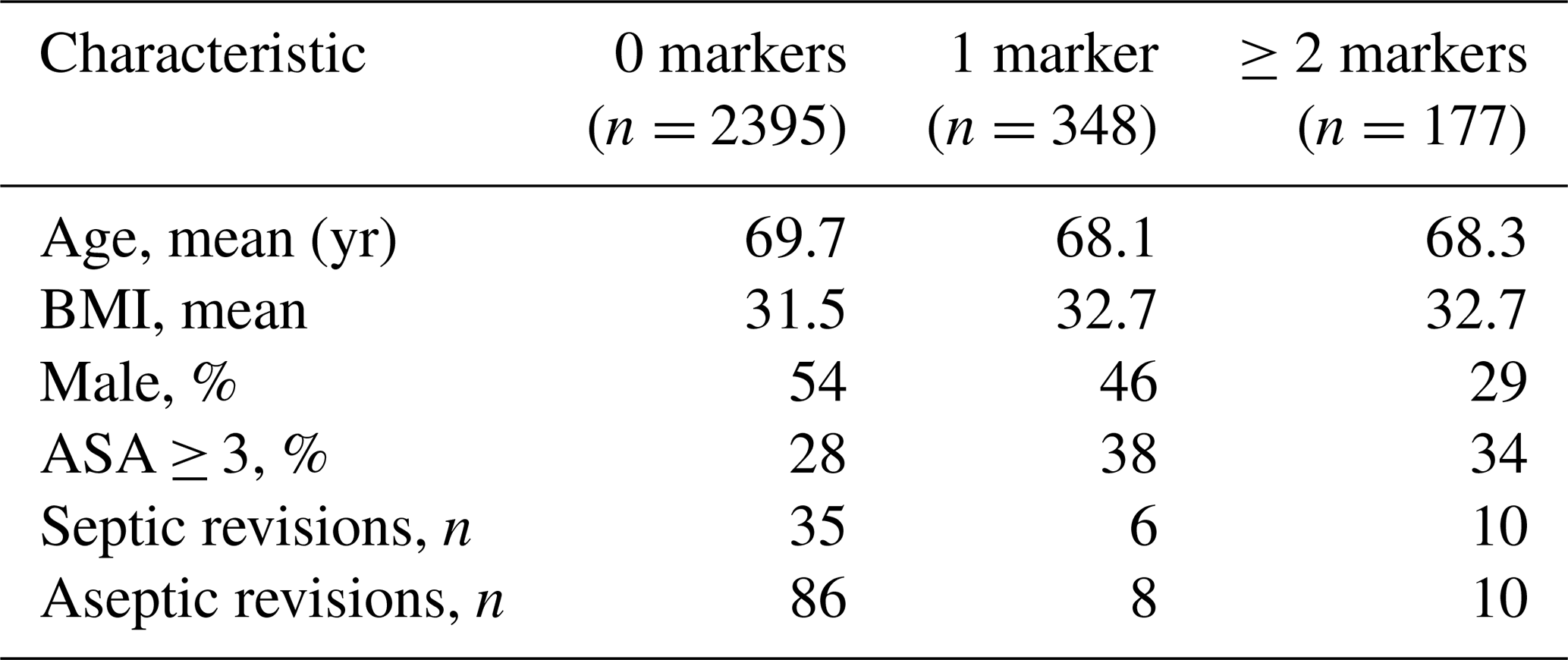
The cohort comprised 2920 primary total knee arthroplasties in 2350 patients. The mean age was 69.4 years, 52 % were men, the mean BMI was 31.7 kg m−2, 29 % had an ASA grade of at least 3 and 16 % identified as New Zealand Māori. Median follow-up was 7.4 years (interquartile range 4.4 to 10.7). There were 51 septic revisions, 104 aseptic revisions and 525 deaths, and the overall 5-year cumulative incidence of PJI was 1.7 %. The 525 deaths are 18.0 % of the cohort over a median of 7.4 years, lower than the 27.8 % reported at the same median follow-up in 98 778 primary knees in Scotland (Yapp et al., 2022) and the reason a competing-risks framework was necessary. Baseline characteristics are shown in Table 1; complexity markers were present in 525 knees (18.0 %) and 177 (6.1 %) carried two or more.
Table 1Baseline characteristics by surgical-complexity stratum.
3.2 Surgical complexity and infection
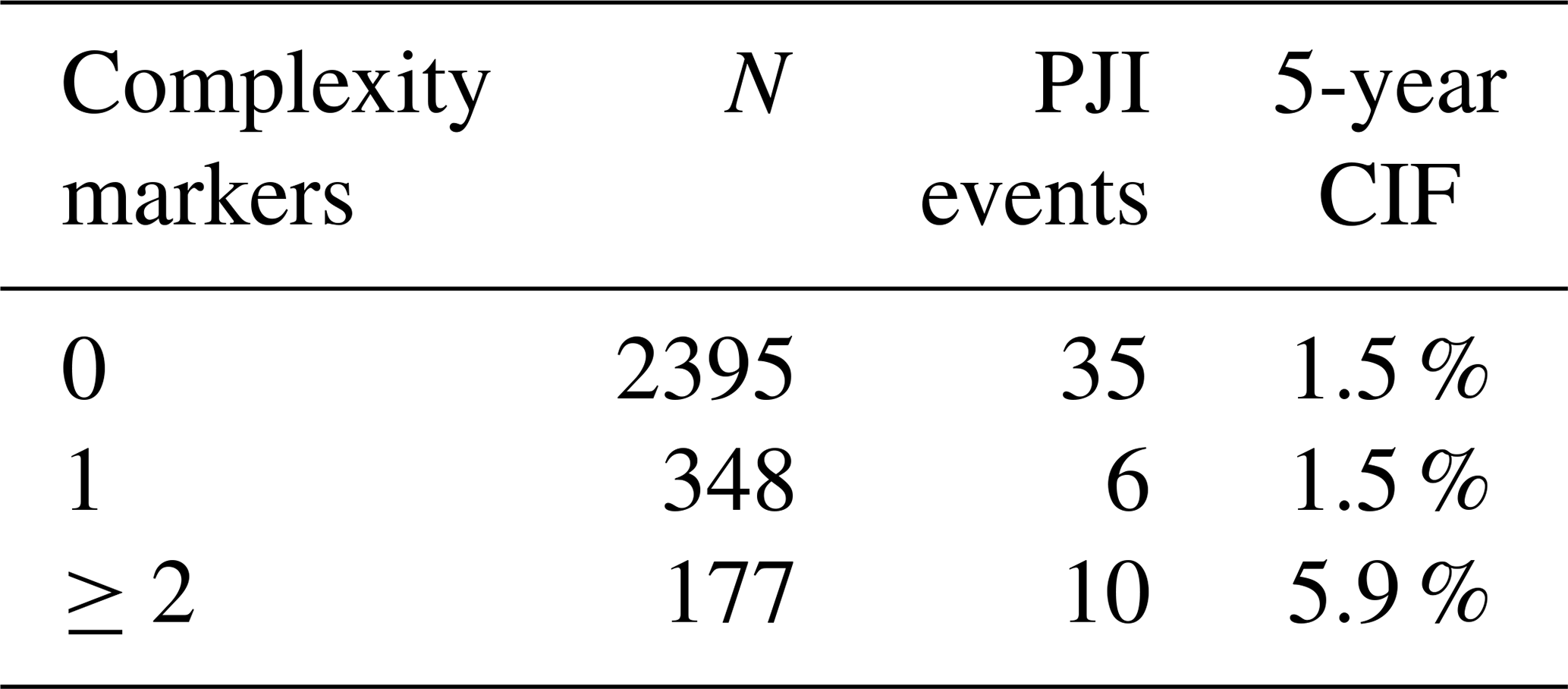
Each additional complexity marker raised the subdistribution hazard ratio (sHR) of PJI (sHR 1.61, 95 % confidence interval [CI] 1.27 to 2.04, P<0.001), with a model concordance of 0.68 (Table 2, Fig. 1). The association was independent of the measured host factors: male sex was associated with infection (sHR 2.83, 95 % CI 1.49 to 5.39), whereas ASA of at least 3 and body mass index pointed the same way without reaching significance at 51 events (Table 2). Five-year PJI incidence was 1.5 % at zero markers (95 % CI 1.1 to 2.1), 1.5 % at one marker (95 % CI 0.6 to 3.5) and 5.9 % at two or more (95 % CI 3.2 to 10.8), indicating a practical threshold at two markers (Table 3, Fig. 2A). The E value was 2.60, and 1.86 for the confidence limit nearer the null, so an unmeasured confounder would need an association of at least 2.60 with both the index and PJI, beyond age, sex, BMI and ASA, to explain it away.
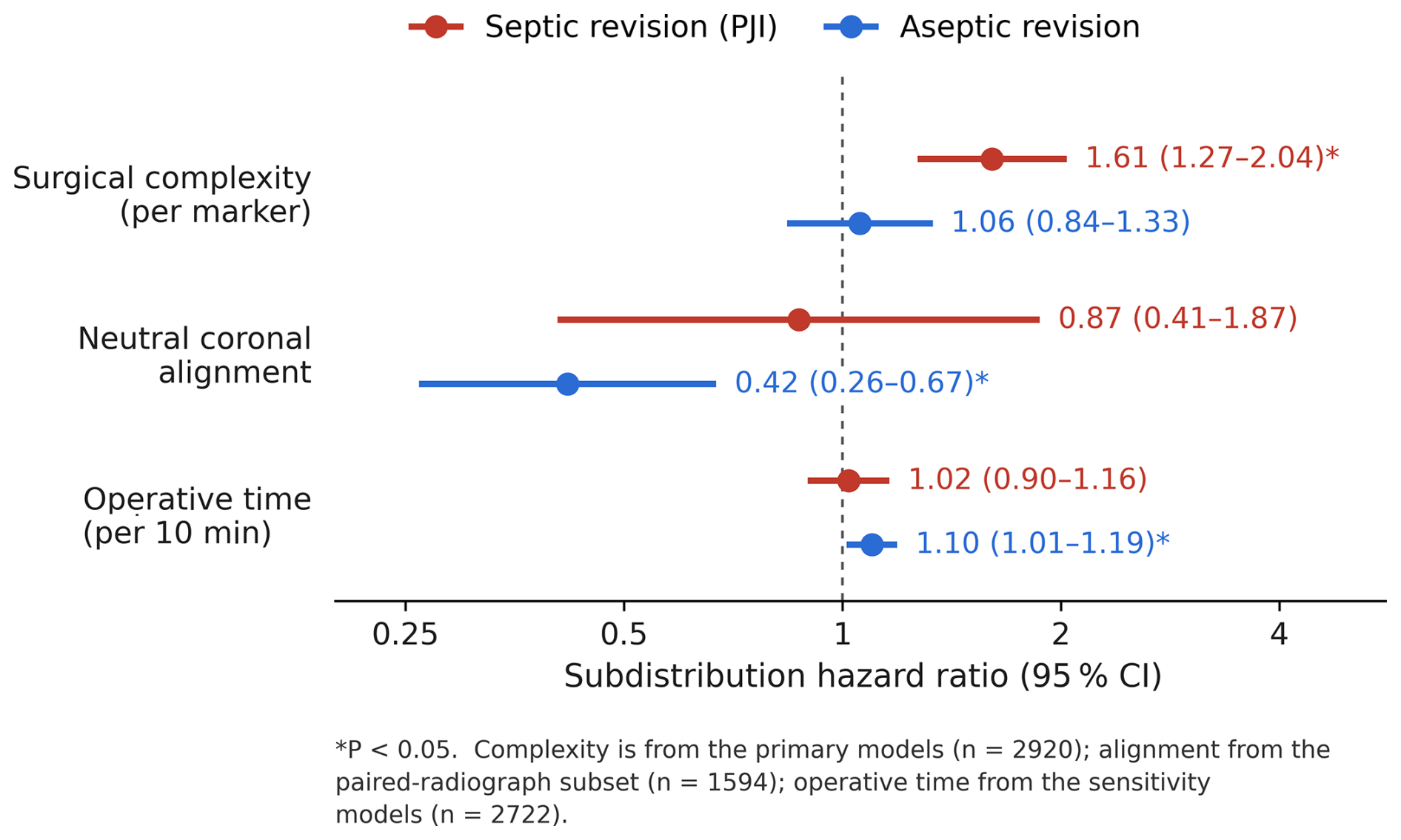
Figure 1Double dissociation of surgical complexity, coronal alignment and operative time. Subdistribution hazard ratios with 95 % confidence intervals for each exposure against each failure mode, with death treated as a competing risk.
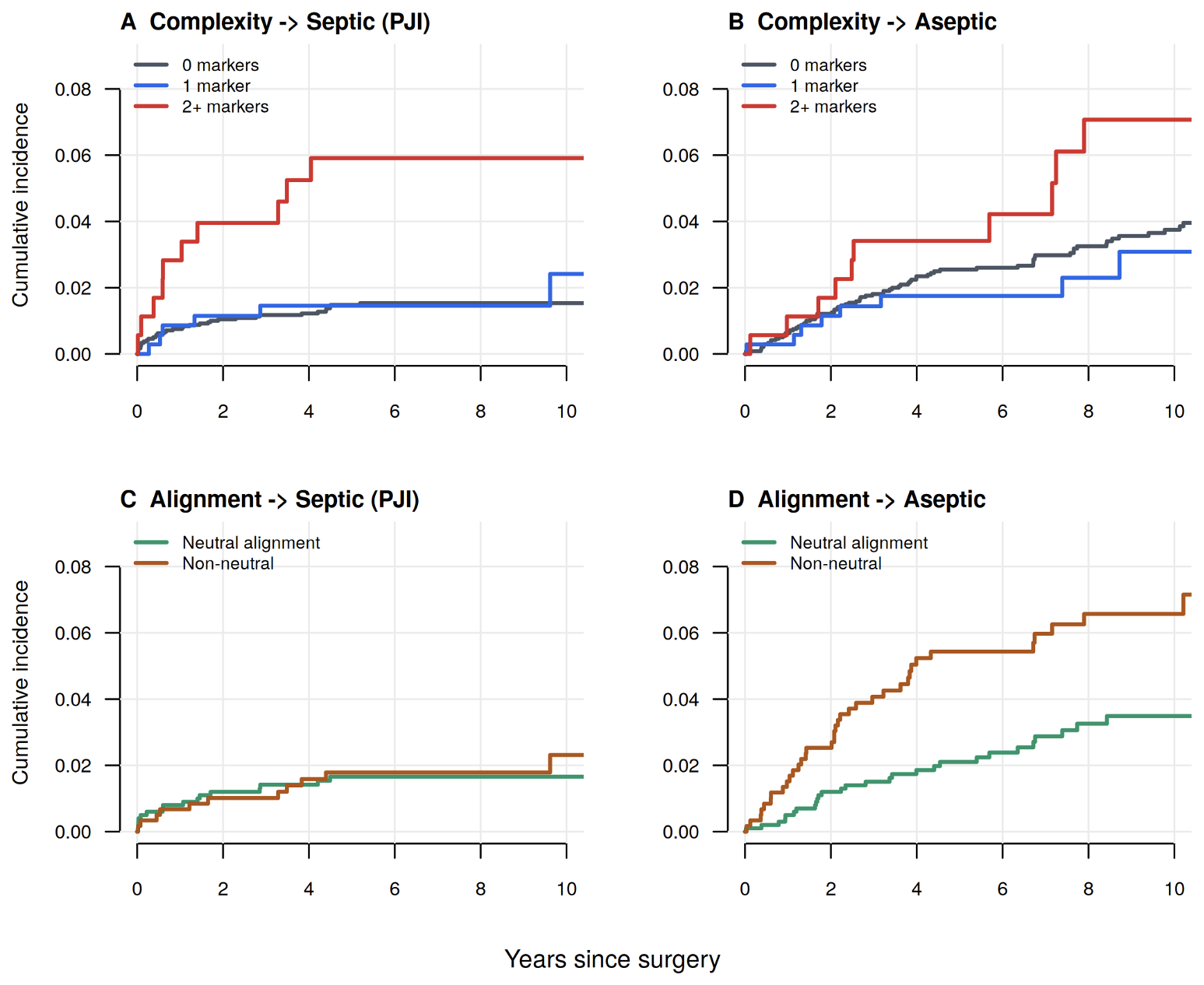
Figure 2Cumulative incidence of septic and aseptic revision by surgical complexity (A, B) and by neutral coronal alignment (C, D).
Table 2Fine–Gray models for periprosthetic joint infection (death competing).
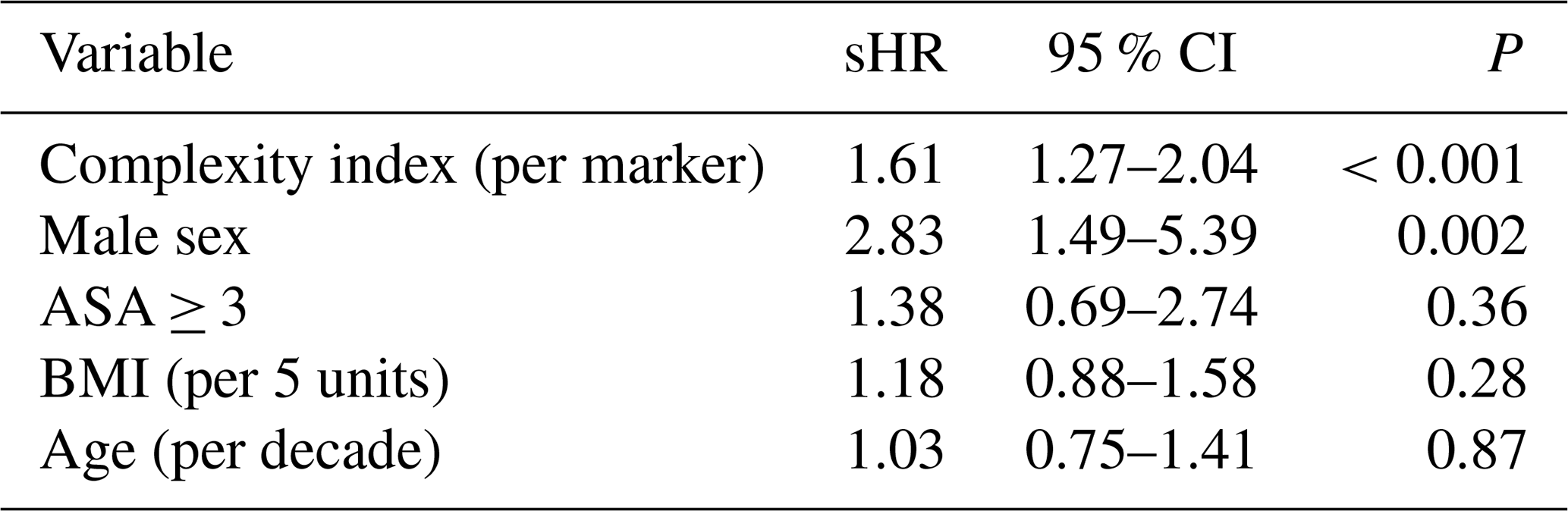
Table 3Five-year cumulative incidence of PJI by complexity stratum.
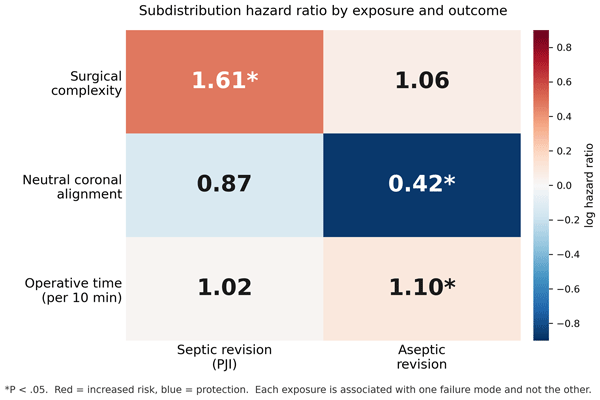
Operative time was recorded for 2722 knees (93 %), with a median of 85 min (interquartile range 72 to 100), and rose with the complexity index from a mean of 85 min at no markers to 111 at three and 122 at four, although not strictly monotonically across the sparsely populated middle strata. In the 2722 knees with operative time, adding it to the primary model moved the complexity-PJI subdistribution hazard ratio from 1.58 to 1.55 (95 % CI 1.21 to 1.98, P<0.001); operative time itself was not associated with septic revision (sHR 1.002 per minute, 95 % CI 0.990 to 1.015, P=0.72), and a difference-method decomposition attributed 5 % of the complexity effect to operative time. In the aseptic control, the pattern reversed, operative time being associated with revision (sHR 1.009 per minute, 95 % CI 1.001 to 1.017, P=0.023) but not with the complexity index (sHR 0.98, 95 % CI 0.74 to 1.29, P=0.87) – a second dissociation (Figs. 1 and 3).
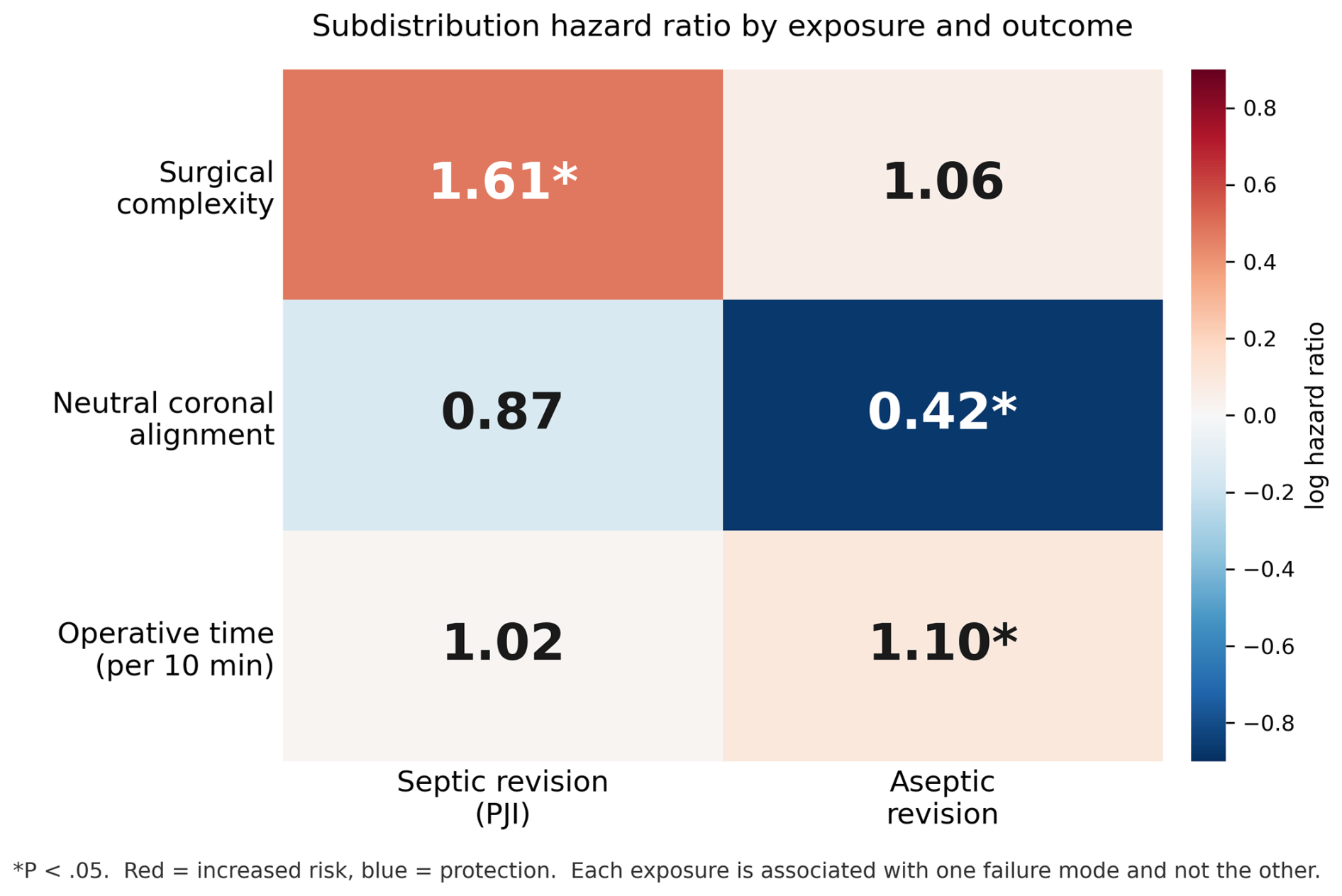
Figure 3Dissociation matrix. Subdistribution hazard ratio by exposure and outcome; each exposure is associated with one failure mode and not the other.
3.3 The negative-control dissociation
The identical complexity index was not associated with aseptic revision (sHR 1.06, 95 % CI 0.84 to 1.33, P=0.64). In the paired-radiograph subset of 1594 knees, neutral coronal alignment was protective against aseptic revision (sHR 0.42, 95 % CI 0.26 to 0.67, P<0.001) but unrelated to PJI (sHR 0.87, 95 % CI 0.41 to 1.87, P=0.72). Each degree of deviation from neutral raised aseptic revision (sHR 1.22 per degree, 95 % CI 1.12 to 1.33) but not PJI (sHR 1.08, 95 % CI 0.94 to 1.23), and a central Kennedy zone showed the same pattern (aseptic sHR 0.38, 95 % CI 0.22 to 0.63; PJI sHR 0.60, 95 % CI 0.24 to 1.48). Surgical complexity and coronal alignment therefore showed opposite patterns across the two failure modes, a double dissociation (Figs. 1–3).
3.4 Component-level estimation
Fitting the five markers individually produced gross separation, the constraint coefficient inflating without bound because rare markers perfectly predicted infection within small cells, confirming that component-level inference requires the pre-specified penalized-likelihood estimator and supporting the aggregated index as the primary analysis.
This study tested whether the operation itself carries PJI risk, indexed by a pre-specified count of complexity markers, with coronal alignment as a negative control and death as a competing risk. Surgical complexity was associated with a graded increase in infection, independent of the measured host factors, whereas coronal alignment was not, and 5-year infection incidence rose roughly four-fold once two or more markers were present. Alignment reproduced its established protection against aseptic revision but was unrelated to infection. These are associations in a single retrospective cohort and are hypothesis generating rather than causal. The practical implication we would draw is a modest one: that the more a knee demands of the operation, the more it may demand of infection prevention.
Male sex, higher ASA and obesity are well-established infection risks (Bagheri et al., 2025; Li et al., 2026; Lucenti et al., 2024); male sex reproduced clearly here, whereas ASA and BMI pointed the same way without reaching significance. What is added is a surgical-exposure axis that host-factor models and national registries do not capture: registries record who was operated on but not how demanding the operation was; they undercount infection unless augmented with microbiology or chart review (Anneberg et al., 2023, 2024; Koh et al., 2017). Case complexity, previous operations, bone defects and preoperative alignment are seldom recorded on their forms (Hoskins et al., 2023). That robotic and navigated assistance do not change PJI risk is consistent with this reading, because those technologies change how a target is reached rather than the size of the surgical task (LaValva et al., 2024).
Operative time deserves specific comment, because the interval over which a wound is open is a well-supported determinant of infection (Chong et al., 2025; DeMik et al., 2022; Pacha et al., 2025) and might be thought to confound this association. Constraint, stemmed fixation, the removal of a previous implant and the correction of an extra-articular deformity all lengthen the operation, so operative time lies on the causal path from complexity to infection rather than behind both, and conditioning on it estimates only that part of the effect that does not run through prolonged exposure (Schisterman et al., 2009). When we nonetheless conditioned on it, the association was barely disturbed and only 5 % of the effect traveled through duration. We do not claim that the complexity count predicts infection better than operative time but that it is available earlier – from the radiograph and the operative plan rather than from the completed operation.
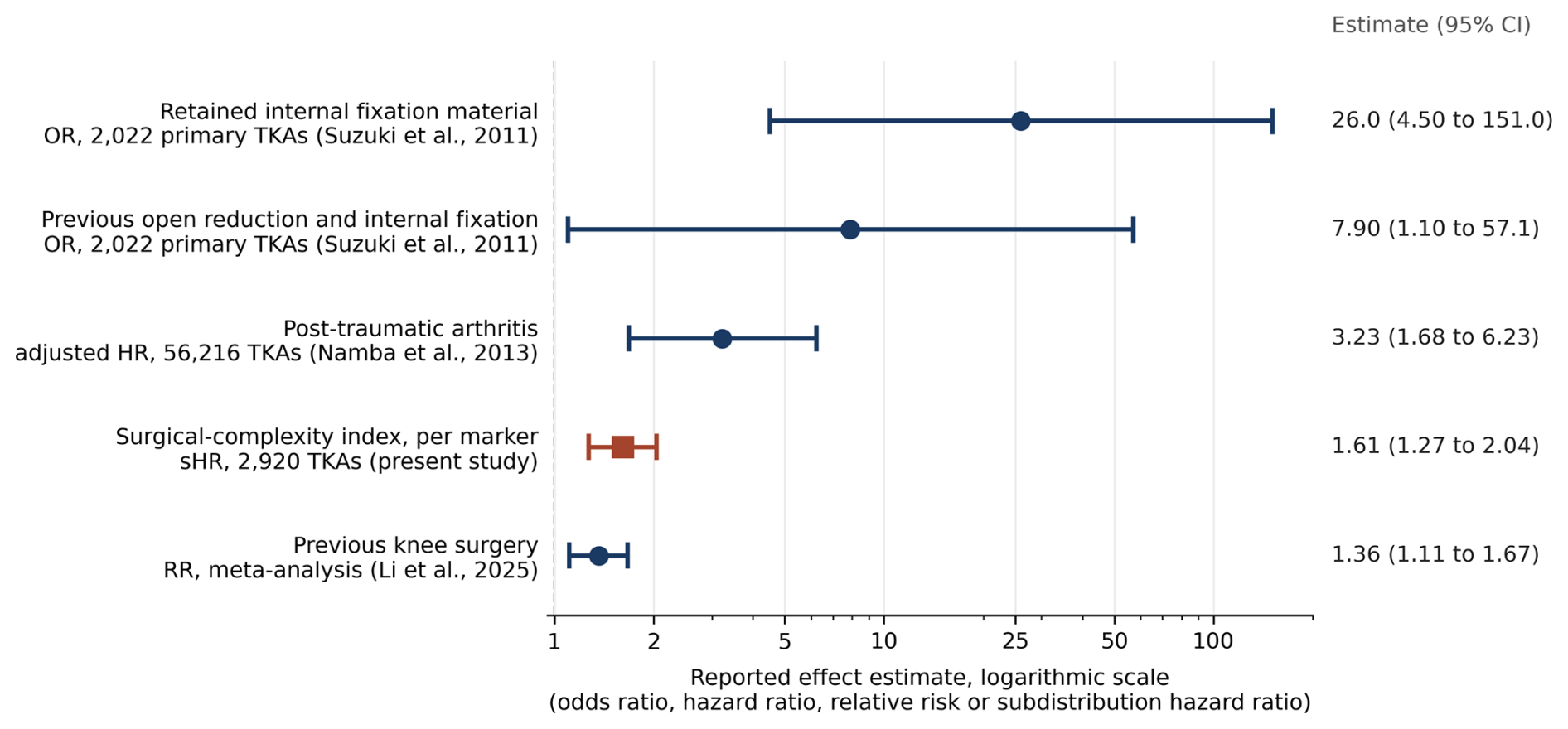
Figure 4Reported associations between markers of previous surgery or retained material and infection after knee replacement in two independent cohorts and one meta-analysis, with the per-marker estimate from the present study. Estimates are odds ratios, hazard ratios, relative risks and subdistribution hazard ratios from different designs and endpoints, shown on a common logarithmic scale and not pooled.
Two external series bear on the same chain. Costa et al. (2020) matched 74 primary knees receiving a varus-valgus constrained implant one to one with 74 posterior-stabilized knees and found 5-year survivorship free of revision for infection of 91.9 % against 100 % (P=0.013), whereas survivorship free of revision for every other cause did not differ. This is the same pattern, septic but not aseptic, found by a different design. Their groups differed by 7.1 min of mean operative time against a contrast of six infections and none, and in our cohort the equivalent difference was 6.3 min. In the largest series of this outcome – 56 216 primary knees with 404 deep infections – operative time was associated with infection on univariable analysis but did not enter the final adjusted model, and those authors read it as a proxy for the complexity of the procedure (Namba et al., 2013).
A multifactorial mechanism is available for the association of surgical complexity with PJI. In the established animal model, a foreign body reduced the inoculum of Staphylococcus aureus needed to establish infection by orders of magnitude, and granulocytes at an implant surface killed poorly despite opsonization (Zimmerli et al., 1982, 2004). A constrained, stemmed construct presents a larger foreign surface than a primary condylar implant, and the knees this index counts often carry retained material already: sonication of osteosynthetic implants from asymptomatic patients grew bacteria in 27 %, seven times more often at the knee than at the hip (Fuchs et al., 2019). Previous knee surgery and a thicker soft-tissue envelope independently raise infection risk after replacement (Li et al., 2025; Vahedi et al., 2020). Three further cohorts support the construct (Fig. 4): previous internal fixation, and more strongly retained material, were independent risk factors in a cohort of 2022 knees (Suzuki et al., 2011); post-traumatic arthritis carried an adjusted hazard ratio of 3.23 in 56 216 knees (Namba et al., 2013); and of 42 factors screened in 27 717 patients, the most influential was a previous open surgical procedure (Tan et al., 2018).
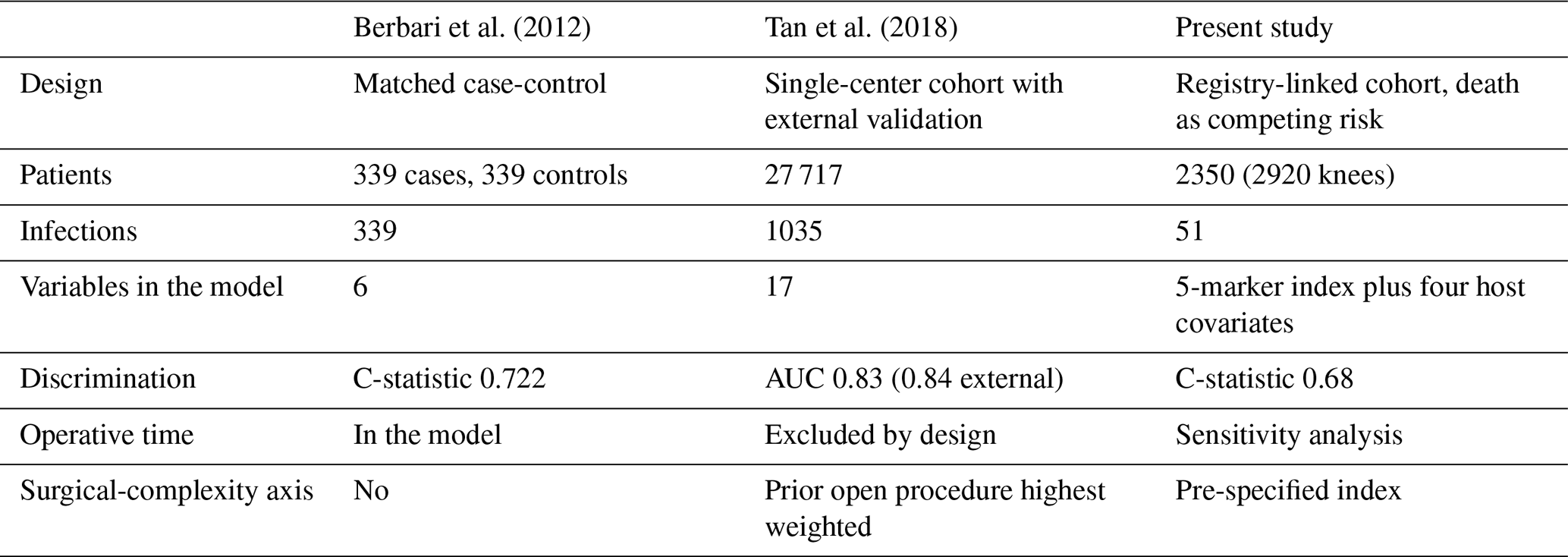
These results sit alongside the two published calculators rather than replacing them (Table 4). Both discriminate better than the model reported here, from six and from 17 variables (Berbari et al., 2012; Tan et al., 2018). What is offered is not discrimination but an axis neither calculator counts and a decomposition showing that most of what it carries does not travel through the duration of the operation.
Table 4Preoperative prediction of periprosthetic joint infection: the two published models and the present study.
No single marker accounted for the association. The markers were uncommon and highly correlated, every constrained knee was also stemmed and the component model separated, so the signal came from the graded accumulation of complexity rather than from any one component. The negative-control result is the methodological core of the study. If coronal alignment reduced aseptic revision only through residual confounding, it should also have tracked infection, and it did not, which is more consistent with two pathways than with a shared bias (Lipsitch et al., 2010). The argument does not require the alignment-aseptic association to be free of confounding but the opposite, because confounders acting across failure modes should have moved the alignment-infection estimate as well. What it cannot exclude is a confounder specific to aseptic failure, and a target alignment differing between surgeons is exactly such a candidate. Neither surgeon identity nor the intended alignment strategy was recorded, so the alignment findings should be read as reproducing an established association rather than as a comparison of alignment philosophies.
For the surgeon, the infection conversation should include the operation and not only the patient. A knee needing added constraint, stems or removal of a previous implant, or carrying deformity from a previous fracture represents a larger exposure and a compromised envelope, and the four-fold rise at two or more markers marks the cases in which intensified prophylaxis and shared decision-making are warranted. The index is not a validated calculator.
This study has limitations. It is retrospective and from a single institution, the estimates are associations rather than causal effects and specific values should be regarded as internally valid only. With 51 infections the analysis supports a small pre-specified exposure set and a directional negative-control test rather than an individualized predictor, and its concordance of 0.68 is below that of both published calculators. Constraint and stems partly mark revision-prone knees, so confounding by indication cannot be excluded. The alignment-infection null rests on 27 infections and is consistent with, but not proof of, the absence of an effect. Operative time was available for only 93 % of the cohort; the 198 knees without it carried proportionally more aseptic revisions than the cohort, and a decomposition on 47 septic events is imprecise. The null association between operative time and septic revision here is not evidence that duration is unimportant to infection in general, and larger series using a broader surgical site infection endpoint do report one (Namba et al., 2013). The E value bounds how strong an unmeasured confounder would have to be but does not exclude one. Finally, the index aggregates heterogeneous markers whose component-level effects require the penalized-likelihood estimator noted above.
Surgical complexity was associated with a graded increase in PJI after primary TKA, independent of the measured host factors, whereas coronal alignment was not, and the two exposures showed an opposite pattern across septic and aseptic failure. Adjustment for operative time left that association essentially intact and attributed only a small fraction of it to duration. Surgical exposure deserves a place alongside host factors in how infection risk is understood, and external validation in a cohort with operative time recorded is the necessary next step.
The analysis code (R and Python) that supports the findings of this study is available from the corresponding author on reasonable request.
The data that support the findings of this study are available from the corresponding author on reasonable request. The data are not publicly available because they contain information that could compromise the privacy of research participants and are held under the governance of the linked national joint registry.
WH conceived and designed the study, was involved with data acquisition, contributed to the statistical analysis, interpreted the data and drafted the paper. CG performed the statistical analysis and interpretation, and drafted the paper. KR, ML and KD contributed to data acquisition and interpretation, and drafted the paper. KGV contributed to the study design and interpretation, and drafted the paper. All authors critically revised the paper, and read and approved the final version.
Wayne Hoskins has given paid educational presentations for Smith & Nephew and Zimmer Biomet, is an Associate Editor for The Journal of Bone & Joint Surgery and The Journal of Knee Surgery, and is a Deputy Editor for the European Journal of Orthopaedic Surgery & Traumatology. Kelly G. Vince has received royalties from Zimmer Biomet. The authors declare that they have no other competing interests.
This study was approved by the Auckland Health Research Ethics Committee (approval no. AH29107) and was conducted in accordance with the principles of the Declaration of Helsinki. The requirement for individual informed consent was waived for this retrospective analysis of routinely collected, registry-linked data.
Publisher's note: Copernicus Publications remains neutral with regard to jurisdictional claims made in the text, published maps, institutional affiliations, or any other geographical representation in this paper. The authors bear the ultimate responsibility for providing appropriate place names. Views expressed in the text are those of the authors and do not necessarily reflect the views of the publisher.
The authors used artificial intelligence (Claude, Anthropic) to assist with drafting analytic and figure code that the authors independently executed and validated. The authors reviewed and edited all AI-assisted content and take full responsibility for the publication.
This paper was edited by Vinay Aggarwal and reviewed by two anonymous referees.
Anneberg, M., Troelsen, A., Gundtoft, P., Sørensen, H. T., and Pedersen, A. B.: Temporal trends in revision rate due to knee periprosthetic joint infection: a study of 115,120 cases from the Danish Knee Arthroplasty Register, Acta Orthop., 94, 616–624, https://doi.org/10.2340/17453674.2023.33294, 2023.
Anneberg, M., Kristiansen, E. B., Troelsen, A., Gundtoft, P., Sørensen, H. T., and Pedersen, A. B.: Enhancing the data capture of periprosthetic joint infections in the Danish Knee Arthroplasty Registry: validity assessment and incidence estimation, Acta Orthop., 95, 166–173, https://doi.org/10.2340/17453674.2024.40358, 2024.
Bagheri, A., Sharifi Niknafs, A., Farhadi, B., Mazhari, S. A., Karimian, P., Hekmati Pour, N., Hojjati, H., Nosratabadi, I., Emami, A., and Salehi, R.: Incidence and risk factors of surgical site infection after knee arthroplasty; a systematic review and meta-analysis, Arch. Acad. Emerg. Med., 13, e28, https://doi.org/10.22037/aaemj.v13i1.2543, 2025.
Berbari, E. F., Osmon, D. R., Lahr, B., Eckel-Passow, J. E., Tsaras, G., Hanssen, A. D., Mabry, T., Steckelberg, J., and Thompson, R.: The Mayo prosthetic joint infection risk score: implication for surgical site infection reporting and risk stratification, Infect. Control Hosp. Epidemiol., 33, 774–781, https://doi.org/10.1086/666641, 2012.
Chong, Y. Y., Lau, C. M. L., Jiang, T., Wen, C., Zhang, J., Cheung, A., Luk, M. H., Leung, K. C. T., Cheung, M. H., Fu, H., Chiu, K. Y., and Chan, P. K.: Predicting periprosthetic joint infection in primary total knee arthroplasty: a machine learning model integrating preoperative and perioperative risk factors, BMC Musculoskelet. Disord., 26, 241, https://doi.org/10.1186/s12891-025-08296-6, 2025.
Costa, G. G., Lo Presti, M., Agrò, G., Vasco, C., Cialdella, S., Casali, M., Neri, M. P., Grassi, A., and Zaffagnini, S.: Difficult primary total knee arthroplasty requiring a varus–valgus constrained implant is at higher risk of periprosthetic infection, Knee Surg. Sports Traumatol. Arthrosc., 28, 3787–3795, https://doi.org/10.1007/s00167-020-05866-0, 2020.
DeMik, D. E., Carender, C. N., Glass, N. A., Brown, T. S., Elkins, J. M., and Bedard, N. A.: Not all total hip and knee arthroplasties are the same: what are the implications in large database studies?, J. Arthroplasty, 37, 1247–1252.e2, https://doi.org/10.1016/j.arth.2022.02.119, 2022.
Fine, J. P. and Gray, R. J.: A proportional hazards model for the subdistribution of a competing risk, J. Am. Stat. Assoc., 94, 496–509, https://doi.org/10.1080/01621459.1999.10474144, 1999.
Firth, D.: Bias reduction of maximum likelihood estimates, Biometrika, 80, 27–38, https://doi.org/10.1093/biomet/80.1.27, 1993.
Fuchs, M., Kinzel, S., Gwinner, C., Perka, C., Renz, N., and von Roth, P.: Clinically asymptomatic patients show a high bacterial colonization rate of osteosynthetic implants around the knee but not the hip, J. Arthroplasty, 34, 1761–1766, https://doi.org/10.1016/j.arth.2019.03.058, 2019.
Heinze, G. and Schemper, M.: A solution to the problem of separation in logistic regression, Stat. Med., 21, 2409–2419, https://doi.org/10.1002/sim.1047, 2002.
Hoskins, W. and Gusho, C.: The effect of tibial and femoral component coronal alignment on survivorship after total knee arthroplasty: a systematic scoping review of the literature, JBJS Open Access, 11, e25.00350, https://doi.org/10.2106/JBJS.OA.25.00350, 2026.
Hoskins, W., Bingham, R., and Vince, K. G.: A systematic review of data collection by national joint replacement registries: what opportunities exist for enhanced data collection and analysis?, JBJS Rev., 11, e23.00062, https://doi.org/10.2106/JBJS.RVW.23.00062, 2023.
Koh, C. K., Zeng, I., Ravi, S., Zhu, M., Vince, K. G., and Young, S. W.: Periprosthetic joint infection is the main cause of failure for modern knee arthroplasty: an analysis of 11,134 knees, Clin. Orthop. Relat. Res., 475, 2194–2201, https://doi.org/10.1007/s11999-017-5396-4, 2017.
Kotzur, T. M., Singh, A., Peng, L. N., Makhani, A. A., Seifi, A., and Moore, C. C.: Comparing common risk assessment tools to predict outcomes in total knee arthroplasty, J. Arthroplasty, 39, S163–S170.e11, https://doi.org/10.1016/j.arth.2024.01.052, 2024.
Lacny, S., Wilson, T., Clement, F., Roberts, D. J., Faris, P. D., Ghali, W. A., and Marshall, D. A.: Kaplan-Meier survival analysis overestimates the risk of revision arthroplasty: a meta-analysis, Clin. Orthop. Relat. Res., 473, 3431–3442, https://doi.org/10.1007/s11999-015-4235-8, 2015.
LaValva, S. M., Chiu, Y. F., Fowler, M. J., Lyman, S., and Carli, A. V.: Does computer navigation or robotic assistance affect the risk of periprosthetic joint infection in primary total knee arthroplasty? A propensity score-matched cohort analysis, J. Arthroplasty, 39, 96–102, https://doi.org/10.1016/j.arth.2023.08.007, 2024.
Li, J., Liu, Z., Wang, Z., Li, D., Zhang, H., Hao, S., Zhu, Q., Yakufu, M., Abulaiti, A., and Haibier, A.: Risk factors for periprosthetic joint infection following primary total knee arthroplasty: a systematic review and meta-analysis, Front. Surg., 12, 1715571, https://doi.org/10.3389/fsurg.2025.1715571, 2026.
Li, Y., Ajia, A., Wu, Z., Fan, J., Wu, M., Mao, P., Yang, F., He, Q., and Wang, P.: Previous knee surgery increases risks of revision, infection, pain and stiffness after knee replacement arthroplasty: a systematic review and meta-analysis, BMC Musculoskelet. Disord., 26, 869, https://doi.org/10.1186/s12891-025-09060-6, 2025.
Lipsitch, M., Tchetgen Tchetgen, E., and Cohen, T.: Negative controls: a tool for detecting confounding and bias in observational studies, Epidemiology, 21, 383–388, https://doi.org/10.1097/EDE.0b013e3181d61eeb, 2010.
Lucenti, L., Testa, G., Caldaci, A., Sammartino, F., Cicio, C., Ilardo, M., Sapienza, M., and Pavone, V.: Preoperative risk factors for periprosthetic joint infection: a narrative review of the literature, Healthcare, 12, 666, https://doi.org/10.3390/healthcare12060666, 2024.
Maradit Kremers, H., Wyles, C. C., Slusser, J. P., O'Byrne, T. J., Sagheb, E., Lewallen, D. G., Berry, D. J., Osmon, D. R., Sohn, S., and Kremers, W. K.: Data-driven approach to development of a risk score for periprosthetic joint infections in total joint arthroplasty using electronic health records, J. Arthroplasty, 40, 1308–1316.e13, https://doi.org/10.1016/j.arth.2024.10.129, 2025.
Namba, R. S., Inacio, M. C. S., and Paxton, E. W.: Risk factors associated with deep surgical site infections after primary total knee arthroplasty: an analysis of 56,216 knees, J. Bone Joint Surg. Am., 95, 775–782, https://doi.org/10.2106/JBJS.L.00211, 2013.
Pacha, T. O., Klett, S. K., von Lewinski, G., Koblenzer, M., Özbek, H., Mayor, J., Clausen, J. D., Gänsslen, A., Faraj Tabrizi, S., Sehmisch, S., and Aktas, G. F.: Preoperative risk factors and phenotypic clustering in periprosthetic joint infection: a matched case-control study, Life, 15, 1762, https://doi.org/10.3390/life15111762, 2025.
Premkumar, A., Kolin, D. A., Farley, K. X., Wilson, J. M., McLawhorn, A. S., Cross, M. B., and Sculco, P. K.: Projected economic burden of periprosthetic joint infection of the hip and knee in the United States, J. Arthroplasty, 36, 1484–1489.e3, https://doi.org/10.1016/j.arth.2020.12.005, 2021.
Schiffner, E., Latz, D., Karbowski, A., Grassmann, J. P., Thelen, S., Gehrmann, S., Windolf, J., Schneppendahl, J., and Jungbluth, P.: Possible risk factors for acute and chronic deep periprosthetic joint infections in primary total knee arthroplasty. Do BMI, smoking, urinary tract infections, gender, and ASA classification have an impact?, J. Orthop., 19, 111–113, https://doi.org/10.1016/j.jor.2019.11.035, 2020.
Schisterman, E. F., Cole, S. R., and Platt, R. W.: Overadjustment bias and unnecessary adjustment in epidemiologic studies, Epidemiology, 20, 488–495, https://doi.org/10.1097/EDE.0b013e3181a819a1, 2009.
Suzuki, G., Saito, S., Ishii, T., Motojima, S., Tokuhashi, Y., and Ryu, J.: Previous fracture surgery is a major risk factor of infection after total knee arthroplasty, Knee Surg. Sports Traumatol. Arthrosc., 19, 2040–2044, https://doi.org/10.1007/s00167-011-1525-x, 2011.
Tan, T. L., Maltenfort, M. G., Chen, A. F., Shahi, A., Higuera, C. A., Siqueira, M., and Parvizi, J.: Development and evaluation of a preoperative risk calculator for periprosthetic joint infection following total joint arthroplasty, J. Bone Joint Surg. Am., 100, 777–785, https://doi.org/10.2106/JBJS.16.01435, 2018.
Vahedi, H., Ward, D. T., Lee, Y. S., Shohat, N., and Chen, A. F.: Greater knee soft tissue thickness predisposes patients to subsequent periprosthetic joint infection after total knee arthroplasty, J. Arthroplasty, 35, 1924–1927, https://doi.org/10.1016/j.arth.2020.02.049, 2020.
VanderWeele, T. J. and Ding, P.: Sensitivity analysis in observational research: introducing the E-value, Ann. Intern. Med., 167, 268–274, https://doi.org/10.7326/M16-2607, 2017.
Yapp, L. Z., Clement, N. D., Moran, M., Clarke, J. V., Simpson, A. H. R. W., and Scott, C. E. H.: Long-term mortality rates and associated risk factors following primary and revision knee arthroplasty: 107,121 patients from the Scottish Arthroplasty Project, Bone Joint J., 104-B, 45–52, https://doi.org/10.1302/0301-620X.104B1.BJJ-2021-0753.R1, 2022.
Zimmerli, W., Waldvogel, F. A., Vaudaux, P., and Nydegger, U. E.: Pathogenesis of foreign body infection: description and characteristics of an animal model, J. Infect. Dis., 146, 487–497, https://doi.org/10.1093/infdis/146.4.487, 1982.
Zimmerli, W., Trampuz, A., and Ochsner, P. E.: Prosthetic-joint infections, N. Engl. J. Med., 351, 1645–1654, https://doi.org/10.1056/NEJMra040181, 2004.
Infection after knee replacement is usually blamed on the patient. We asked whether the operation itself matters. In 2920 knee replacements from one New Zealand hospital, each added feature of a complex operation, such as a previous implant, a bone deformity or a larger, stemmed implant, raised the risk of later infection by about 60 %. Leg alignment, which affects wear and loosening, did not change infection risk. Surgeons should weigh how complex the operation will be when judging this risk.
Infection after knee replacement is usually blamed on the patient. We asked whether the...