the Creative Commons Attribution 4.0 License.
the Creative Commons Attribution 4.0 License.
 | 09 Nov 2026
Success of debridement, antibiotics, and implant retention for acute hematogenous periprosthetic joint infection: a systematic review and meta-analysis
Sina Esmaeili
Mohammadreza Razzaghof
Mohammad Ayati Firoozabadi
Seyed Mohammad Javad Mortazavi

Background: Acute hematogenous periprosthetic joint infection after hip or knee arthroplasty is difficult to treat. The method of debridement, antibiotics, and implant retention (DAIR) is widely used, but reported success rates vary, and predictors of failure remain unclear. Methods: We searched PubMed, Scopus, Web of Science, and Embase from inception through 26 November 2025 for studies reporting outcomes of DAIR in acute hematogenous periprosthetic joint infection. Two reviewers independently screened studies, extracted data, and assessed methodological quality using Joanna Briggs Institute tools. The primary outcome was pooled treatment success. Results: Forty-nine studies were included in the qualitative synthesis. Reported success rates ranged from 20 % to 100 %, with a pooled success rate of 64.5 % (95 % confidence interval, 59.3 %–69.4 %; I2=72 %, τ2=0.44) in the meta-analysis. This pooled estimate describes an average across heterogeneous cohorts and should not be used as a patient-specific prediction. Success was higher in total hip arthroplasty than in total knee arthroplasty (69.4 % vs. 63.2 %). Outcomes improved over time, from 44.9 % before 2010 to 68.7 % in 2020–2025. Staphylococcus aureus infection and prolonged symptom duration before debridement were the most consistently reported predictors of treatment failure, whereas some included studies reported improved outcomes with modular component exchange. Conclusion: DAIR controls infection in about two-thirds of patients with acute hematogenous periprosthetic joint infection. Failure remains common, especially with S. aureus infection or delayed intervention, supporting early diagnosis, prompt surgery, and careful patient selection.
- Article
(5450 KB) - Full-text XML
-
Supplement
(3994 KB) - BibTeX
- EndNote


Periprosthetic joint infection (PJI) is among the most serious complications after hip and knee arthroplasty, causing substantial morbidity, impaired quality of life, prolonged hospitalization, and major healthcare costs (Premkumar et al., 2021; McMaster Arthroplasty, 2020). As the volume of primary arthroplasty continues to increase, the burden of PJI is expected to rise accordingly. International registry data suggest infection rates of approximately 1 % after total hip and knee arthroplasty, although reported estimates vary depending on diagnostic criteria, registry methodology, and follow-up duration (Marang-van de Mheen et al., 2017). Acute hematogenous PJI, which accounts for approximately 20 % to 35 % of all cases, occurs when bacteria disseminate from a distant infectious focus or, less commonly, from a contiguous site and seed a previously well-functioning joint implant, often leading to abrupt pain, swelling, and functional decline (Urish et al., 2018; Konigsberg et al., 2014).
Several surgical strategies are available for the management of PJI, including debridement with implant retention and one-stage-revision and two-stage-revision arthroplasty (Fink et al., 2017; Osmon et al., 2013b). In acute hematogenous periprosthetic joint infection, the method of debridement, antibiotics, and implant retention (DAIR) is often the preferred initial approach because it can preserve well-fixed components and avoid more extensive reconstruction (Osmon et al., 2013b). However, reported success rates vary widely, definitions are inconsistent, and focused synthesis in this specific setting remains limited.
A clearer estimate of treatment success, along with a better understanding of reported failure predictors, may help guide patient selection, timing of intervention, and multidisciplinary management.
The aim of this systematic review and meta-analysis was to estimate the pooled success rate of DAIR for acute hematogenous PJI after hip or knee arthroplasty and to identify reported predictors of treatment failure.
This systematic review was conducted in accordance with the Preferred Reporting Items for Systematic Reviews and Meta-Analyses (PRISMA) guidelines (Page et al., 2021). The review protocol was prospectively registered in PROSPERO (registration ID: CRD420251245222).
2.1 Search strategy
We searched PubMed, Scopus, Web of Science, and Embase from database inception through 26 November 2025 using controlled vocabulary and free-text terms for periprosthetic joint infection and hematogenous infection. Reference lists of included studies and relevant reviews were also screened. No language restriction was applied during the search, but non-English full-text articles were excluded during screening. Full search strategies are provided in Table S1 in the Supplement.
2.2 Study selection
Eligible studies reported outcomes of debridement, antibiotics, and implant retention in acute hematogenous periprosthetic joint infection after hip or knee arthroplasty. Retrospective and prospective cohort studies, case control studies, cross-sectional studies, case series, and randomized trials were eligible. Studies had to provide separate extractable outcomes for acute hematogenous cases treated with DAIR. Mixed acute/chronic cohorts or mixed treatment cohorts were excluded unless relevant subgroup data were extractable. Review articles, case reports, congress abstracts, letters, and non-English publications were excluded.
Two reviewers independently screened titles, abstracts, and full texts using Covidence. Inter-rater agreement was quantified with Cohen's κ statistic at the title/abstract stage (κ=0.73) and full-text stage (κ=0.88). Disagreements were resolved by discussion, with adjudication by a senior author when required.
2.3 Definition of acute hematogenous PJI
Definitions of acute hematogenous PJI varied across studies. Study-specific definitions were accepted when the infection was explicitly described as acute hematogenous or when the clinical scenario was consistent with hematogenous seeding of a previously well-functioning implanted joint. Definitions and time thresholds from index arthroplasty were recorded during extraction, and subgroup analyses were performed by study definition where feasible.
2.4 Data extraction
Two reviewers independently extracted study characteristics, patient characteristics, definitions of acute hematogenous infection, microbiological findings, intervention details, and outcomes using a standardized spreadsheet. All reported predictors of failure were extracted; predictors from multivariable analyses were prioritized over those reported only in univariable analyses. Discrepancies were resolved by consensus.
2.5 Assessment of study quality
Methodological quality was assessed independently by two reviewers using the 10-item Joanna Briggs Institute (JBI) critical appraisal checklist (Munn et al., 2020). Because most included studies were retrospective case series or cohort studies, the findings of this review were interpreted with caution, and greater emphasis was placed on the consistency of results across studies rather than on any single study estimate.
2.6 Data analyses
A meta-analysis of proportions was performed in R (version 4.2.2) using the metaprop function from the meta package with a generalized linear mixed model and logit transformation. Because substantial between-study variability was expected, pooled estimates were interpreted within a random-effects framework. Heterogeneity was assessed with Cochran's Q test and the I2 statistic. Subgroup analyses were conducted by joint type, study definition, publication period, and region. A restrictive sensitivity analysis was performed by limiting the analysis to studies that provided detailed diagnostic criteria for acute hematogenous PJI, included at least 10 patients with acute hematogenous PJI, and reported a minimum follow-up of 1 year to allow adequate assessment of treatment failure. Exploratory meta-regression was performed where sufficient data were available to investigate associations between study-level DAIR success rates and prespecified clinical and procedural characteristics, including mean symptom-to-DAIR interval, modular component exchange rate, proportion of Staphylococcus aureus infections, joint age, and mean duration of antibiotic therapy. These models were adjusted for joint type. Publication bias was assessed by means of funnel plot inspection and Egger's regression test, interpreted cautiously because of substantial heterogeneity.
3.1 Study selection
After duplicates were removed, 1002 records underwent title and abstract screening. Ninety-four full-text articles were assessed for eligibility, and 49 studies were ultimately included in the final synthesis (Liukkonen et al., 2024; Soundarrajan et al., 2023; Chen et al., 2021; Huotari et al., 2023; Rahardja et al., 2023; Karlsen et al., 2025; Tarity et al., 2021; Geurts et al., 2013; Westberg et al., 2023; Segawa et al., 1999; Bryan et al., 2017; Chiu and Chen, 2007; Cook et al., 2007; Crockarell et al., 1998; Tsukayama et al., 1996; Estes et al., 2010; Fink et al., 2017; Flierl et al., 2017; Hernandez et al., 2019; Uriarte et al., 2019; Engen et al., 2024; Nurmohamed et al., 2021; Kim et al., 2011; Koh et al., 2015; Konigsberg et al., 2014; Koyonos et al., 2011; Son et al., 2017; Kuo et al., 2019; Lora-Tamayo et al., 2013; Salmons et al., 2023; Renz et al., 2022; Lora-Tamayo et al., 2017; Shao et al., 2022; Chaiyakit et al., 2021; Iza et al., 2019; Pérez-Prieto et al., 2023; Chang et al., 2022; Toh et al., 2021; Sendi et al., 2017; Shohat et al., 2019; Swenson et al., 2018; Vilchez et al., 2011; Waldman et al., 2000; Wouthuyzen-Bakker et al., 2019a; Zhu et al., 2021; Chandler et al., 2025; Liukkonen et al., 2025; Sigmund et al., 2024; Terhune et al., 2025). The study selection process is summarized in the PRISMA flow diagram (Fig. 1).

3.2 Study characteristics
Forty-nine studies comprising 2318 patients were included in the qualitative synthesis; however, only studies with extractable outcome data were included in each quantitative analysis, resulting in smaller denominators for some pooled estimates.
Study design and geography. Among the included studies, 42 were retrospective and 7 were prospective. The studies were conducted across multiple countries, most commonly the United States (19 studies), Spain (6 studies), and Korea (4 studies) (Table 1).
Patient and joint characteristics. The review included a total of 2318 patients with acute hematogenous PJI. Among the 21 studies reporting sex distribution, 49 % of patients were men (752 of 1529). Thirty-two studies reported mean age, which ranged from 59 to 74 years, and mean follow-up duration ranged from 0.3 to 8.5 years. Twenty-four studies included both hip and knee arthroplasties, 18 focused exclusively on knee arthroplasty, and 7 focused exclusively on hip arthroplasty (Table 1).
Definitions of acute hematogenous PJI. The definition of acute hematogenous PJI varied across studies. Twenty-one studies defined it as infection occurring more than 4 weeks after the index procedure, 18 used a threshold of more than 3 months, and 3 used more than 6 months, whereas 8 studies did not report a specific definition (Table 1). In most studies, symptom duration of fewer than 4 weeks was considered to be consistent with an acute presentation. Thirty-six studies provided detailed diagnostic criteria for acute hematogenous PJI that incorporated features consistent with the concepts described by the International Consensus Meeting (ICM) (Elkins et al., 2019) and the Infectious Diseases Society of America (IDSA) (Osmon et al., 2013a), including a previously well-functioning prosthetic joint and clinical or microbiologic evidence suggestive of hematogenous seeding, such as positive blood cultures or a distant infectious focus.
3.3 Quality assessment
Among the included studies, 42 were retrospective, and 7 were prospective. Overall, methodological quality was acceptable according to the JBI critical appraisal tool; however, common limitations included the predominance of retrospective designs, inconsistent reporting of clinical variables, and incomplete reporting across some appraisal domains. Notably, only 8 of 49 studies (16 %) reported clinical information clearly (JBI item 7), representing the main weakness identified in the quality assessment. Table 2 summarizes the JBI appraisal by domain, and study-level ratings are provided in Table S2.
3.4 Infective organisms
S. aureus was the most frequently reported pathogen, with a pooled prevalence of 34.2 % (95 % CI: 28.5 %–40.3 %; I2=71 %, τ2=0.47; Fig. S1 in the Supplement). Streptococcal species were the second most common organisms, with a pooled prevalence of 23.6 % (95 % CI: 17.7 %–30.8 %; I2=70 %, τ2=0.49; Fig. S2). Polymicrobial infections accounted for 8.0 % of reported cases (95 % CI: 4.9 %–12.8 %; I2=83 %, τ2=0.28; Fig. S3), whereas culture-negative infections represented 17.4 % (95 % CI: 11.1 %–26.2 %; I2=63 %, τ2=0.57; Fig. S4).
Among studies reporting treatment timing, the interval from symptom onset to DAIR ranged from 3.3 to 15 d, and the time from index arthroplasty to DAIR ranged from 1.3 to 6.5 years. In most studies, modular components were exchanged in all patients undergoing DAIR. Intravenous antibiotic therapy typically lasted 6 weeks, although the duration of subsequent oral antibiotic therapy varied considerably across studies (Table S3).
3.5 Treatment success rate
Definitions of treatment success generally required the resolution of clinical symptoms and normalization of laboratory inflammatory markers (e.g., ESR, CRP, synovial fluid analysis), whereas treatment failure consisted of recurrent infection, need for reoperation, or death attributable to infection (Table S4). Across all studies, success rates ranged from 20 % to 100 %, with a pooled success proportion of 64.5 % (95 % CI: 59.3 %–69.4 %; I2=72 %, τ2=0.44; Fig. 2). This suggests that approximately one in three patients undergoing DAIR for acute hematogenous PJI may ultimately experience treatment failure. Egger's regression test revealed no significant publication bias (P=0.13) (Fig. S5).
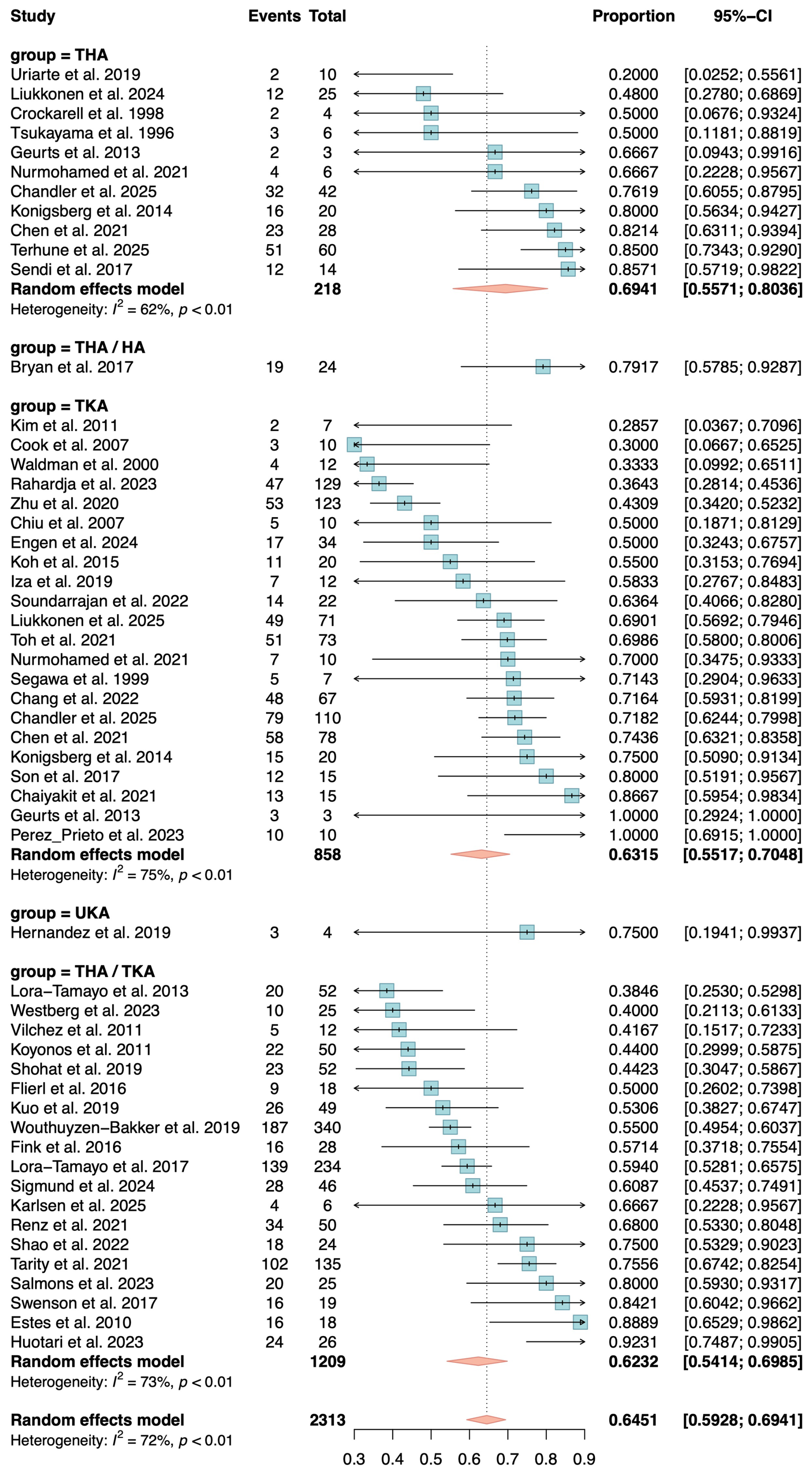
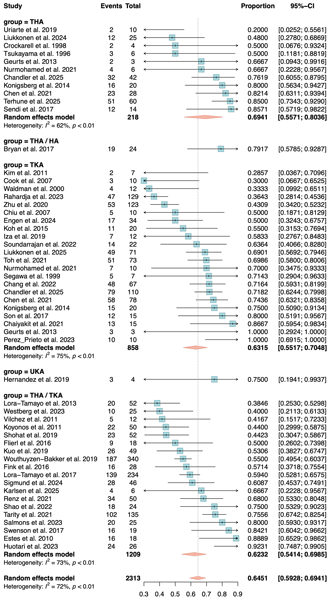
Figure 2Forest plot showing the pooled success rate of DAIR for acute hematogenous PJI across all included studies, along with subgroup analyses for THA and TKA.
Table 1Study characteristics.
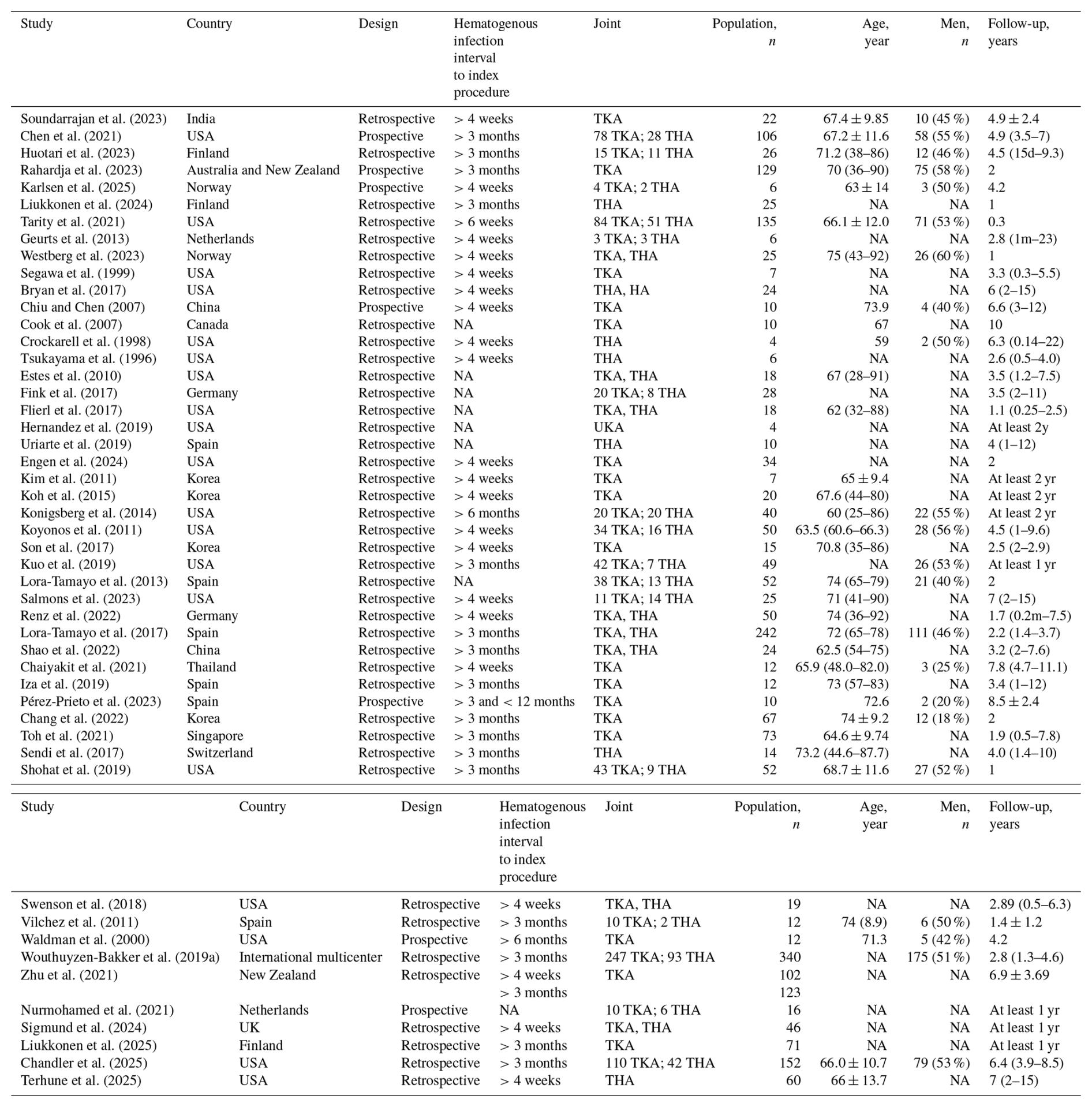
TKA: total knee arthroplasty; THA: total hip arthroplasty; HA: hemi-arthroplasty; UKA: unicompartmental knee arthroplasty; NA: not available; n: number.
Table 2Summary of the Joanna Briggs Institute (JBI) critical appraisal of the included studies, by domain.

Values are numbers of studies (% of 49). Study-level ratings are provided in Table S2.
3.6 Subgroup analyses
Subgroup analyses showed somewhat higher success rates in hips than in knees, a finding that is clinically informative given potential differences in implant anatomy, soft-tissue exposure, and treatment response between joint types (Fig. 2). Among patients with total hip arthroplasty (THA), the pooled success rate was 69.4 % (159 of 218; 95 % CI: 55.7 %–80.4 %), whereas among patients with total knee arthroplasty (TKA), success was achieved in 513 of 858 cases (pooled prevalence: 63.2 %; 95 % CI: 55.2 %–70.5 %; Fig. 2).
When studies were stratified by publication period, outcomes improved over time. Studies published before 2010 reported a pooled success rate of 44.9 % (95 % CI: 31.7 %–58.9 %; k=6), those published from 2010 to 2019 had a pooled success rate of 60.2 % (95 % CI: 51.7 %–68.0 %; k=21), and those published between 2020 and 2025 achieved the highest pooled success rate at 68.7 % (95 % CI: 61.4 %–75.2 %; k=22). This temporal trend was statistically significant (P=0.0098), suggesting that contemporary DAIR management may be associated with improved outcomes (Fig. 3).
By contrast, subgroup analyses based on study definitions of acute hematogenous PJI should be interpreted more cautiously. Studies using a threshold of more than 4 weeks after the index procedure reported a pooled success rate of 64.1 % (334 of 553; 95 % CI: 55.6 %–71.8 %), and those using a threshold of more than 3 months reported a similar pooled success rate of 64.1 % (903 of 1519; 95 % CI: 55.6 %–69.6 %; Fig. S6). However, these findings remain exploratory because of heterogeneity in study definitions, overlap in clinical classification methods, and inconsistencies in reporting across studies.
Regional subgroup analysis showed pooled success rates of 66.3 % (95 % CI: 57.7 %–73.9 %) in North America, 62.8 % (95 % CI: 52.5 %–72.0 %) in Europe, and 60.9 % (95 % CI: 49.8 %–71.0 %) in the Asia–Pacific region. The international multicenter study had a success rate of 55.0 % (95 % CI: 49.5 %–60.4 %). There was no statistically significant difference in pooled success rates across geographic subgroups (P=0.127; Fig. S7).

Figure 3Forest plot illustrating the pooled success rates of DAIR in acute hematogenous PJI across publication periods (pre-2010, 2010–2019, and 2020–2025), demonstrating a significant temporal improvement in success rate.
3.7 Restrictive sensitivity analysis
To address the heterogeneity in diagnostic criteria and follow-up duration, a restrictive sensitivity analysis was performed including only studies that provided detailed diagnostic criteria for acute hematogenous PJI, included at least 10 patients, and reported at least 1 year of follow-up. This analysis comprised 31 studies with 1780 patients and yielded a pooled treatment success rate of 62.5 % (95 % CI: 56.4 %–68.2 %; I2=76.3 %). These findings were broadly consistent with the primary analysis (Fig. S8).
3.8 Meta-regression analyses
In meta-regression analyses adjusted for joint type, a higher proportion of S. aureus infections among the studies was significantly associated with lower DAIR success rates (, 95 % CI: −5.19 to −1.52; P=0.0003; k=23), while mean duration of antibiotic therapy was significantly associated with higher success rates (β=0.035, 95 % CI: 0.014–0.055; P=0.0009; k=18). In contrast, symptom-to-DAIR interval (, 95 % CI: −0.200 to 0.084; P=0.424; k=18); modular component exchange rate (β=0.148, 95 % CI: −1.34 to 1.64; P=0.846; k=34); and joint age, defined as the interval from index arthroplasty to DAIR (, 95 % CI: −0.464 to 0.328; P=0.737; k=16) were not significantly associated with success rate (Fig. S9).
3.9 Reported risk factors for DAIR failure
Reported predictors of DAIR failure were grouped into infection-related, timing-related, and procedure-related factors to improve clinical interpretability (Table S4).
Infection-related factors. S. aureus infection was the most consistently reported infection-related predictor of failure and was identified as a significant risk factor in seven studies using multivariable regression analyses. Polymicrobial infection was also associated with failure in some studies, although the supporting evidence was less consistent.
Timing-related factors. Prolonged symptom duration before DAIR was one of the most frequently reported timing-related predictors of treatment failure. In addition, delayed diagnosis or longer time to intervention was associated with poorer outcomes in several studies, supporting the importance of prompt recognition and early surgical management.
Procedure-related factors. Exchange of modular components was associated with improved treatment success in three studies, suggesting a potential procedural benefit in selected patients. When reported, surgeon specialization also appeared to be relevant, with treatment by non-specialist surgeons being associated with higher failure rates in at least one study.
This systematic review and meta-analysis found that DAIR controls infection in about two-thirds of patients with acute hematogenous PJI. Outcomes were better in more recent studies than in older reports, and S. aureus infection and delayed intervention were the most consistent predictors of failure. To our knowledge, this is the largest focused synthesis of this treatment strategy specifically for acute hematogenous periprosthetic joint infection.
Our findings are broadly consistent with previous literature. Abbaszadeh et al. (2026) reported a success rate of about 60.9 % for acute hematogenous cases close to our pooled estimate of 64.5 %, but that review included only eight studies. By including 49 studies and more recent data, the present review provides a broader and more clinically focused estimate for this distinct infection subtype.
These findings characterize the reported success of DAIR in selected patients with acute hematogenous PJI. However, because this meta-analysis was based on non-comparative studies, the observed success rate should not be interpreted as evidence of comparative effectiveness relative to one- or two-stage-revision strategies. Treatment failure still occurs in about one-third of cases, and so careful candidate selection remains essential. Patients with S. aureus infection or delayed symptom-to-surgery intervals should be approached with particular caution. The higher success in hip arthroplasty than in knee arthroplasty and the significant temporal improvement over time are clinically informative, but the central message remains the same: early recognition, timely surgery, and multidisciplinary management are critical.
Our subgroup analysis showed a higher success rate for THA than for TKA (69.4 % vs. 63.2 %), consistent with prior literature. A 2021 meta-regression analysis reported pooled DAIR success rates of 70 % for hip and 63 % for knee PJI (Gerritsen et al., 2021), supporting the view that DAIR may achieve modestly better outcomes in hips than in knees.
DAIR outcomes improved significantly over time, with pooled success rates increasing from 44.9 % before 2010 to 60.2 % in 2010–2019 and 68.7 % in 2020–2025 (P=0.0098). However, this temporal association should not be interpreted as evidence of improved therapeutic effectiveness over time. Differences in diagnostic criteria, patient selection, microbiological characteristics, timing of intervention, surgical practices, and antibiotic management may have contributed to the observed trend. Era-stratified analyses of S. aureus prevalence, mean symptom-to-DAIR interval, and modular component exchange were not feasible because these variables were inconsistently reported across studies. Furthermore, the available data did not permit a reliable multivariable meta-regression simultaneously accounting for publication period, S. aureus prevalence, symptom-to-DAIR interval, and modular component exchange. Therefore, the observed temporal trend should be considered to be hypothesis-generating rather than evidence of a causal improvement in DAIR outcomes.
This review reported several predictors of DAIR failure, most notably S. aureus infection and prolonged symptom duration, while modular component exchange was associated with higher success. S. aureus accounted for 34.2 % of infections and was consistently linked to failure, with seven multivariate studies confirming it as an independent risk factor. Reported odds ratios ranged from 3.6 to 4.7 (Zhu et al., 2021; Toh et al., 2021). Our meta-regression analysis also demonstrated a study-level association between a higher proportion of S. aureus infections and lower success rates. Prolonged symptom duration was also a recurrent predictor of failure, with five studies demonstrating its significance; Uriarte et al. identified an 11 d threshold beyond which outcomes worsened (Uriarte et al., 2019). These findings are biologically plausible as delayed intervention encounters mature biofilms with increased antimicrobial tolerance.
Three studies in our review found that modular component exchange was associated with improved outcomes, although the broader literature remains mixed. A large Swedish registry study of 575 patients reported higher success with component exchange than without exchange (71.4 % vs. 55.5 %; HR 0.51; P<0.001) (Svensson et al., 2020). In contrast, a meta-regression analysis of 65 studies (Gerritsen et al., 2021), consistent with our study-level meta-regression, found no significant association between the rate of component exchange and overall DAIR success. Deng et al. further reported that, among patients with sinus tracts, modular exchange was associated with significantly higher success rates (75.8 % vs. 47.4 %; P=0.038), suggesting that its value may be context dependent (Deng et al., 2021). Although most surgeons favored modular exchange when feasible, inconsistent reporting precluded formal meta-analysis. While biologically plausible due to improved debridement and biofilm removal, current evidence is insufficient for a definitive conclusion, and any benefit likely depends on clinical and operative factors.
Multivariate analyses identified several additional prognostic factors, including higher failure rates when DAIR was performed by non-specialist surgeons compared with hip specialists (85 % vs. 33 %) (Uriarte et al., 2019). Positive blood cultures (Kuo et al., 2019; Lora-Tamayo et al., 2017) and elevated preoperative inflammatory markers (e.g., ESR > 107.5 mm h−1 (Toh et al., 2021) or CRP > 65 mg L−1 (Zhu et al., 2021)) were also associated with poorer outcomes. Although the CRIME80 score has been proposed to guide DAIR selection in acute hematogenous PJI, it lacks external validation (Wouthuyzen-Bakker et al., 2019b). In our study-level meta-regression, a longer mean duration of antibiotic therapy was significantly associated with higher DAIR success rates, suggesting that the duration of antimicrobial treatment may be an additional factor associated with treatment outcomes. However, this finding should be interpreted cautiously because the analysis was conducted at the study level and may reflect differences in treatment protocols, patient selection, or other unmeasured study-level characteristics. Overall, optimal patient selection remains unclear and likely depends on a combination of patient, microbiologic, implant, soft-tissue, and treatment-related factors.
This review has several limitations. Most included studies were retrospective, with inherent risks of bias and confounding. Definitions of acute hematogenous PJI and treatment success varied substantially, limiting comparability. Classification as acute hematogenous PJI was based on the designation provided by the authors of each included study. As a documented well-functioning interval before symptom onset and explicit clinical or microbiological evidence of hematogenous seeding were not consistently required, some cohorts may have included acute infections of post-surgical rather than hematogenous origin. Accordingly, the pooled estimate should be interpreted as representing acute PJIs designated as hematogenous in the source literature, while the restrictive sensitivity analysis provides an estimate less susceptible to potential misclassification. A microorganism-specific analysis of treatment success was not feasible because few studies reported treatment outcomes stratified by causative organism specifically within the acute hematogenous PJI population. Key variables, including symptom duration, microbiology, modular exchange, bacteremia, and antibiotic regimens, were inconsistently reported, precluding detailed subgroup analyses and robust prognostic modeling. Furthermore, the timing of DAIR in relation to bacteremia and treatment or source control of the remote infection was insufficiently reported, preventing assessment of whether DAIR was performed during ongoing bacteremia or after control of the remote infectious focus and whether the duration of treatment of the remote source influenced outcomes. In particular, the source of hematogenous seeding was reported in only a limited number of studies and was generally not available at the individual-patient level; therefore, its potential influence on treatment outcomes could not be reliably evaluated. Accordingly, the pooled success rate should be interpreted as an average across heterogeneous practices rather than as a patient-specific prediction.
Future research should prioritize prospective comparative studies to clarify the role of DAIR relative to one- and two-stage revision in acute hematogenous PJI; the development of validated risk prediction models to improve patient selection; and the broader adoption of standardized definitions, outcomes, and reporting frameworks to strengthen evidence synthesis. Future studies should also systematically report the clinical and microbiological evidence supporting hematogenous seeding, including the documented remote source of infection, to facilitate more precise characterization of patient populations and evaluation of source-specific treatment outcomes.
DAIR achieved infection control in approximately two-thirds of reported cases of acute hematogenous PJI. Because this synthesis was non-comparative, these data describe the success rate of DAIR and not its effectiveness relative to one- or two-stage revision. For clinical practice, the findings argue for prompt recognition and early surgical intervention, with particular caution in patients with S. aureus infection or delayed presentation, in whom reported success rates were consistently lower. Longer antibiotic therapy was associated with higher success rates in study-level meta-regression, although this finding should not be interpreted as causal. Overall, patient selection, prompt intervention, and individualized multidisciplinary management should guide the decision to pursue DAIR rather than relying on the pooled success rate as a patient-specific prediction.
The extracted study-level dataset generated during this review is available from the corresponding author upon reasonable request. It is not publicly posted because the database was manually compiled from published reports and requires study-level verification and harmonization before reuse.
The supplement related to this article is available online at https://doi.org/10.5194/jbji-11-673-2026-supplement.
All of the authors contributed to this research. Conceptualization: SMJM, SE. Literature review: SE, MR. Writing (original draft): SE. Writing (review and editing): SMJM, MAF. Supervision: SMJM. All of the authors approved the paper to be published and agree to be accountable for all aspects of the work in ensuring that questions related to the accuracy or integrity of any part of the work are appropriately investigated and resolved.
The contact author has declared that none of the authors has any competing interests.
This study was a systematic review and meta-analysis of previously published studies and did not involve direct contact with human participants or access to identifiable patient data. Ethics committee approval and informed consent were therefore not required.
Publisher's note: Copernicus Publications remains neutral with regard to jurisdictional claims made in the text, published maps, institutional affiliations, or any other geographical representation in this paper. The authors bear the ultimate responsibility for providing appropriate place names. Views expressed in the text are those of the authors and do not necessarily reflect the views of the publisher.
Generative artificial intelligence tools were used solely to assist with initial English-language editing and improvement of the readability and fluency of earlier versions of the paper. AI tools were not used to conduct or design the literature search, develop the eligibility criteria, screen or select studies, extract data, perform data analysis or statistical calculations, generate tables or figures, assess methodological quality or risk of bias, interpret the study findings, formulate scientific conclusions, or make decisions regarding the study methodology. AI tools were also not used to generate, verify, or select references or to assess the scientific validity of the cited literature. All scientific content, including the study design, methodology, data extraction, statistical analyses, results, interpretation, and conclusions, was independently developed, assessed, and verified by the authors. All AI-assisted language edits were reviewed and, where necessary, revised by the authors. The authors take full responsibility for the accuracy, originality, integrity, and final content of the paper.
This paper was edited by Derek Amanatullah and reviewed by two anonymous referees.
Abbaszadeh, A., Yilmaz, M. K., Izadi, N., Hoveidaei, A. H., Taheriazam, A., Abedi, A. A., and Parvizi, J.: Efficacy of Debridement, Antibiotics, and Implant Retention in Total Hip and Knee Arthroplasty: A Systematic Review and Meta-Analysis, J. Arthroplasty, 41, 19–38, https://doi.org/10.1016/j.arth.2025.05.121, 2026.
Bryan, A. J., Abdel, M. P., Sanders, T. L., Fitzgerald, S. F., Hanssen, A. D., and Berry, D. J.: Irrigation and Debridement with Component Retention for Acute Infection After Hip Arthroplasty: Improved Results with Contemporary Management, J. Bone Joint Surg. Am., 99, 2011–2018, https://doi.org/10.2106/jbjs.16.01103, 2017.
Chaiyakit, P., Meknavin, S., Hongku, N., and Onklin, I.: Debridement, antibiotics, and implant retention combined with direct intra-articular antibiotic infusion in patients with acute hematogenous periprosthetic joint infection of the knee, BMC Musculoskelet. Disord., 22, 557, https://doi.org/10.1186/s12891-021-04451-x, 2021.
Chandler, C. C., Frandsen, J. J., McHugh, M. A., Graham, S. D., Fehring, T. K., and Otero, J. E.: Outcome of Debridement, Antibiotics, and Implant Retention for Treatment of Late Acute Hematogenous Periprosthetic Joint Infections, J. Arthroplasty, 41, 47–53, https://doi.org/10.1016/j.arth.2025.07.008, 2025.
Chang, M. J., Ro, D. H., Kim, T. W., Lee, Y. S., Han, H. S., Chang, C. B., Kang, S. B., and Lee, M. C.: Worse outcome of debridement, antibiotics, and implant retention in acute hematogenous infections than in postsurgical infections after total knee arthroplasty: a multicenter study, Knee Surg. Relat. Res., 34, 38, https://doi.org/10.1186/s43019-022-00165-z, 2022.
Chen, W., Klemt, C., Smith, E. J., Tirumala, V., Xiong, L., and Kwon, Y. M.: Outcomes and Risk Factors Associated With Failures of Debridement, Antibiotics, and Implant Retention in Patients With Acute Hematogenous Periprosthetic Joint Infection, J. Am. Acad. Orthop. Surg., 29, 1024–1030, https://doi.org/10.5435/jaaos-d-20-00939, 2021.
Chiu, F. Y. and Chen, C. M.: Surgical débridement and parenteral antibiotics in infected revision total knee arthroplasty, Clin. Orthop. Relat. Res., 461, 130–135, https://doi.org/10.1097/BLO.0b013e318063e7f3, 2007.
Cook, J. L., Scott, R. D., and Long, W. J.: Late hematogenous infections after total knee arthroplasty: experience with 3013 consecutive total knees, J. Knee Surg., 20, 27–33, https://doi.org/10.1055/s-0030-1248016, 2007.
Crockarell, J. R., Hanssen, A. D., Osmon, D. R., and Morrey, B. F.: Treatment of infection with débridement and retention of the components following hip arthroplasty, J. Bone Joint Surg. Am., 80, 1306–1313, https://doi.org/10.2106/00004623-199809000-00009, 1998.
Deng, W., Li, R., Shao, H., Yu, B., Chen, J., and Zhou, Y.: Comparison of the success rate after debridement, antibiotics and implant retention (DAIR) for periprosthetic joint infection among patients with or without a sinus tract, BMC Musculoskelet. Disord., 22, 895, https://doi.org/10.1186/s12891-021-04756-x, 2021.
Elkins, J. M., Kates, S., Lange, J., Lange, J., Lichstein, P., Otero, J., Soriano, A., Wagner, C., and Wouthuyzen-Bakker, M.: General Assembly, Diagnosis, Definitions: Proceedings of International Consensus on Orthopedic Infections, J. Arthroplasty, 34, S181–S185, https://doi.org/10.1016/j.arth.2018.09.069, 2019.
Engen, M. V., Hartog, T. D., Feuchtenberger, B., Glass, N., and Noiseux, N.: Utility of Debridement, Antibiotics, and Implant Retention for Acute Periprosthetic Joint Infection in Revision Total Knee Arthroplasty, Iowa Orthop. J., 44, 79–84, 2024.
Estes, C. S., Beauchamp, C. P., Clarke, H. D., and Spangehl, M. J.: A two-stage retention débridement protocol for acute periprosthetic joint infections, Clin. Orthop. Relat. Res., 468, 2029–2038, https://doi.org/10.1007/s11999-010-1293-9, 2010.
Fink, B., Schuster, P., Schwenninger, C., Frommelt, L., and Oremek, D.: A Standardized Regimen for the Treatment of Acute Postoperative Infections and Acute Hematogenous Infections Associated With Hip and Knee Arthroplasties, J. Arthroplasty, 32, 1255–1261, https://doi.org/10.1016/j.arth.2016.10.011, 2017.
Flierl, M. A., Culp, B. M., Okroj, K. T., Springer, B. D., Levine, B. R., and Della Valle, C. J.: Poor Outcomes of Irrigation and Debridement in Acute Periprosthetic Joint Infection With Antibiotic-Impregnated Calcium Sulfate Beads, J. Arthroplasty, 32, 2505–2507, https://doi.org/10.1016/j.arth.2017.03.051, 2017.
Gerritsen, M., Khawar, A., Scheper, H., van der Wal, R., Schoones, J., de Boer, M., Nelissen, R., and Pijls, B.: Modular component exchange and outcome of DAIR for hip and knee periprosthetic joint infection: a systematic review and meta-regression analysis, Bone Jt. Open, 2, 806–812, https://doi.org/10.1302/2633-1462.210.Bjo-2021-0090.R1, 2021.
Geurts, J. A., Janssen, D. M., Kessels, A. G., and Walenkamp, G. H.: Good results in postoperative and hematogenous deep infections of 89 stable total hip and knee replacements with retention of prosthesis and local antibiotics, Acta Orthop., 84, 509–516, https://doi.org/10.3109/17453674.2013.858288, 2013.
Hernandez, N. M., Petis, S. M., Hanssen, A. D., Sierra, R. J., Abdel, M. P., and Pagnano, M. W.: Infection After Unicompartmental Knee Arthroplasty: A High Risk of Subsequent Complications, Clin. Orthop. Relat. Res., 477, 70–77, https://doi.org/10.1097/corr.0000000000000372, 2019.
Huotari, K., Vuorinen, M., and Vasara, A.: Debridement, antimicrobials, and implant retention in the treatment of late acute and early acute Staphylococcus aureus prosthetic joint infections, Infect. Dis. (Lond.), 55, 525–532, https://doi.org/10.1080/23744235.2023.2217898, 2023.
Iza, K., Foruria, X., Moreta, J., Uriarte, I., Loroño, A., Aguirre, U., and de Los Mozos, J. L. M.: DAIR (Debridement, Antibiotics and Implant Retention) less effective in hematogenous total knee arthroplasty infections, J. Orthop. Surg. Res., 14, 278, https://doi.org/10.1186/s13018-019-1324-5, 2019.
Karlsen, Ø. E., Snorrason, F., and Westberg, M.: A prospective multicentre study of 82 prosthetic joint infections treated with a standardised debridement and implant retention (DAIR) protocol followed by 6 weeks of antimicrobial therapy: favourable results, Hip Int., 35, 62–69, https://doi.org/10.1177/11207000241295604, 2025.
Kim, Y. H., Choi, Y., and Kim, J. S.: Treatment based on the type of infected TKA improves infection control, Clin. Orthop. Relat. Res., 469, 977–984, https://doi.org/10.1007/s11999-010-1425-2, 2011.
Koh, I. J., Han, S. B., In, Y., Oh, K. J., Lee, D. H., and Kim, T. K.: Open debridement and prosthesis retention is a viable treatment option for acute periprosthetic joint infection after total knee arthroplasty, Arch. Orthop. Trauma Surg., 135, 847–855, https://doi.org/10.1007/s00402-015-2237-3, 2015.
Konigsberg, B. S., Della Valle, C. J., Ting, N. T., Qiu, F., and Sporer, S. M.: Acute hematogenous infection following total hip and knee arthroplasty, J. Arthroplasty, 29, 469–472, https://doi.org/10.1016/j.arth.2013.07.021, 2014.
Koyonos, L., Zmistowski, B., Della Valle, C. J., and Parvizi, J.: Infection control rate of irrigation and débridement for periprosthetic joint infection, Clin. Orthop. Relat. Res., 469, 3043–3048, https://doi.org/10.1007/s11999-011-1910-2, 2011.
Kuo, F. C., Goswami, K., Klement, M. R., Shohat, N., and Parvizi, J.: Positive Blood Cultures Decrease the Treatment Success in Acute Hematogenous Periprosthetic Joint Infection Treated With Debridement, Antibiotics, and Implant Retention, J. Arthroplasty, 34, 3030–3034.e1, https://doi.org/10.1016/j.arth.2019.06.053, 2019.
Liukkonen, R., Honkanen, M., Skyttä, E., Eskelinen, A., Karppelin, M., and Reito, A.: Clinical Outcomes After Revision Hip Arthroplasty due to Prosthetic Joint Infection-A Single-Center Study of 369 Hips at a High-Volume Center With a Minimum of One Year Follow-Up, J. Arthroplasty, 39, 806–812.e3, https://doi.org/10.1016/j.arth.2023.08.078, 2024.
Liukkonen, R., Honkanen, M., Skyttä, E., Eskelinen, A., Karppelin, M., and Reito, A.: Clinical outcomes after revision knee arthroplasty due to periprosthetic joint infection: A single-centre study of 359 knees at a high-volume centre with a minimum of one year follow-up, Knee Surg. Sports Traumatol. Arthrosc., 33, 3906–3914, https://doi.org/10.1002/ksa.12762, 2025.
Lora-Tamayo, J., Murillo, O., Iribarren, J. A., Soriano, A., Sánchez-Somolinos, M., Baraia-Etxaburu, J. M., Rico, A., Palomino, J., Rodríguez-Pardo, D., Horcajada, J. P., Benito, N., Bahamonde, A., Granados, A., del Toro, M. D., Cobo, J., Riera, M., Ramos, A., Jover-Sáenz, A., and Ariza, J.: A large multicenter study of methicillin-susceptible and methicillin-resistant Staphylococcus aureus prosthetic joint infections managed with implant retention, Clin. Infect. Dis., 56, 182–194, https://doi.org/10.1093/cid/cis746, 2013.
Lora-Tamayo, J., Senneville, É., Ribera, A., Bernard, L., Dupon, M., Zeller, V., Li, H. K., Arvieux, C., Clauss, M., Uçkay, I., Vigante, D., Ferry, T., Iribarren, J. A., Peel, T. N., Sendi, P., Miksic, N. G., Rodríguez-Pardo, D., Del Toro, M. D., Fernández-Sampedro, M., Dapunt, U., Huotari, K., Davis, J. S., Palomino, J., Neut, D., Clark, B. M., Gottlieb, T., Trebše, R., Soriano, A., Bahamonde, A., Guío, L., Rico, A., Salles, M. J. C., Pais, M. J. G., Benito, N., Riera, M., Gómez, L., Aboltins, C. A., Esteban, J., Horcajada, J. P., O'Connell, K., Ferrari, M., Skaliczki, G., Juan, R. S., Cobo, J., Sánchez-Somolinos, M., Ramos, A., Giannitsioti, E., Jover-Sáenz, A., Baraia-Etxaburu, J. M., Barbero, J. M., Choong, P. F. M., Asseray, N., Ansart, S., Moal, G. L., Zimmerli, W., and Ariza, J.: The Not-So-Good Prognosis of Streptococcal Periprosthetic Joint Infection Managed by Implant Retention: The Results of a Large Multicenter Study, Clin. Infect. Dis., 64, 1742–1752, https://doi.org/10.1093/cid/cix227, 2017.
Marang-van de Mheen, P. J., Bragan Turner, E., Liew, S., Mutalima, N., Tran, T., Rasmussen, S., Nelissen, R., and Gordon, A.: Variation in Prosthetic Joint Infection and treatment strategies during 4.5 years of follow-up after primary joint arthroplasty using administrative data of 41 397 patients across Australian, European and United States hospitals, BMC Musculoskelet. Disord., 18, 207, https://doi.org/10.1186/s12891-017-1569-2, 2017.
McMaster Arthroplasty, C.: Risk Factors for Periprosthetic Joint Infection Following Primary Total Hip Arthroplasty: A 15-Year, Population-Based Cohort Study, J. Bone Joint Surg. Am., 102, 503–509, https://doi.org/10.2106/JBJS.19.00537, 2020.
Munn, Z., Barker, T. H., Moola, S., Tufanaru, C., Stern, C., McArthur, A., Stephenson, M., and Aromataris, E.: Methodological quality of case series studies: an introduction to the JBI critical appraisal tool, JBI Evid. Synth., 18, 2127–2133, https://doi.org/10.11124/jbisrir-d-19-00099, 2020.
Nurmohamed, F. R. H. A., van Dijk, B., Veltman, E. S., Hoekstra, M., Rentenaar, R. J., Weinans, H. H., Vogely, H. C., and van der Wal, B. C. H.: One-year infection control rates of a DAIR (debridement, antibiotics and implant retention) procedure after primary and prosthetic-joint-infection-related revision arthroplasty – a retrospective cohort study, J. Bone Joint Infect., 6, 91–97, https://doi.org/10.5194/jbji-6-91-2021, 2021.
Osmon, D. R., Berbari, E. F., Berendt, A. R., Lew, D., Zimmerli, W., Steckelberg, J. M., Rao, N., Hanssen, A., and Wilson, W. R.: Diagnosis and management of prosthetic joint infection: clinical practice guidelines by the Infectious Diseases Society of America, Clin. Infect. Dis., 56, e1–e25, https://doi.org/10.1093/cid/cis803, 2013a.
Osmon, D. R., Berbari, E. F., Berendt, A. R., Lew, D., Zimmerli, W., Steckelberg, J. M., Rao, N., Hanssen, A., and Wilson, W. R.: Executive summary: diagnosis and management of prosthetic joint infection: clinical practice guidelines by the Infectious Diseases Society of America, Clin. Infect. Dis., 56, 1–10, https://doi.org/10.1093/cid/cis966, 2013b.
Page, M. J., McKenzie, J. E., Bossuyt, P. M., Boutron, I., Hoffmann, T. C., Mulrow, C. D., Shamseer, L., Tetzlaff, J. M., Akl, E. A., Brennan, S. E., Chou, R., Glanville, J., Grimshaw, J. M., Hróbjartsson, A., Lalu, M. M., Li, T., Loder, E. W., Mayo-Wilson, E., McDonald, S., McGuinness, L. A., Stewart, L. A., Thomas, J., Tricco, A. C., Welch, V. A., Whiting, P., and Moher, D.: The PRISMA 2020 statement: an updated guideline for reporting systematic reviews, BMJ, 372, n71, https://doi.org/10.1136/bmj.n71, 2021.
Pérez-Prieto, D., Pardo, A., Fontanellas, A., Gómez-Junyent, J., Hinarejos, P., and Monllau, J. C.: Incidence, functional outcomes and cure rate of hematogenous infection in a 2,498 Total Knee Arthroplasties cohort, J. Exp. Orthop., 10, 96, https://doi.org/10.1186/s40634-023-00656-2, 2023.
Premkumar, A., Kolin, D. A., Farley, K. X., Wilson, J. M., McLawhorn, A. S., Cross, M. B., and Sculco, P. K.: Projected Economic Burden of Periprosthetic Joint Infection of the Hip and Knee in the United States, J. Arthroplasty, 36, 1484–1489.e3, https://doi.org/10.1016/j.arth.2020.12.005, 2021.
Rahardja, R., Zhu, M., Davis, J. S., Manning, L., Metcalf, S., and Young, S. W.: Success of Debridement, Antibiotics, and Implant Retention in Prosthetic Joint Infection Following Primary Total Knee Arthroplasty: Results From a Prospective Multicenter Study of 189 Cases, J. Arthroplasty, 38, S399–S404, https://doi.org/10.1016/j.arth.2023.04.024, 2023.
Renz, N., Trampuz, A., Perka, C., and Rakow, A.: Outcome and Failure Analysis of 132 Episodes of Hematogenous Periprosthetic Joint Infections – A Cohort Study, Open Forum Infect. Dis., 9, ofac094, https://doi.org/10.1093/ofid/ofac094, 2022.
Salmons, H. I., Bettencourt, J. W., Wyles, C. C., Osmon, D. R., Berry, D. J., and Abdel, M. P.: Irrigation and Debridement With Chronic Antibiotic Suppression for the Management of Acutely Infected Aseptic Revision Total Joint Arthroplasties, J. Arthroplasty, 38, 2710–2715.e2, https://doi.org/10.1016/j.arth.2023.05.092, 2023.
Segawa, H., Tsukayama, D. T., Kyle, R. F., Becker, D. A., and Gustilo, R. B.: Infection after total knee arthroplasty. A retrospective study of the treatment of eighty-one infections, J. Bone Joint Surg. Am., 81, 1434–1445, https://doi.org/10.2106/00004623-199910000-00008, 1999.
Sendi, P., Lötscher, P. O., Kessler, B., Graber, P., Zimmerli, W., and Clauss, M.: Debridement and implant retention in the management of hip periprosthetic joint infection: outcomes following guided and rapid treatment at a single centre, Bone Joint J., 99-b, 330–336, https://doi.org/10.1302/0301-620x.99b3.Bjj-2016-0609.R1, 2017.
Shao, H., Li, R., Deng, W., Yu, B., Yang, D., Zhou, Y., and Chen, J.: Symptom duration is associated with failure of periprosthetic joint infection treated with debridement, antibiotics and implant retention, Front. Surg., 9, 913431, https://doi.org/10.3389/fsurg.2022.913431, 2022.
Shohat, N., Goswami, K., Tan, T. L., Fillingham, Y., and Parvizi, J.: Increased Failure After Irrigation and Debridement for Acute Hematogenous Periprosthetic Joint Infection, J. Bone Joint Surg. Am., 101, 696–703, https://doi.org/10.2106/jbjs.18.00381, 2019.
Sigmund, I. K., Palmer, A. J. R., Hotchen, A. J., McNally, M. A., Young, B. C., Alvand, A., Taylor, A., and Kendrick, B. J. L.: The use of antibiotic-loaded calcium sulphate beads in debridement, antibiotics, and implant retention (DAIR) for periprosthetic infections: a retrospective comparative cohort on outcome, Acta Orthop., 95, 707–714, https://doi.org/10.2340/17453674.2024.42360, 2024.
Son, W. S., Shon, O. J., Lee, D. C., Park, S. J., and Yang, H. S.: Efficacy of Open Debridement and Polyethylene Exchange in Strictly Selected Patients with Infection after Total Knee Arthroplasty, Knee Surg. Relat. Res., 29, 172–179, https://doi.org/10.5792/ksrr.16.040, 2017.
Soundarrajan, D., Rajkumar, N., Dhanasekararaja, P., Rithika, S., and Rajasekaran, S.: A Comparison of Outcomes of Culture positive and Culture negative Acute Knee Prosthetic Joint Infection following Debridement, Antibiotics and Implant Retention (DAIR), Eur. J. Orthop. Surg. Traumatol., 33, 2375–2383, https://doi.org/10.1007/s00590-022-03445-2, 2023.
Svensson, K., Rolfson, O., Nauclér, E., Lazarinis, S., Sköldenberg, O., Schilcher, J., Johanson, P. E., Mohaddes, M., and Kärrholm, J.: Exchange of Modular Components Improves Success of Debridement, Antibiotics, and Implant Retention: An Observational Study of 575 Patients with Infection After Primary Total Hip Arthroplasty, JBJS Open Access, 5, https://doi.org/10.2106/jbjs.Oa.20.00110, 2020.
Swenson, R. D., Butterfield, J. A., Irwin, T. J., Zurlo, J. J., and Davis III, C. M.: Preoperative Anemia Is Associated With Failure of Open Debridement Polyethylene Exchange in Acute and Acute Hematogenous Prosthetic Joint Infection, J. Arthroplasty, 33, 1855–1860, https://doi.org/10.1016/j.arth.2018.01.042, 2018.
Tarity, T. D., Gkiatas, I., Nocon, A. A., Jones, C. W., Carli, A. V., and Sculco, P. K.: Irrigation and Debridement With Implant Retention: Does Chronicity of Symptoms Matter?, J. Arthroplasty, 36, 3741–3749, https://doi.org/10.1016/j.arth.2021.07.018, 2021.
Terhune, E. B., Elmenawi, K. A., Grimm, J. A., Hannon, C. P., Bedard, N. A., Berbari, E. F., Berry, D. J., and Abdel, M. P.: Debridement, Antibiotics, and Implant Retention for Acute Periprosthetic Joint Infection: Results of 126 Primary Hip Arthroplasties at Extended Follow-Up of Seven Years, J. Arthroplasty, 40, S304–S309, https://doi.org/10.1016/j.arth.2025.02.009, 2025.
Toh, R. X., Yeo, Z. N., Liow, M. H. L., Yeo, S. J., Lo, N. N., and Chen, J. Y.: Debridement, Antibiotics, and Implant Retention in Periprosthetic Joint Infection: What Predicts Success or Failure?, J. Arthroplasty, 36, 3562–3569, https://doi.org/10.1016/j.arth.2021.05.023, 2021.
Tsukayama, D. T., Estrada, R., and Gustilo, R. B.: Infection after total hip arthroplasty. A study of the treatment of one hundred and six infections, J. Bone Joint Surg. Am., 78, 512–523, https://doi.org/10.2106/00004623-199604000-00005, 1996.
Uriarte, I., Moreta, J., Mosquera, J., Legarreta, M. J., Aguirre, U., and Martínez de Los Mozos, J. L.: Debridement, Antibiotics and Implant Retention for Early Periprosthetic Infections of the Hip: Outcomes and Influencing Factors, Hip Pelvis, 31, 158–165, https://doi.org/10.5371/hp.2019.31.3.158, 2019.
Urish, K. L., Bullock, A. G., Kreger, A. M., Shah, N. B., Jeong, K., and Rothenberger, S. D.: A Multicenter Study of Irrigation and Debridement in Total Knee Arthroplasty Periprosthetic Joint Infection: Treatment Failure Is High, J. Arthroplasty, 33, 1154–1159, https://doi.org/10.1016/j.arth.2017.11.029, 2018.
Vilchez, F., Martínez-Pastor, J. C., García-Ramiro, S., Bori, G., Tornero, E., García, E., Mensa, J., and Soriano, A.: Efficacy of debridement in hematogenous and early post-surgical prosthetic joint infections, Int. J. Artif. Organs, 34, 863–869, https://doi.org/10.5301/ijao.5000029, 2011.
Waldman, B. J., Hostin, E., Mont, M. A., and Hungerford, D. S.: Infected total knee arthroplasty treated by arthroscopic irrigation and débridement, J. Arthroplasty, 15, 430–436, https://doi.org/10.1054/arth.2000.4637, 2000.
Westberg, M., Fagerberg, Ø. T., and Snorrason, F.: Poor outcome after debridement and implant retention for acute hematogenous periprosthetic joint infection: a cohort study of 43 patients, Acta Orthop., 94, 115–120, https://doi.org/10.2340/17453674.2023.10312, 2023.
Wouthuyzen-Bakker, M., Sebillotte, M., Lomas, J., Kendrick, B., Palomares, E. B., Murillo, O., Parvizi, J., Shohat, N., Reinoso, J. C., Sánchez, R. E., Fernandez-Sampedro, M., Senneville, E., Huotari, K., Allende, J. M. B., García, A. B., Lora-Tamayo, J., Ferrari, M. C., Vaznaisiene, D., Yusuf, E., Aboltins, C., Trebse, R., Salles, M. J., Benito, N., Vila, A., Toro, M. D. D., Kramer, T. S., Petersdorf, S., Diaz-Brito, V., Tufan, Z. K., Sanchez, M., Arvieux, C., and Soriano, A.: Timing of implant-removal in late acute periprosthetic joint infection: A multicenter observational study, J. Infect., 79, 199–205, https://doi.org/10.1016/j.jinf.2019.07.003, 2019a.
Wouthuyzen-Bakker, M., Sebillotte, M., Lomas, J., Taylor, A., Palomares, E. B., Murillo, O., Parvizi, J., Shohat, N., Reinoso, J. C., Sánchez, R. E., Fernandez-Sampedro, M., Senneville, E., Huotari, K., Barbero, J. M., Garcia-Cañete, J., Lora-Tamayo, J., Ferrari, M. C., Vaznaisiene, D., Yusuf, E., Aboltins, C., Trebse, R., Salles, M. J., Benito, N., Vila, A., Toro, M. D. D., Kramer, T. S., Petersdorf, S., Diaz-Brito, V., Tufan, Z. K., Sanchez, M., Arvieux, C., and Soriano, A.: Clinical outcome and risk factors for failure in late acute prosthetic joint infections treated with debridement and implant retention, J. Infect., 78, 40–47, https://doi.org/10.1016/j.jinf.2018.07.014, 2019b.
Zhu, M. F., Kim, K., Cavadino, A., Coleman, B., Munro, J. T., and Young, S. W.: Success Rates of Debridement, Antibiotics, and Implant Retention in 230 Infected Total Knee Arthroplasties: Implications for Classification of Periprosthetic Joint Infection, J. Arthroplasty, 36, 305–310.e1, https://doi.org/10.1016/j.arth.2020.07.081, 2021.