Articles | Volume 11, issue 5
https://doi.org/10.5194/jbji-11-569-2026
© Author(s) 2026. This work is distributed under
the Creative Commons Attribution 4.0 License.
https://doi.org/10.5194/jbji-11-569-2026
© Author(s) 2026. This work is distributed under
the Creative Commons Attribution 4.0 License.
Investigating long-term quality of life and depressive symptoms following fracture-related infection: a systematic review with meta-analysis of heterogeneous evidence

Johann Alexander Betker
CORRESPONDING AUTHOR
Department for Trauma Surgery, University Hospital Regensburg, Franz-Josef-Strauß-Allee 11, 93053 Regensburg, Germany
Nike Walter
Department for Trauma Surgery, University Hospital Regensburg, Franz-Josef-Strauß-Allee 11, 93053 Regensburg, Germany
Department for Psychosomatic Medicine, University Hospital Regensburg, Franz-Josef-Strauß-Allee 11, 93053 Regensburg, Germany
Markus Rupp
Department of Trauma, Hand and Reconstructive Surgery, University Hospital Gießen, Rudolf-Buchheim-Straße 7, 35392 Gießen, Germany
Susanne Baertl
Department for Trauma Surgery, University Hospital Regensburg, Franz-Josef-Strauß-Allee 11, 93053 Regensburg, Germany
Volker Alt
Department for Trauma Surgery, University Hospital Regensburg, Franz-Josef-Strauß-Allee 11, 93053 Regensburg, Germany
Related authors
No articles found.
Belal Abdo, Daniel Strack, Marcel Schäuffele, Tim Ludwig Tüngler, Can Imirzalioglu, Anita Windhorst, Moritz Fritzenwanker, Christian Heiss, and Markus Rupp
J. Bone Joint Infect., 11, 555–563, https://doi.org/10.5194/jbji-11-555-2026, https://doi.org/10.5194/jbji-11-555-2026, 2026
Short summary
Short summary
Fracture-related infections after bone surgery are difficult to diagnose because bacteria can attach to metal implants and become hard to detect, especially when antibiotics have already been given. We compared two laboratory methods used to identify bacteria on removed implants in 157 patients. Each method alone missed some infections, but using both together improved detection and helped guide antibiotic treatment. Our findings support combining diagnostic approaches to improve patient care.
Dominik Szymski, Susanne Baertl, Nike Walter, Markus Rupp, Katja Hierl, and Volker Alt
J. Bone Joint Infect., 11, 523–533, https://doi.org/10.5194/jbji-11-523-2026, https://doi.org/10.5194/jbji-11-523-2026, 2026
Short summary
Short summary
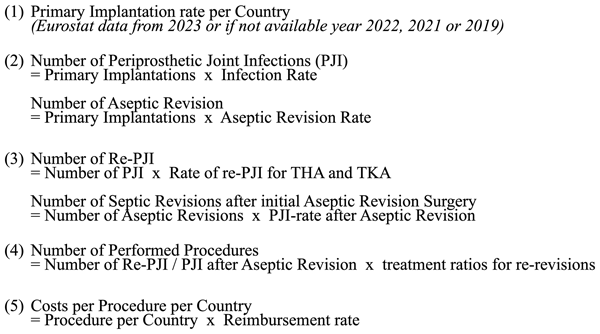
A health-economic study estimating the cost of septic re-revision surgery for periprosthetic joint infections (PJIs) across 30 European countries. Using 2023 Eurostat data plus a 13-country reimbursement survey, the study estimates 22 794 PJIs and 8629 septic re-revisions in 2023, costing ~€123.6 million (95% CI €102–156 million). Two-stage exchanges drive 82.8% of costs. Cutting PJI incidence by 25% could save €27.9 million/year; shifting half of two-stage cases to one-stage a further €22.6 million.
Goran Georgievski, Nike Walter, Ronald Man Yeung Wong, Irene Katharina Sigmund, Ashok Kanuri, Christian Heiss, and Markus Rupp
J. Bone Joint Infect., 11, 219–228, https://doi.org/10.5194/jbji-11-219-2026, https://doi.org/10.5194/jbji-11-219-2026, 2026
Short summary
Short summary
This article outlines 20 common errors in the prevention, diagnosis, and management of fracture-related infection (FRI), highlighting their clinical consequences and providing practical recommendations for avoiding them. By addressing typical pitfalls and emphasizing standardized procedures and interdisciplinary collaboration, the article aims to improve patient safety and treatment outcomes.
Lorenz Huber, Hasan S. Aguicenoglu, Susanne Baertl, Julia Elisabeth Lenz, Kristina Gerhardinger, Frank Hanses, Florian Zeman, Nike Walter, Volker Alt, and Markus Rupp
J. Bone Joint Infect., 11, 175–183, https://doi.org/10.5194/jbji-11-175-2026, https://doi.org/10.5194/jbji-11-175-2026, 2026
Short summary
Short summary
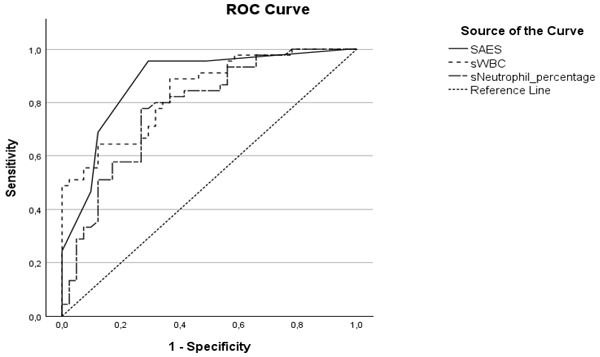
Septic arthritis is a dangerous joint infection that requires rapid treatment. We analysed patient data to test common blood and synovial fluid markers and a newly developed composite score combining these markers. The score demonstrated higher sensitivity than individual tests alone within this dataset. Prospective validation in larger cohorts is required before clinical application.
Markus Rupp, Nike Walter, Dominik Szymski, Christian Taeger, Martin Franz Langer, and Volker Alt
J. Bone Joint Infect., 8, 165–173, https://doi.org/10.5194/jbji-8-165-2023, https://doi.org/10.5194/jbji-8-165-2023, 2023
Short summary
Short summary
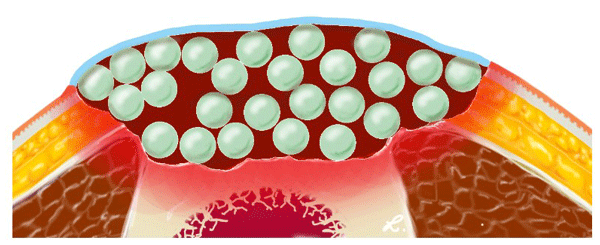
The antibiotic bead pouch is a useful technique for temporary soft tissue coverage. After the introduction of negative wound pressure therapy, it has fallen into oblivion. However, the technique has several advantages, which are highlighted in the present review article. After debridement, the antibiotic beads deliver high dosages of antibiotics suitable for bone cements. This enables a sterile wound, which might help to avoid either infection or progress of infection.
Julia Elisabeth Lenz, Volker Alt, and Thomas Dienemann
J. Bone Joint Infect., 7, 71–74, https://doi.org/10.5194/jbji-7-71-2022, https://doi.org/10.5194/jbji-7-71-2022, 2022
Short summary
Short summary
This case report is the first description of severe metabolic acidosis due to flucloxacillin therapy without relevant comedication that we know of. The described patient had been treated with flucloxacillin for 14 d due to intraoperative evidence of multisensitive Staphylococcus aureus due to periprosthetic shoulder infection. In patients on flucloxacillin therapy, acidosis should therefore always be considered as a differential diagnosis of tachypnoea or impaired mental status.
Cited articles
Abulaiti, A., Yilihamu, Y., Yasheng, T., Alike, Y., and Yusufu, A.: The psychological impact of external fixation using the Ilizarov or Orthofix LRS method to treat tibial osteomyelitis with a bone defect, Injury, 48, 2842–2846, https://doi.org/10.1016/j.injury.2017.10.036, 2017.
Bezstarosti, H., Van Lieshout, E. M. M., Voskamp, L. W., Kortram, K., Obremskey, W., McNally, M. A., Metsemakers, W. J., and Verhofstad, M. H. J.: Insights into treatment and outcome of fracture-related infection: A systematic literature review, Arch. Orthop. Traum. Su., 139, 61–72, https://doi.org/10.1007/s00402-018-3048-0, 2019.
Buijs, M. a. S., van den Kieboom, J., Sliepen, J., Wever, K. L. H., van Breugel, J. M., Hietbrink, F., IJpma, F. F. A., and Govaert, G. a. M.: Outcome and risk factors for recurrence of early onset fracture-related infections treated with debridement, antibiotics and implant retention: Results of a large retrospective multicentre cohort study, Injury, 53, 3930–3937, https://doi.org/10.1016/j.injury.2022.10.017, 2022.
Buijs, M. A. S., Haidari, S., IJpma, F. F. A., Hietbrink, F., and Govaert, G. A. M.: What can they expect? Decreased quality of life and increased postoperative complication rate in patients with a fracture-related infection, Injury, 55, 111425, https://doi.org/10.1016/j.injury.2024.111425, 2024.
Capdevilla, L. L., Fumas, A. S., Pérez, J. M. S., Sevilla, A. D., del Corral Cuervo, J., Varela-Quintana, C., Rubio, M. R., and Miguel, P. R.: Amputation versus circular external fixation in the treatment of diabetic foot with osteomyelitis: A cost and quality-of-life analysis, Therapeutic Advances in Endocrinology and Metabolism, 15, 20420188241271795, https://doi.org/10.1177/20420188241271795, 2024.
Egeler, S. A., de Jong, T., Luijsterburg, A. J. M., and Mureau, M. A. M.: Long-Term Patient-Reported Outcomes following Free Flap Lower Extremity Reconstruction for Traumatic Injuries, Plast. Reconstr. Surg., 141, 773, https://doi.org/10.1097/PRS.0000000000004124, 2018.
Ellert, U. and Kurth, B.-M.: Methodological views on the SF-36 summary scores based on the adult German population, Bundesgesundheitsbla., 47, 1027–1032, https://doi.org/10.1007/s00103-004-0933-1, 2004.
Howick, J., Chalmers, I., Glasziou, P., Greenlagh, T., Heneghan, C., Liberati, A., Moschetti, I., Phillips, B., and Thornton, H.: Explanation of the 2011 OCEBM Levels of Evidence, Oxford Center for Evidence-Based Medicine, https://www.cebm.ox.ac.uk/resources/levels-of-evidence/explanation-of-the-2011-ocebm-levels-of-evidence, last access: 5 August 2025.
Iliaens, J., Onsea, J., Hoekstra, H., Nijs, S., Peetermans, W. E., and Metsemakers, W.-J.: Fracture-related infection in long bone fractures: A comprehensive analysis of the economic impact and influence on quality of life, Injury, 52, 3344–3349, https://doi.org/10.1016/j.injury.2021.08.023, 2021.
Koutalos, A. A., Baltas, C., Akrivos, V., Arnaoutoglou, C., and Malizos, K. N.: Mortality, functional outcomes and quality of life after hip fractures complicated by infection: a case control study, J. Bone Joint Infect., 6, 347–354, https://doi.org/10.5194/jbji-6-347-2021, 2021.
Ktistakis, I., Giannoudi, M., and Giannoudis, P. V.: Infection rates after open tibial fractures: Are they decreasing?, Injury, 45, 1025–1027, https://doi.org/10.1016/j.injury.2014.03.022, 2014.
Lu, V., Zhang, J., Patel, R., Zhou, A. K., Thahir, A., and Krkovic, M.: Fracture Related Infections and Their Risk Factors for Treatment Failure-A Major Trauma Centre Perspective, Diagnostics (Basel, Switzerland), 12, 1289, https://doi.org/10.3390/diagnostics12051289, 2022.
Maglinte, G. A., Hays, R. D., and Kaplan, R. M.: US general population norms for telephone administration of the SF-36v2, J. Clin. Epidemiol., 65, 497–502, https://doi.org/10.1016/j.jclinepi.2011.09.008, 2012.
Marx, R. G., Wilson, S. M., and Swiontkowski, M. F.: Updating the Assignment of Levels of Evidence, J. Bone Joint Surg., 97, 1, https://doi.org/10.2106/JBJS.N.01112, 2015.
Maurer, E., Walter, N., Baumgartner, H., Histing, T., Alt, V., and Rupp, M.: Quality of life after fracture-related infection of the foot, Foot Ankle Surg., 28, 1421–1426, https://doi.org/10.1016/j.fas.2022.08.005, 2022.
Metsemakers, W.-J., Onsea, J., Neutjens, E., Steffens, E., Schuermans, A., McNally, M., and Nijs, S.: Prevention of fracture-related infection: A multidisciplinary care package, Int. Orthop., 41, 2457–2469, https://doi.org/10.1007/s00264-017-3607-y, 2017.
Moher, D., Liberati, A., Tetzlaff, J., and Altman, D. G.: Preferred reporting items for systematic reviews and meta-analyses: The PRISMA statement, Int. J. Surg., 8, 336–341, https://doi.org/10.1016/j.ijsu.2010.02.007, 2010.
O'Hara, N. N., Mullins, C. D., Slobogean, G. P., Harris, A. D., Kringos, D. S., and Klazinga, N. S.: Association of Postoperative Infections After Fractures With Long-term Income Among Adults, JAMA Network Open, 4, e216673, https://doi.org/10.1001/jamanetworkopen.2021.6673, 2021.
Raven, T. F., Moghaddam, A., Ermisch, C., Westhauser, F., Heller, R., Bruckner, T., and Schmidmaier, G.: Use of Masquelet technique in treatment of septic and atrophic fracture nonunion, Injury, 50, 40–54, https://doi.org/10.1016/j.injury.2019.06.018, 2019.
R Core Team: R: A language and environment for statistical computing (Version 4.4.0) [Software], R Foundation for Statistical Computing, https://www.R-project.org/ (last access: 14 August 2026), 2024.
Rodham, P., Panteli, M., Qin, C., Harwood, P., and Giannoudis, P. V.: Long-term outcomes of lower limb post-traumatic osteomyelitis, Eur. J. Trauma Emerg. S., 49, 539–549, https://doi.org/10.1007/s00068-022-02104-9, 2023.
Röver, C., Knapp, G., and Friede, T.: Hartung-Knapp-Sidik-Jonkman approach and its modification for random-effects meta-analysis with few studies, BMC Med. Res. Methodol., 15, 99, https://doi.org/10.1186/s12874-015-0091-1, 2015.
Rupp, M., Walter, N., Baertl, S., Lang, S., Lowenberg, D. W., and Alt, V.: Terminology of bone and joint infection, Bone Joint Res., 10, 742–743, https://doi.org/10.1302/2046-3758.1011.BJR-2021-0371, 2021.
Singh, J., Rambani, R., Hashim, Z., Raman, R., and Sharma, H. K.: The relationship between time to surgical debridement and incidence of infection in grade III open fractures, Strategies in Trauma and Limb Reconstruction, 7, 33–37, https://doi.org/10.1007/s11751-012-0130-y, 2012.
Slim, K., Nini, E., Forestier, D., Kwiatkowski, F., Panis, Y., and Chipponi, J.: Methodological index for non‐randomized studies (MINORS): Development and validation of a new instrument, ANZ J. Surg., 73, 712–716, https://doi.org/10.1046/j.1445-2197.2003.02748.x, 2003.
Sterne, J. A. C., Hernán, M. A., Reeves, B. C., Savović, J., Berkman, N. D., Viswanathan, M., Henry, D., Altman, D. G., Ansari, M. T., Boutron, I., Carpenter, J. R., Phelan, A. W. C., Churchill, R., Deeks, J. J., Hróbjartsson, A., Kirkham, J., Jüni, P., Loke, Y. K., Pigott, T. D., Ramsay, C. R., Regidor, D., Rothstein, H. R., Sandhu, L., Santaguida, P. L., Schünemann, H. J., Shea, B., Shrier, I., Tugwell, P., Turner, L., Valentine, J. C., Waddington, H. Waters, E., Wells, G. A.. Whiting, P. F., and Higgins, J. P. T.: ROBINS-I: A tool for assessing risk of bias in non-randomised studies of interventions, BMJ, i4919, https://doi.org/10.1136/bmj.i4919, 2016.
Sterne, J. A. C., Savović, J., Page, M. J., Elbers, R. G., Blencowe, N. S., Boutron, I., Cates, C. J., Cheng, H. Y. , Corbett, M. S., Eldridge, S. M., Emberson, J. R., Hernán, M. A., Hopewell, S., Hróbjartsson, A., Junqueira, D. R., Jüni, P., Kirkham, J. J., Lasserson, T., Li, T., McAleenan, A., Reeves, B. C., Shepperd, S., Shrier, I., Stewart, L. A., Tilling, K., White, I. R., Whiting, P. F., and Higgins, J. P. T.: RoB 2: A revised tool for assessing risk of bias in randomised trials, BMJ, l4898, https://doi.org/10.1136/bmj.l4898, 2019.
Tritt, K., von Heymann, F., Zaudig, M., Zacharias, I., Söllner, W., and Loew, T.: Entwicklung des Fragebogens “ICD-10-Symptom-Rating” (ISR), Zeitschrift für Psychosom. Med. Psyc., 54, 409–418, 2008.
Vranceanu, A.-M., Bachoura, A., Weening, A., Vrahas, M., Smith, R. M., and Ring, D.: Psychological Factors Predict Disability and Pain Intensity After Skeletal Trauma, J. Bone Joint Surg., 96, e20, https://doi.org/10.2106/JBJS.L.00479, 2014.
Walter, N. and Alt, V.: Psychosocial needs in fracture-related infection patients: A call for action, Injury, https://doi.org/10.1016/j.injury.2025.112652, 2025.
Walter, N., Rupp, M., Hierl, K., Pfeifer, C., Kerschbaum, M., Hinterberger, T., and Alt, V.: Long-term patient-related quality of life after fracture-related infections of the long bones, Bone Joint Res., 10, 321–327, https://doi.org/10.1302/2046-3758.105.BJR-2020-0532, 2021.
Walter, N., Loew, T., Hinterberger, T., Alt, V., and Rupp, M.: Managing more than bones: The psychological impact of a recurrent fracture-related infection, Bone Joint Open, 5, 621–627, https://doi.org/10.1302/2633-1462.58.BJO-2023-0156.R1, 2024.
Walter, N., Loew, T., Hinterberger, T., Mohokum, M., Alt, V., and Rupp, M.: Mental health implications of fracture-related infections: A longitudinal quality of life study, one & Joint Research, 14, 136–142, https://doi.org/10.1302/2046-3758.142.BJR-2024-0086.R2, 2025.
Wang, H., Wei, X., Liu, P., Fu, Y.-H., Wang, P., Cong, Y., Zhang, B., Li, Z., Lei, J., Zhang, K., and Zhuang, Y.: Quality of life and complications at the different stages of bone transport for treatment infected nonunion of the tibia, Medicine, 96, e8569, https://doi.org/10.1097/MD.0000000000008569, 2017.
Wimalan, B., Rupp, M., Alt, V., and Walter, N.: The patients' perspective – A qualitative analysis of experiencing a fracture-related infection, Front. Psychol., 14, https://doi.org/10.3389/fpsyg.2023.1126826, 2023.
Wright, J., Swiontkowski, M., and Heckman, J.: Introducing Levels of Evidence to The Journal, J. Bone Joint Surg., 85, 1–3, 2003.
Yilihamu, Y., Keremu, A., Abulaiti, A., Maimaiti, X., Ren, P., and Yusufu, A.: Outcomes of post-traumatic tibial osteomyelitis treated with an Orthofix LRS versus an Ilizarov external fixator, Injury, 48, 1636–1643, https://doi.org/10.1016/j.injury.2017.05.002, 2017.
Zayzan, K. R., Yusof, N. M., Sulong, A. F., Zakaria, Z., and Rahman, J. A.: Functional outcome and quality of life following treatment for post-traumatic osteomyelitis of long bones, Singap. Med. J., 63, 251–255, https://doi.org/10.11622/smedj.2020164, 2022.
Zhang, H., Zhao, X., Yang, X., Zhang, X., Chen, X., Zhou, T., Xu, X., Song, M., Luo, S., Xie, Z., Xu, Y., and Shi, J.: Comparison of internal and external fixation after debridement in the Masquelet technique for Cierny-Mader type IV tibial post-traumatic osteomyelitis, Injury, 54, 422–428, https://doi.org/10.1016/j.injury.2022.11.030, 2023.
Short summary
An infected bone fracture can lead to long-lasting problems with movement, daily function, and mental well-being. A review of 15 studies found that physical recovery often stayed below normal even after 1 year or more. Overall mental quality of life seemed stable, but other tests showed signs of ongoing depression. The evidence was mixed and limited, therefore better long-term studies and regular psychological screening are needed.
An infected bone fracture can lead to long-lasting problems with movement, daily function, and...